

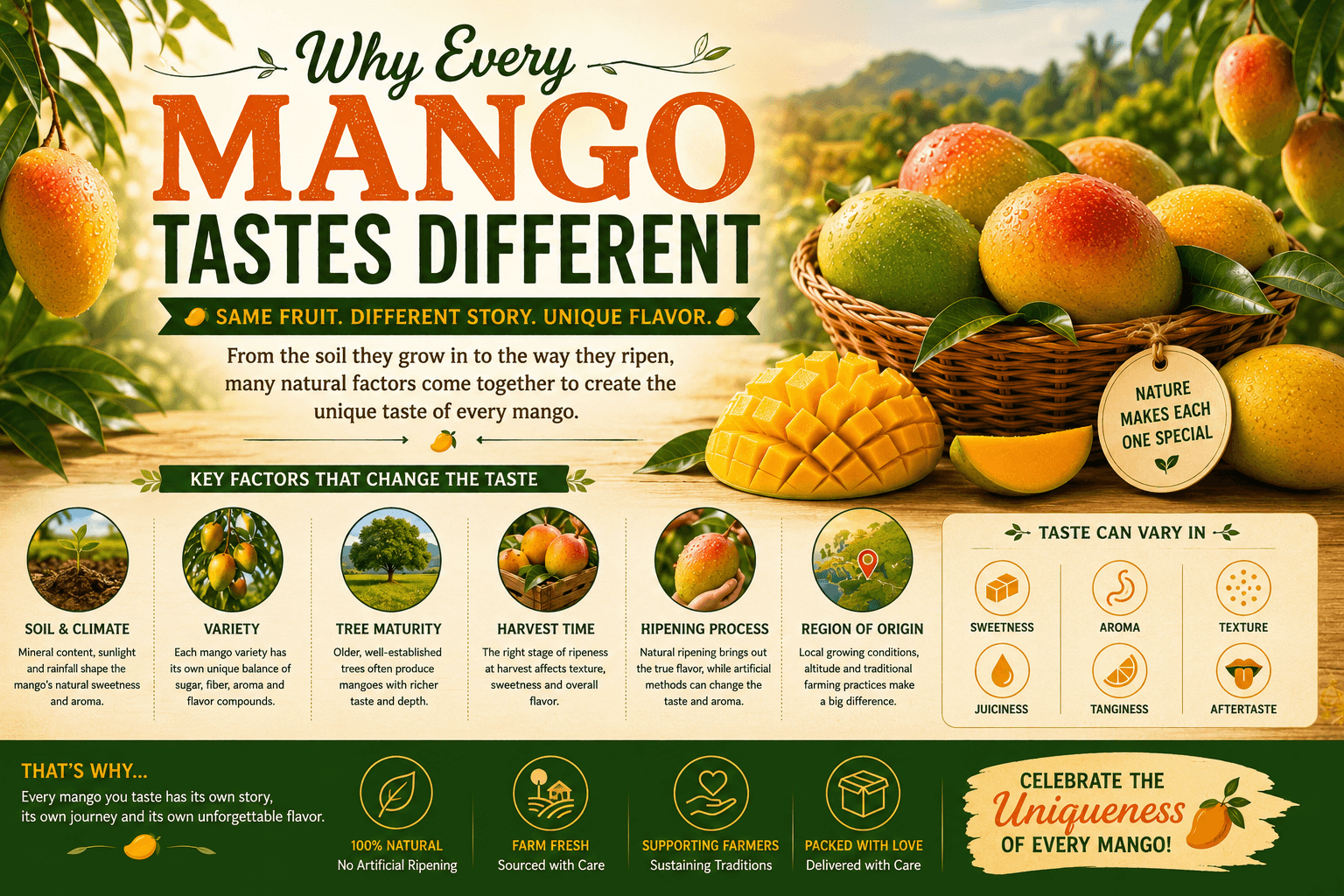
Have you ever eaten two mangoes that looked almost identical but tasted completely different? One may be intensely sweet and aromatic, while another is mildly sweet with a hint of tanginess. This natural variation is one of the reasons mangoes are so fascinating and why every mango season offers a unique experience.
A mango’s flavor is influenced by much more than its variety. Climate, soil, orchard management, harvest timing, natural ripening, and even the position of the fruit on the tree all contribute to its final taste. Every mango develops under slightly different conditions, creating subtle differences in sweetness, aroma, texture, and juiciness.
In this guide, we’ll explore the science behind why every mango tastes different and how understanding these factors can help you appreciate the remarkable diversity of India’s favorite summer fruit.
Mango Variety Is the Biggest Influence
The most important factor affecting flavor is the mango variety itself.
Every variety has its own natural characteristics, including:
- Sweetness.
- Aroma.
- Texture.
- Fibre content.
- Juiciness.
- Acidity.
- Color.
For example:
- Himsagar is known for its rich sweetness and fibre-free pulp.
- Alphonso offers a creamy texture with a complex tropical aroma.
- Kesar is appreciated for its balanced sweetness and vibrant orange pulp.
- Fazli is mild, juicy, and ideal for beverages and desserts.
- Lakshmanbhog combines smooth texture with pleasant natural sweetness.
Each variety has its own unique flavor profile.
Climate Shapes Mango Flavor
Weather plays a significant role in fruit development.
Important climate factors include:
- Sunshine.
- Temperature.
- Rainfall.
- Humidity.
- Seasonal changes.
Warm, sunny conditions generally encourage better sugar development, while rainfall patterns influence fruit growth and overall quality.
Soil Makes a Difference
Healthy soil supplies essential nutrients that support fruit development.
Different soil types influence:
- Natural sweetness.
- Aroma.
- Fruit size.
- Tree health.
- Pulp quality.
Many premium mango-growing regions, including Malda in West Bengal, benefit from fertile alluvial soils that contribute to excellent fruit quality.
Natural Ripening Enhances Flavor
Once harvested at the proper stage of maturity, mangoes continue to ripen naturally.
During ripening:
- Starch converts into natural sugars.
- The flesh becomes softer.
- Tropical aromas develop.
- Flavor becomes richer.
- Juiciness increases.
Naturally ripened mangoes typically offer a more complete flavor experience.
Harvest Timing Matters
Picking mangoes at the correct stage of maturity is essential.
Mangoes harvested too early may:
- Taste less sweet.
- Develop less aroma.
- Have firmer pulp.
- Offer reduced flavor complexity.
Harvesting at peak maturity allows the fruit to ripen properly and develop its full potential.
Orchard Management Influences Quality
Experienced growers use good orchard practices to produce healthy fruit.
These include:
- Proper irrigation.
- Balanced nutrition.
- Regular pruning.
- Pest management.
- Timely harvesting.
Healthy trees are more likely to produce consistently flavorful mangoes.
Sunlight and Photosynthesis
Sunlight is essential for producing the carbohydrates that later become natural sugars.
Trees receiving adequate sunlight often produce fruit with:
- Better sweetness.
- Improved aroma.
- Richer flavor.
- Healthy development.
Proper canopy management helps ensure sunlight reaches the fruit effectively.
Sweetness Is Only One Part of Flavor
Many people think sweetness alone determines a mango’s quality, but flavor is much more complex.
A delicious mango combines:
- Natural sugars.
- Mild acidity.
- Tropical aroma.
- Creamy texture.
- Juicy pulp.
The balance of these characteristics creates each variety’s distinctive taste.
Even Mangoes from the Same Tree Can Taste Different
It may be surprising, but mangoes growing on the same tree can vary slightly in flavor.
This can happen because of differences in:
- Sunlight exposure.
- Fruit position.
- Branch location.
- Size.
- Maturity at harvest.
These small variations make every mango unique.
Storage Conditions Affect Taste
After harvest, proper storage helps preserve flavor.
For best quality:
- Keep unripe mangoes at room temperature.
- Refrigerate only after they are fully ripe.
- Avoid rough handling.
- Protect the fruit from bruising.
Proper storage helps maintain sweetness and texture.
Different Mangoes for Different Preferences
Because every variety has its own qualities, different mangoes suit different uses.
Fresh Eating
Excellent choices include:
- Himsagar.
- Alphonso.
- Dashehari.
Juices
Popular options are:
- Fazli.
- Kesar.
- Gopalbhog.
Desserts
Ideal varieties include:
- Alphonso.
- Himsagar.
- Lakshmanbhog.
Smoothies and Milkshakes
Recommended choices:
- Fazli.
- Kesar.
- Khirsapati.
Selecting the right variety enhances every recipe.
Why Malda Mangoes Have a Distinctive Flavor
Malda in West Bengal is one of India’s most celebrated mango-growing regions.
Its fertile alluvial soil, favorable climate, experienced orchard management, and long tradition of mango cultivation contribute to producing premium varieties such as:
- Himsagar.
- Fazli.
- Lakshmanbhog.
- Gopalbhog.
- Khirsapati.
These mangoes are admired for their naturally sweet flavor, smooth pulp, rich aroma, and exceptional quality.
Appreciating Mango Diversity
India grows hundreds of mango varieties, each with its own personality.
This diversity offers:
- A wide range of flavors.
- Different textures.
- Varying levels of sweetness.
- Unique aromas.
- Seasonal experiences.
Exploring different varieties is one of the joys of mango season.
Final Thoughts
Every mango tastes different because every fruit has its own journey. The variety, climate, soil, sunlight, orchard care, harvest timing, and natural ripening process all influence the sweetness, aroma, texture, and overall flavor. Even two mangoes from the same tree can develop subtle differences that make each one unique.
Instead of looking for a single “perfect” mango, embrace the incredible diversity that India has to offer. Whether you prefer the rich sweetness of Himsagar, the creamy elegance of Alphonso, or the juicy freshness of Fazli, each variety provides a memorable taste of summer and reflects the unique conditions in which it was grown.
Discover the Unique Flavor of Premium Malda Mangoes
Experience the exceptional taste of premium Malda Mangoes sourced directly from trusted orchards in West Bengal. Our Himsagar, Fazli, Lakshmanbhog, Gopalbhog, and Khirsapati mangoes are handpicked at peak maturity, naturally ripened, carefully graded, thoroughly quality-checked, and securely packed before being delivered fresh across India. Every mango reflects generations of orchard expertise, fertile alluvial soils, and the natural diversity that makes each bite special.