

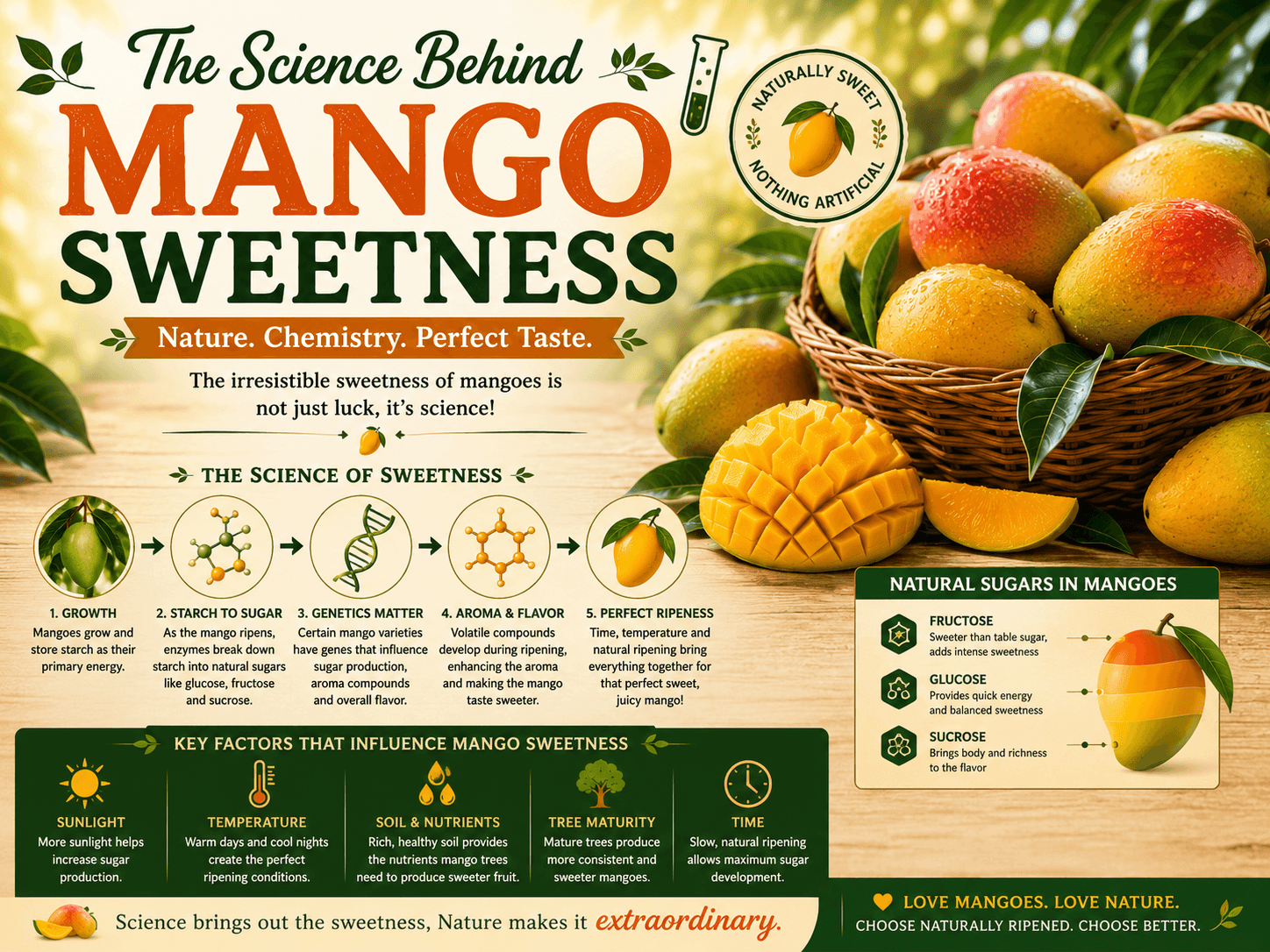
One bite into a perfectly ripe mango reveals why it is known as the King of Fruits. Its rich sweetness, tropical aroma, juicy flesh, and creamy texture make it one of the world’s most loved fruits. But have you ever wondered what makes a mango so sweet? The answer lies in a fascinating combination of biology, chemistry, climate, and careful cultivation.
Mango sweetness is not simply determined by the variety of fruit. It develops through a natural process involving plant hormones, enzymes, sunlight, soil nutrients, and ripening. Every stage of a mango’s growth—from flowering in the orchard to ripening after harvest—plays an important role in creating the delicious flavor we enjoy.
In this article, we’ll explore the science behind mango sweetness, the factors that influence it, and why naturally ripened mangoes consistently deliver the best eating experience.
What Makes a Mango Taste Sweet?
The sweetness of a mango comes primarily from natural sugars that develop as the fruit ripens.
During the early stages of growth, mangoes contain more starch than sugar. As the fruit matures and ripens, enzymes gradually convert these starches into natural sugars, resulting in a sweeter and more flavorful mango.
The main characteristics of a sweet mango include:
- High natural sugar content.
- Balanced acidity.
- Rich aroma.
- Smooth, juicy pulp.
- Proper ripeness.
Together, these qualities create the distinctive taste that mango lovers enjoy.
How Starch Changes into Natural Sugar
One of the most important processes during ripening is the conversion of starch into sugar.
As a mature mango ripens:
- Starch levels decrease.
- Natural sugars increase.
- The flesh becomes softer.
- Flavor becomes richer.
- Aroma develops.
This transformation is why unripe mangoes taste tart, while ripe mangoes are naturally sweet.
The Role of Ethylene in Ripening
Mangoes are climacteric fruits, meaning they continue to ripen after harvest.
A naturally occurring plant hormone called ethylene triggers the ripening process.
Ethylene helps:
- Activate ripening enzymes.
- Convert starch into sugar.
- Soften the fruit.
- Develop aroma compounds.
- Enhance flavor.
This natural process allows mangoes to reach their peak sweetness after harvesting.
Sunlight Helps Build Sweetness
Sunlight is one of the most important factors influencing mango quality.
Healthy mango trees use sunlight during photosynthesis to produce carbohydrates, which are later stored within the fruit.
Good sunlight exposure contributes to:
- Better sugar development.
- Richer flavor.
- Improved fruit quality.
- Stronger aroma.
Well-managed orchards ensure trees receive adequate sunlight throughout the growing season.
Climate Influences Mango Flavor
Climate plays a major role in determining sweetness.
Important factors include:
- Warm temperatures.
- Adequate sunshine.
- Balanced rainfall.
- Healthy growing conditions.
Each mango-growing region develops unique flavor characteristics because of its local climate.
The Importance of Fertile Soil
Healthy soil provides the nutrients needed for strong tree growth and quality fruit production.
Fertile orchard soils support:
- Healthy roots.
- Better fruit development.
- Efficient nutrient absorption.
- Consistent fruit quality.
Regions with nutrient-rich alluvial soils often produce exceptionally flavorful mangoes.
Why Variety Matters
Different mango varieties naturally develop different levels of sweetness.
Popular sweet varieties include:
- Himsagar.
- Alphonso.
- Kesar.
- Lakshmanbhog.
- Chausa.
- Dashehari.
- Gopalbhog.
- Khirsapati.
Each variety has its own balance of sweetness, acidity, aroma, and texture.
Natural Ripening Improves Flavor
When mangoes are harvested at the correct stage of maturity and allowed to ripen naturally, they gradually develop:
- Higher sugar levels.
- Rich tropical aroma.
- Creamier texture.
- Better overall flavor.
Natural ripening allows the fruit to complete its biological development.
Why Aroma Affects Perceived Sweetness
Interestingly, sweetness is influenced not only by sugar but also by aroma.
As mangoes ripen, they produce natural aromatic compounds that enhance our perception of sweetness.
This is why fragrant mangoes often seem sweeter, even when sugar levels are similar.
Balancing Sweetness and Acidity
The most enjoyable mangoes are not simply the sweetest.
Great flavor comes from a balance between:
- Natural sugars.
- Mild acidity.
- Tropical aroma.
- Creamy texture.
This balance creates a richer and more satisfying eating experience.
Orchard Management Makes a Difference
Experienced mango growers carefully manage orchards through practices such as:
- Proper irrigation.
- Pruning.
- Nutrient management.
- Pest and disease control.
- Timely harvesting.
These practices contribute to healthy fruit development and consistently high-quality mangoes.
Does Harvest Timing Affect Sweetness?
Yes. Harvesting mangoes at the proper stage of maturity is essential.
Fruit harvested too early may not fully develop its characteristic sweetness and flavor.
When harvested at peak maturity, mangoes continue ripening naturally and achieve excellent eating quality.
Measuring Mango Sweetness
Scientists and growers often estimate sweetness by measuring soluble solids, commonly expressed as degrees Brix (°Bx).
Higher Brix values generally indicate a greater concentration of natural sugars, although aroma, acidity, and texture also influence how sweet a mango tastes.
This measurement helps growers monitor fruit quality while recognizing that overall flavor depends on several characteristics working together.
Why Malda Mangoes Are Naturally Sweet
Malda in West Bengal is renowned for producing premium mangoes with exceptional flavor.
The region’s fertile alluvial soils, favorable climate, experienced orchard management, and generations of cultivation expertise contribute to producing mangoes that are appreciated for:
- Rich natural sweetness.
- Smooth pulp.
- Excellent aroma.
- Creamy texture.
Popular Malda varieties include:
- Himsagar.
- Lakshmanbhog.
- Gopalbhog.
- Khirsapati.
- Fazli.
These varieties have become favorites among mango enthusiasts across India.
Final Thoughts
The sweetness of a mango is the result of an extraordinary natural process. From sunlight and photosynthesis to starch conversion, ethylene-driven ripening, fertile soils, and careful orchard management, many factors work together to create the delicious flavor that makes mangoes so popular.
Understanding the science behind mango sweetness helps us appreciate the care involved in growing premium-quality fruit. By choosing mature, naturally ripened mangoes from trusted orchards, you can enjoy the authentic sweetness, aroma, and creamy texture that make every bite memorable.
Experience Naturally Sweet Premium Malda Mangoes
Taste the authentic sweetness of premium Malda Mangoes sourced directly from trusted orchards in West Bengal. Our Himsagar, Lakshmanbhog, Gopalbhog, Khirsapati, and Fazli mangoes are handpicked at peak maturity, naturally ripened, carefully graded, thoroughly quality-checked, and securely packed before being delivered fresh across India. Enjoy mangoes that reflect generations of orchard expertise, fertile alluvial soils, and the remarkable science of natural sweetness.