

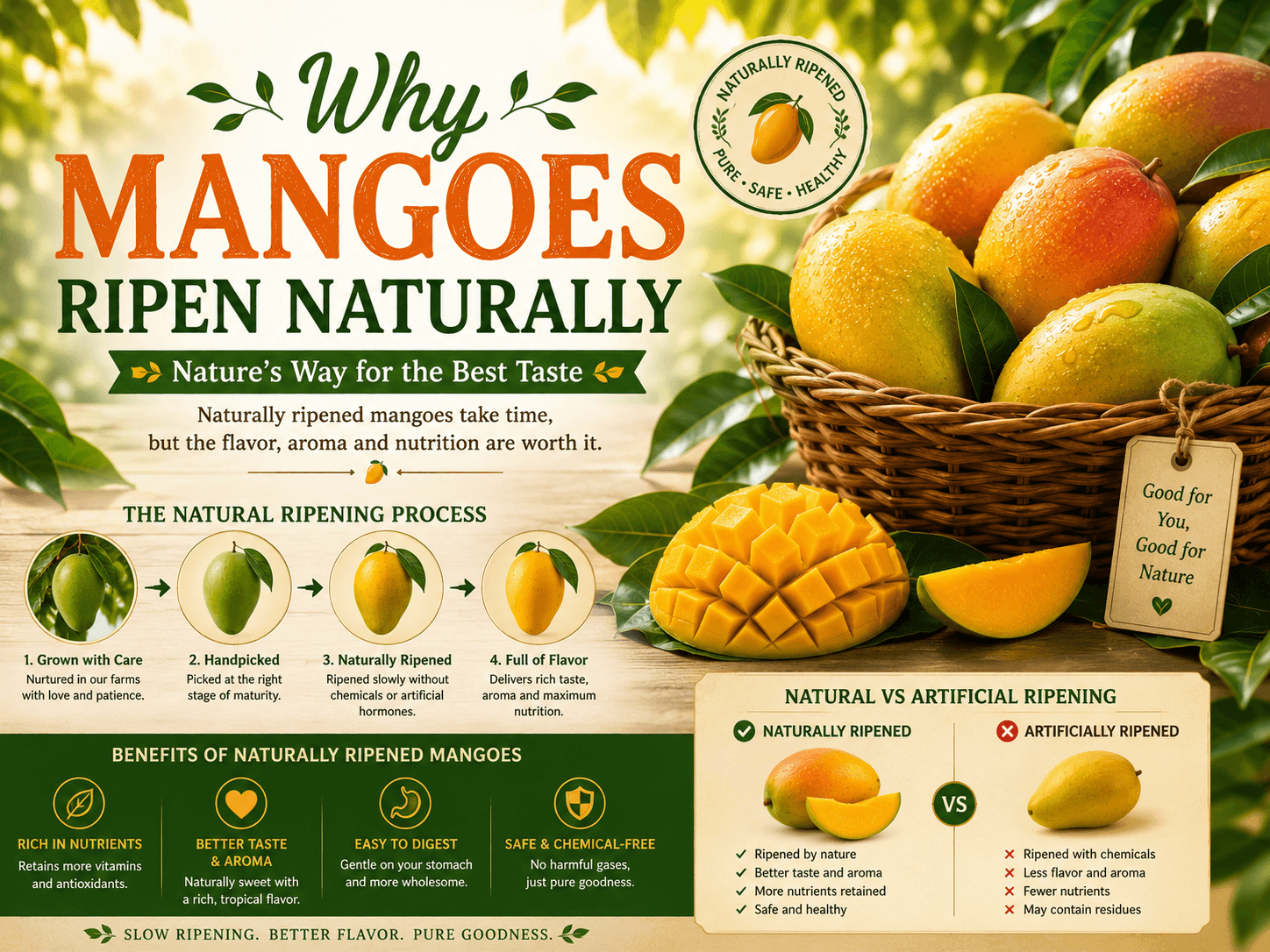
A perfectly ripened mango is one of nature’s greatest delights. Soft, fragrant, juicy, and naturally sweet, a ripe mango delivers the flavor and aroma that mango lovers eagerly anticipate every summer. But have you ever wondered why mangoes ripen naturally or what actually happens inside the fruit as it transforms from firm and green to golden, sweet, and delicious?
Natural ripening is a remarkable biological process that allows the mango to reach its peak eating quality. During this stage, the fruit develops its characteristic sweetness, aroma, vibrant color, and creamy texture. Understanding how mangoes ripen naturally not only helps you choose better fruit but also highlights why naturally ripened mangoes are widely appreciated for their authentic taste and eating experience.
In this guide, we’ll explore the science behind natural mango ripening, the factors that influence it, and why patience often leads to the most flavorful mangoes.
What Is Natural Ripening?
Natural ripening is the process through which a mature mango continues to develop after being harvested. As it ripens, the fruit undergoes several natural biochemical changes that improve its taste, aroma, texture, and appearance.
During this process, the mango becomes:
- Sweeter.
- Softer.
- More aromatic.
- Juicier.
- Easier to eat.
These changes are a normal part of the fruit’s life cycle.
The Role of Ethylene
One of the most important factors in natural ripening is ethylene, a naturally occurring plant hormone produced by many fruits, including mangoes.
Ethylene helps trigger the ripening process by encouraging several natural changes within the fruit, such as:
- Softening of the flesh.
- Development of aroma.
- Conversion of starch into natural sugars.
- Changes in skin color.
- Improvement in flavor.
As ethylene levels increase, the mango gradually reaches its ideal stage for eating.
How Mangoes Become Sweeter
When a mango is harvested at the proper stage of maturity, it contains stored starches that gradually break down into natural sugars as the fruit ripens.
This process contributes to:
- Rich sweetness.
- Balanced flavor.
- Smooth texture.
- Pleasant eating quality.
That is why a fully ripened mango tastes significantly sweeter than an unripe one.
Why the Texture Changes
One of the first signs of ripening is the softening of the fruit.
Natural enzymes gently break down parts of the fruit’s cell walls, resulting in:
- Creamier flesh.
- Softer texture.
- Juicier pulp.
- Easier slicing.
Different mango varieties soften at different rates, but each develops its own ideal texture when properly ripened.
Why Mangoes Become More Aromatic
The delightful fragrance of a ripe mango develops during natural ripening.
As the fruit matures, it produces a range of natural aroma compounds that create the distinctive tropical scent associated with fresh mangoes.
A fragrant aroma is often one of the best indicators that a mango is ready to enjoy.
Why the Color Changes
Many mango varieties change color as they ripen, although the exact appearance depends on the variety.
Common color changes include:
- Green to yellow.
- Green to golden.
- Green with red or orange highlights.
- Brightening of existing colors.
It’s important to remember that color alone is not always a reliable indicator of ripeness, as some varieties remain mostly green even when fully ripe.
Factors That Influence Natural Ripening
Several factors affect how quickly a mango ripens.
These include:
- Variety.
- Harvest maturity.
- Temperature.
- Humidity.
- Air circulation.
- Storage conditions.
Each of these influences the speed and quality of the ripening process.
How Long Does Natural Ripening Take?
The exact time varies depending on the mango variety and storage conditions.
In general:
- Mature mangoes often ripen over several days at room temperature.
- Warmer environments may speed up ripening.
- Cooler temperatures may slow the process.
Checking the fruit daily helps ensure it is enjoyed at its best.
Signs of a Naturally Ripened Mango
A naturally ripened mango typically has several characteristics.
Look for:
- A pleasant fruity aroma.
- Slight softness when gently pressed.
- Well-developed color for its variety.
- Smooth skin.
- Good overall freshness.
These signs together provide a better indication of ripeness than color alone.
Tips for Ripening Mangoes at Home
You can encourage natural ripening by:
- Keeping mangoes at room temperature.
- Placing them in a paper bag if you want to speed up ripening slightly.
- Avoiding refrigeration until they are fully ripe.
- Handling the fruit gently to prevent bruising.
Once ripe, mangoes can be refrigerated to help maintain their quality for a few more days.
Why Naturally Ripened Mangoes Are Preferred
Naturally ripened mangoes are appreciated because they often develop:
- Rich sweetness.
- Full tropical aroma.
- Creamy texture.
- Balanced flavor.
- Excellent eating quality.
These qualities make them ideal for enjoying fresh or using in recipes such as smoothies, juices, fruit salads, desserts, and homemade ice cream.
Popular Naturally Sweet Mango Varieties
Many Indian mango varieties are celebrated for their flavor after natural ripening.
Some favorites include:
- Himsagar
- Alphonso
- Kesar
- Lakshmanbhog
- Gopalbhog
- Khirsapati
- Dashehari
- Chausa
Each variety develops its own unique sweetness and aroma during the ripening process.
Malda Mangoes and Natural Ripening
Malda in West Bengal is renowned for producing premium mangoes with exceptional flavor and smooth pulp.
Popular Malda varieties include:
- Himsagar
- Fazli
- Lakshmanbhog
- Gopalbhog
- Khirsapati
When harvested at peak maturity and allowed to ripen naturally, these mangoes develop their characteristic sweetness, rich aroma, and creamy texture that make them favorites among mango lovers.
Final Thoughts
Natural ripening is one of the most fascinating stages in a mango’s journey from orchard to table. Guided by naturally occurring ethylene, the fruit gradually transforms as starches become sugars, aromas develop, and the flesh softens into the creamy texture that makes mangoes so enjoyable.
By understanding how mangoes ripen naturally, you can better appreciate the care involved in producing premium-quality fruit and learn to recognize when a mango has reached its best flavor. Choosing mature, naturally ripened mangoes is one of the easiest ways to enjoy the authentic taste of India’s favorite summer fruit.
Experience Naturally Ripened Premium Malda Mangoes
Enjoy the authentic flavor of premium Malda Mangoes sourced directly from trusted orchards in West Bengal. Our Himsagar, Fazli, Lakshmanbhog, Gopalbhog, and Khirsapati mangoes are handpicked at peak maturity, naturally ripened, carefully graded, thoroughly quality-checked, and securely packed before being delivered fresh across India. Experience the rich sweetness, smooth texture, and exceptional aroma that only naturally ripened mangoes can offer.