

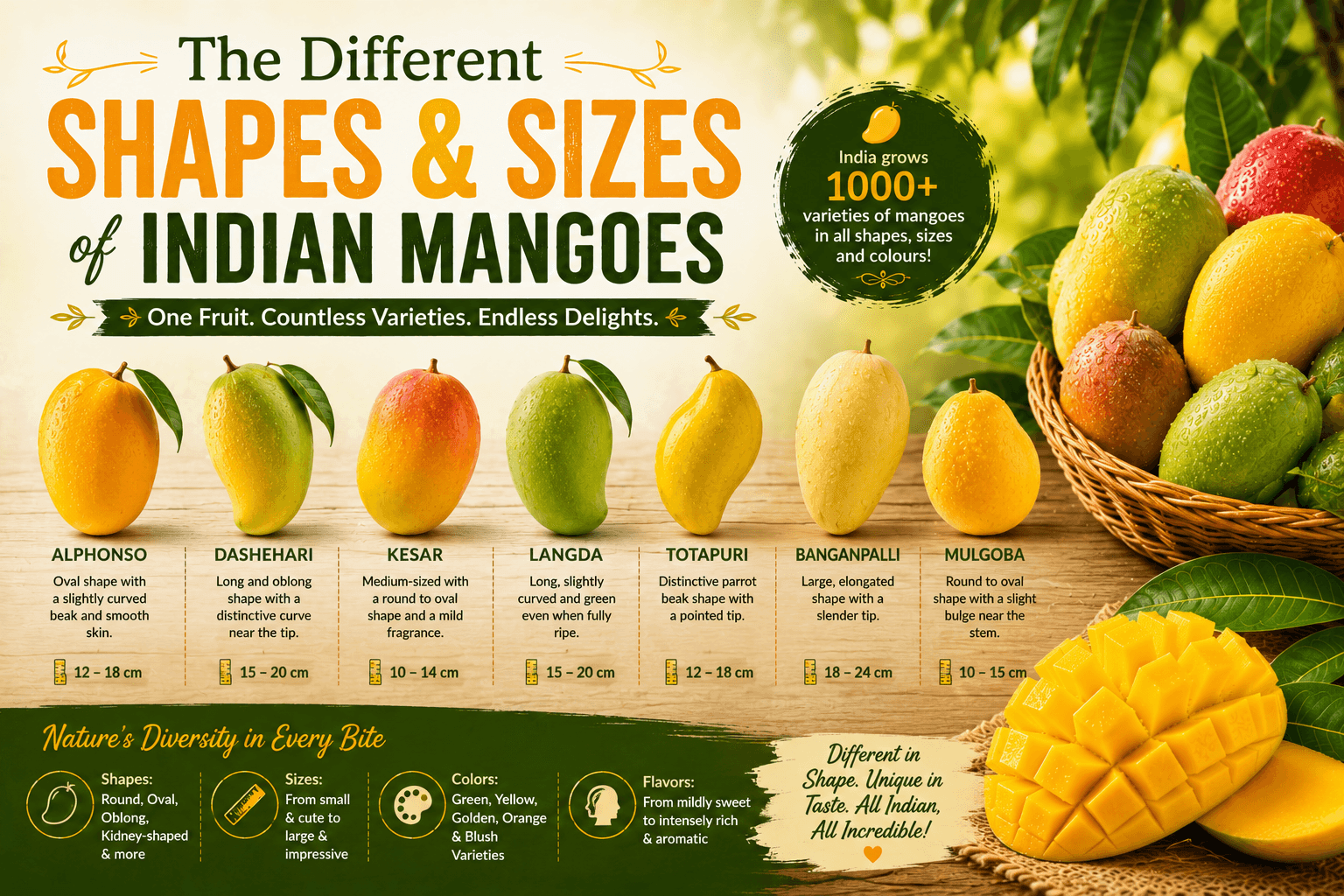
India is home to an incredible diversity of mangoes, with more than 1,000 recognized varieties grown across different regions of the country. While most people choose mangoes based on their sweetness or aroma, another fascinating aspect of these fruits is their remarkable variety in shape, size, color, and appearance.
From the small yet intensely flavorful Amrapali to the large and impressive Fazli, every mango variety has developed unique physical characteristics that reflect its genetics, growing environment, and farming traditions. Some mangoes are long and slender, others are round or oval, while a few are known for their large size and weight.
In this article, we’ll explore the different shapes and sizes of Indian mangoes, discover why they vary so much, and learn what these differences mean for taste, texture, and culinary uses.
Why Do Mangoes Have Different Shapes and Sizes?
The appearance of a mango is influenced by several natural factors.
These include:
- Genetic characteristics of the variety.
- Climate and weather conditions.
- Soil quality.
- Orchard management.
- Water availability.
- Pollination.
- Fruit maturity.
Each mango variety has evolved with its own distinctive characteristics, making it easy for experienced growers and buyers to identify them.
Common Mango Shapes Found in India
Indian mangoes are available in several recognizable shapes.
Oval Mangoes
Oval-shaped mangoes are among the most common.
Characteristics include:
- Balanced appearance.
- Smooth curves.
- Medium to large size.
- Easy slicing.
Examples include:
- Himsagar
- Lakshmanbhog
- Kesar
Round Mangoes
Some mangoes are almost round or broadly oval.
These varieties often have:
- Thick pulp.
- Compact shape.
- Attractive appearance.
Examples include:
- Amrapali
- Mallika
Long and Slender Mangoes
Certain varieties develop an elongated shape.
Features include:
- Narrow body.
- Longer length.
- Elegant appearance.
Examples include:
- Dashehari
- Langra
- Chausa
Kidney-Shaped Mangoes
Many premium mangoes have the classic kidney shape.
This form is characterized by:
- Curved profile.
- Broad shoulders.
- Rounded base.
Examples include:
- Alphonso
- Banganapalli
Small, Medium, and Large Mangoes
Indian mangoes vary greatly in size.
Small Mangoes
Typically weigh between 150–250 grams.
Popular examples:
- Amrapali
- Mallika
These are known for concentrated sweetness and rich flavor.
Medium-Sized Mangoes
Usually weigh 250–400 grams.
Examples include:
- Himsagar
- Lakshmanbhog
- Kesar
- Dashehari
Medium-sized mangoes are popular because they offer an excellent balance between pulp, seed size, and serving convenience.
Large Mangoes
Often weigh 400–700 grams, with some growing even larger.
Examples include:
- Fazli
- Banganapalli
- Chausa
Large mangoes provide generous amounts of pulp, making them ideal for sharing and culinary use.
The Famous Giant Fazli Mango
Among India’s largest commercial mangoes, Fazli is especially famous.
Its characteristics include:
- Large size.
- Broad shoulders.
- Smooth skin.
- Juicy pulp.
- Mild sweetness.
Fazli is widely used for:
- Fresh eating.
- Desserts.
- Juices.
- Pulp production.
Its impressive size makes it one of the most recognizable mango varieties in India.
Does Shape Affect Taste?
Not directly.
A mango’s sweetness and flavor depend primarily on:
- Variety.
- Ripeness.
- Growing conditions.
- Harvest timing.
However, shape often reflects the genetic characteristics of a particular variety, which also influence its texture, aroma, and flavor profile.
Does Size Affect Quality?
Many people believe bigger mangoes are always better, but that’s a myth.
A premium mango is judged by factors such as:
- Natural sweetness.
- Aroma.
- Texture.
- Freshness.
- Proper ripening.
- Overall quality.
Some smaller mangoes, like Himsagar and Amrapali, are highly prized for their exceptional flavor despite their modest size.
The Role of Seed Size
Another interesting difference among mango varieties is seed size.
Some varieties have:
- Thin seeds.
- Thick seeds.
- More edible pulp.
- Less edible pulp.
Varieties with relatively smaller seeds often provide a higher proportion of juicy flesh.
Regional Differences in Mango Appearance
Different regions of India are known for distinctive mango varieties.
West Bengal
Famous for:
- Himsagar
- Fazli
- Lakshmanbhog
- Gopalbhog
- Khirsapati
These mangoes are admired for their smooth texture and excellent flavor.
Maharashtra
Known for:
- Alphonso
Recognized by its golden color and kidney-shaped appearance.
Gujarat
Known for:
- Kesar
Distinguished by its attractive shape and saffron-colored pulp.
Uttar Pradesh
Popular varieties include:
- Dashehari
- Langra
- Chausa
These varieties are widely appreciated for their unique forms and rich taste.
Choosing Mangoes Based on Size and Shape
When shopping for mangoes, don’t focus only on appearance.
Look for:
- A pleasant fruity aroma.
- Slight softness when gently pressed.
- Smooth skin without major damage.
- Appropriate size for the variety.
- Freshness.
Remember that every variety naturally looks different.
Why Every Mango Is Unique
Even mangoes from the same orchard can show slight differences in:
- Shape.
- Size.
- Weight.
- Color.
- Sweetness.
These natural variations are a hallmark of fresh, naturally grown fruit and reflect the uniqueness of each harvest.
Final Thoughts
The incredible diversity of Indian mangoes is one of the reasons they are celebrated around the world. From small, intensely sweet varieties to large, juicy fruits, every mango has its own distinctive shape, size, and character.
Rather than determining quality, these differences showcase the richness of India’s mango heritage. Whether you prefer the creamy Himsagar, the giant Fazli, the elegant Dashehari, or the famous Alphonso, exploring different varieties is one of the greatest joys of mango season.
Discover Premium Malda Mangoes
Experience the unique beauty and exceptional flavor of premium Malda Mangoes sourced directly from trusted orchards in West Bengal. Our Himsagar, Fazli, Lakshmanbhog, Gopalbhog, and Khirsapati mangoes are handpicked at peak maturity, naturally ripened, carefully graded, thoroughly quality-checked, and securely packed before being delivered fresh across India. Enjoy the authentic taste of India’s finest seasonal mangoes from farm to table.