

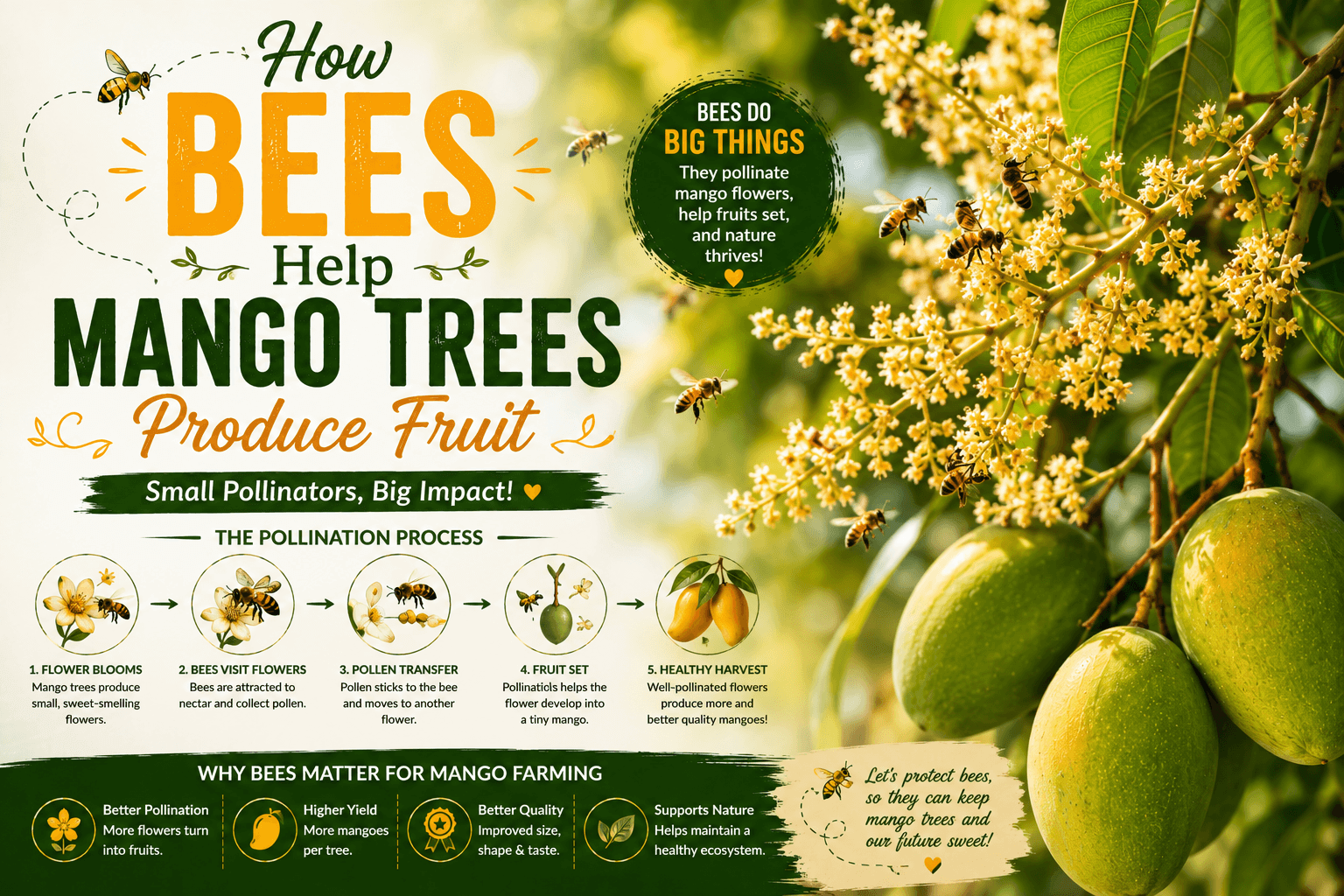
When people think about growing delicious mangoes, they often picture healthy orchards, fertile soil, sunshine, and skilled farmers. While all these factors are essential, there’s another hardworking contributor that often goes unnoticed—the humble bee. These tiny pollinators play a vital role in the life cycle of mango trees and are one of nature’s most valuable partners in fruit production.
Without effective pollination, many mango flowers would never develop into the juicy fruits we enjoy every summer. Bees transfer pollen from one flower to another, helping fertilization occur and increasing the chances of successful fruit formation. Their daily activity supports healthier orchards, improves fruit set, and contributes to better harvests.
In this article, we’ll explore how bees help mango trees produce fruit, why pollination is so important, and how farmers protect these beneficial insects to maintain thriving mango orchards.
Understanding Pollination
Pollination is the natural process of transferring pollen from the male part of a flower (the anther) to the female part (the stigma). This transfer allows fertilization to take place, leading to the development of seeds and fruit.
For mango trees, successful pollination is one of the most important steps in producing a healthy crop.
Pollination helps:
- Initiate fruit development.
- Improve fruit set.
- Support seed formation.
- Increase orchard productivity.
- Contribute to healthy harvests.
Although wind and other insects can assist with pollination, bees are among the most effective pollinators in mango orchards.
Why Mango Flowers Need Pollinators
A mature mango tree can produce thousands of tiny flowers during the flowering season. However, only a small percentage of these flowers naturally develop into mature fruits.
Several factors influence fruit formation, including:
- Weather conditions.
- Flower health.
- Tree nutrition.
- Pollination success.
- Presence of beneficial insects.
Bees increase the likelihood that more flowers receive the pollen they need, improving the chances of fruit development.
How Bees Pollinate Mango Flowers
As bees search for nectar and pollen, they move from one mango flower to another.
During this process:
- Pollen sticks to the tiny hairs on the bee’s body.
- The bee visits another flower.
- Some of the pollen is transferred to the flower’s stigma.
- Fertilization can occur.
- Fruit development begins.
A single bee may visit hundreds of flowers in one day, making it an incredibly efficient pollinator.
Types of Bees Found in Mango Orchards
Many different bee species contribute to mango pollination.
Common pollinators include:
- Honey bees
- Stingless bees
- Carpenter bees
- Solitary native bees
Each species plays a role in supporting biodiversity and healthy orchard ecosystems.
Why Bees Are Important for Mango Production
Healthy bee populations benefit mango orchards in many ways.
Better Fruit Set
Effective pollination increases the number of flowers that successfully develop into fruit.
Improved Fruit Quality
Well-pollinated flowers often produce more uniformly developed fruits, contributing to better size and shape.
Increased Orchard Productivity
Consistent pollination helps farmers achieve more reliable harvests from season to season.
Stronger Biodiversity
Bees also pollinate many surrounding plants, supporting a healthier agricultural environment.
Flowering Season and Bee Activity
Bee activity is closely linked to the mango flowering season.
When mango trees bloom:
- Flowers produce nectar.
- Bees are attracted to the blossoms.
- Pollination activity increases.
- Fruit formation begins.
Warm, sunny weather generally encourages greater bee activity, while prolonged rain or strong winds may reduce pollination.
Challenges Facing Bee Populations
Around the world, bee populations face several challenges.
These include:
- Habitat loss.
- Excessive pesticide use.
- Climate change.
- Reduced flowering plants.
- Environmental pollution.
Protecting bees is important not only for mango production but also for the health of many agricultural crops.
How Farmers Encourage Bees in Mango Orchards
Many mango growers use practices that support pollinators while maintaining productive orchards.
These practices may include:
- Preserving natural vegetation.
- Planting flowering plants nearby.
- Reducing unnecessary pesticide use.
- Encouraging biodiversity.
- Maintaining healthy orchard ecosystems.
These approaches help create an environment where bees can thrive.
The Connection Between Healthy Orchards and Bees
Healthy mango orchards depend on more than just good soil and irrigation.
Successful fruit production is supported by:
- Proper pruning.
- Balanced nutrition.
- Adequate irrigation.
- Favorable weather.
- Beneficial insects like bees.
Each of these factors works together to produce high-quality mangoes.
Interesting Facts About Bees and Mango Trees
Here are some fascinating facts:
- A mango tree can produce thousands of flowers during one flowering season.
- Only a small percentage of flowers become mature mangoes.
- Bees can visit hundreds of flowers in a single day.
- Different bee species contribute to pollination.
- Healthy pollinator populations support sustainable farming.
These facts highlight the incredible partnership between bees and mango trees.
Sustainable Mango Farming
Protecting pollinators is an important part of sustainable agriculture.
By encouraging healthy bee populations, farmers can:
- Improve natural pollination.
- Support biodiversity.
- Reduce environmental impact.
- Maintain productive orchards.
- Promote long-term agricultural sustainability.
These practices benefit both the environment and future mango harvests.
Why Pollination Matters to Consumers
The work of bees directly influences the mangoes that reach your table.
Effective pollination contributes to:
- Healthy fruit development.
- Better harvest consistency.
- High-quality mangoes.
- Sustainable farming systems.
Every delicious mango is the result of a complex natural process in which bees play an essential role.
Final Thoughts
Although they are small, bees make a huge contribution to mango cultivation. By transferring pollen between flowers, they help mango trees produce fruit, support orchard productivity, and maintain healthy ecosystems. Their role extends beyond individual orchards, benefiting biodiversity and sustainable agriculture as a whole.
The next time you enjoy a fresh mango, remember that countless tiny pollinators have helped make that harvest possible. Protecting bees means protecting the future of mango farming and ensuring that generations to come can continue enjoying one of nature’s most beloved fruits.
Enjoy Farm-Fresh Premium Malda Mangoes
Experience the exceptional taste of premium Malda Mangoes grown in carefully managed orchards in West Bengal. Sourced directly from trusted farmers, our mangoes are handpicked at peak maturity, naturally ripened, carefully graded, thoroughly quality-checked, and securely packed before being delivered fresh across India. Every mango reflects the combined efforts of skilled growers, healthy orchards, and the remarkable pollinators that help bring each harvest to life.