

Few fruits can match the irresistible sweetness of a perfectly ripe mango. Whether it’s the creamy richness of Himsagar, the honey-like flavor of Alphonso, or the juicy sweetness of Fazli, every bite is packed with natural goodness. But have you ever wondered how mangoes become so sweet?
The answer lies in a fascinating combination of nature, science, climate, soil, and careful farming practices. A mango doesn’t become sweet overnight. Its flavor develops gradually through a natural ripening process, during which complex changes occur inside the fruit. Everything from the variety of mango and the weather it grows in to when it is harvested plays a role in creating its signature taste.
In this article, we’ll explore the science behind mango sweetness and discover why some mangoes are sweeter than others.
Sweetness Begins on the Tree
The journey to a sweet mango starts long before the fruit is harvested.
As the mango grows on the tree, it absorbs:
- Sunlight
- Water
- Minerals from the soil
- Nutrients produced through photosynthesis
These resources help the fruit develop starches and other compounds that later contribute to its sweetness.
Healthy trees and well-managed orchards create the best conditions for producing high-quality mangoes.
The Role of Photosynthesis
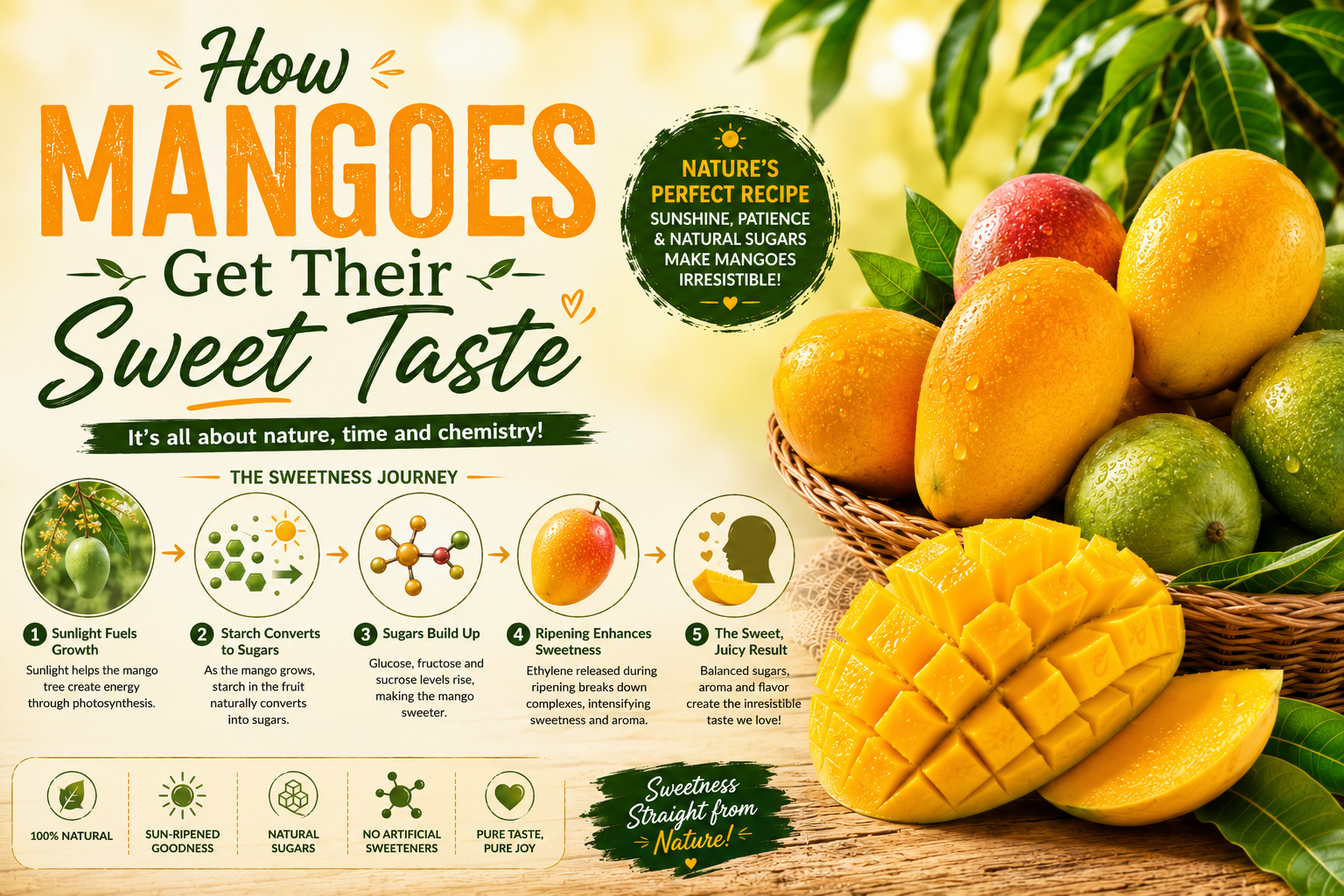
Photosynthesis is the process by which mango trees use sunlight to produce food.
During this process:
- Leaves absorb sunlight.
- Carbon dioxide is taken from the air.
- Water is absorbed through the roots.
- The tree produces carbohydrates.
Some of these carbohydrates are transported to the developing mangoes, where they are stored as starch during the early stages of growth.
How Ripening Creates Sweetness
One of the biggest reasons mangoes become sweet is the natural ripening process.
As mangoes ripen, special enzymes break down stored starch into simpler natural sugars, including:
- Glucose
- Fructose
- Sucrose
This transformation is responsible for the delicious sweetness that ripe mangoes are known for.
At the same time, acidity gradually decreases, making the fruit taste smoother and more balanced.
Ethylene – Nature’s Ripening Hormone
Mangoes are climacteric fruits, meaning they continue to ripen after harvest.
This process is triggered by a naturally occurring plant hormone called ethylene.
Ethylene signals the fruit to begin several important changes:
- Convert starch into sugars.
- Soften the flesh.
- Develop aroma.
- Enhance flavor.
- Change color in many varieties.
These natural processes work together to create the perfect eating experience.
Why Different Mango Varieties Taste Different
Not all mangoes are equally sweet.
Each variety has its own unique genetic characteristics that influence:
- Sugar content
- Aroma
- Fiber content
- Texture
- Acidity
For example:
Himsagar
Known for its rich sweetness, almost fiberless texture, and aromatic pulp.
Alphonso
Famous for its creamy consistency and balanced sweetness with a tropical fragrance.
Fazli
Large, juicy, and mildly sweet with a pleasant flavor.
Lakshmanbhog
Offers an excellent balance of sweetness, aroma, and smooth texture.
Kesar
Recognized for its saffron-colored pulp and naturally sweet taste.
These differences are one reason mango lovers enjoy exploring multiple varieties each season.
Climate Has a Big Influence
Weather conditions play a major role in determining mango sweetness.
Ideal growing conditions include:
- Warm temperatures
- Plenty of sunshine
- Moderate rainfall
- Dry weather during ripening
Adequate sunlight allows mango trees to produce more carbohydrates, while favorable weather supports healthy fruit development.
The Importance of Fertile Soil
Healthy soil provides essential nutrients that contribute to strong tree growth and high-quality fruit.
In regions like Malda, fertile alluvial soil supports:
- Vigorous mango trees
- Healthy flowering
- Good fruit development
- Excellent flavor
While soil alone doesn’t create sweetness, it provides the foundation for producing premium mangoes.
Why Harvest Timing Matters
Harvesting mangoes at the correct stage of maturity is essential.
If mangoes are picked too early:
- They may not develop their full sweetness.
- Flavor can remain underdeveloped.
- Texture may be less appealing.
When harvested at the proper maturity stage, mangoes continue ripening naturally and achieve their characteristic sweetness.
Naturally Ripened Mangoes Offer the Best Flavor
Natural ripening allows mangoes to develop:
- Rich sweetness
- Pleasant aroma
- Creamy texture
- Balanced flavor
Because the fruit ripens gradually, the conversion of starch into sugars occurs naturally, producing a more authentic taste.
Does Size Affect Sweetness?
Many people assume larger mangoes are sweeter, but this isn’t always true.
Sweetness depends on factors such as:
- Variety
- Maturity
- Growing conditions
- Ripening
Some smaller varieties can be exceptionally sweet, while larger mangoes may have a milder flavor.
Does Color Indicate Sweetness?
Not necessarily.
Some ripe mangoes develop bright yellow or orange skin, while others remain mostly green even when fully ripe.
For example:
- Langra often stays green.
- Himsagar may retain green tones.
- Alphonso usually develops a golden-yellow color.
Aroma, softness, and variety are generally better indicators of sweetness than skin color alone.
Can Storage Affect Flavor?
Proper storage helps mangoes continue their natural ripening process.
For best results:
- Store unripe mangoes at room temperature.
- Keep them in a well-ventilated place.
- Refrigerate only after they become fully ripe.
Correct storage helps preserve sweetness and texture.
Common Myths About Sweet Mangoes
Myth 1: Sweeter Mangoes Contain Added Sugar
False. Mangoes naturally develop their sweetness during ripening without added sugar.
Myth 2: Bright Color Means Better Taste
Not always. Different varieties ripen with different skin colors.
Myth 3: Only Expensive Mangoes Are Sweet
Many affordable regional varieties are naturally delicious when grown and ripened properly.
Myth 4: Sweet Mangoes Are Less Nutritious
Fresh mangoes provide natural sugars along with vitamin C, vitamin A, dietary fiber, antioxidants, potassium, and other essential nutrients.
Final Thoughts
The wonderful sweetness of mangoes is the result of a remarkable natural process. From sunlight and photosynthesis to starch conversion, ethylene-triggered ripening, and careful harvesting, every stage contributes to the flavor we enjoy.
Different varieties, climates, soils, and farming practices all influence how sweet a mango becomes. That’s why each variety has its own unique personality and taste profile. By choosing naturally ripened, farm-fresh mangoes harvested at the right stage of maturity, you can experience the authentic sweetness that has made mangoes one of the world’s most beloved fruits.
Enjoy Naturally Sweet Premium Malda Mangoes
Experience the authentic sweetness of premium Malda Mangoes sourced directly from trusted orchards in West Bengal. Our mangoes are handpicked at peak maturity, naturally ripened, carefully graded, thoroughly quality-checked, and securely packed before being delivered fresh across India. Taste the rich flavor, smooth texture, and natural sweetness that make Malda Mangoes a favorite among mango lovers.