

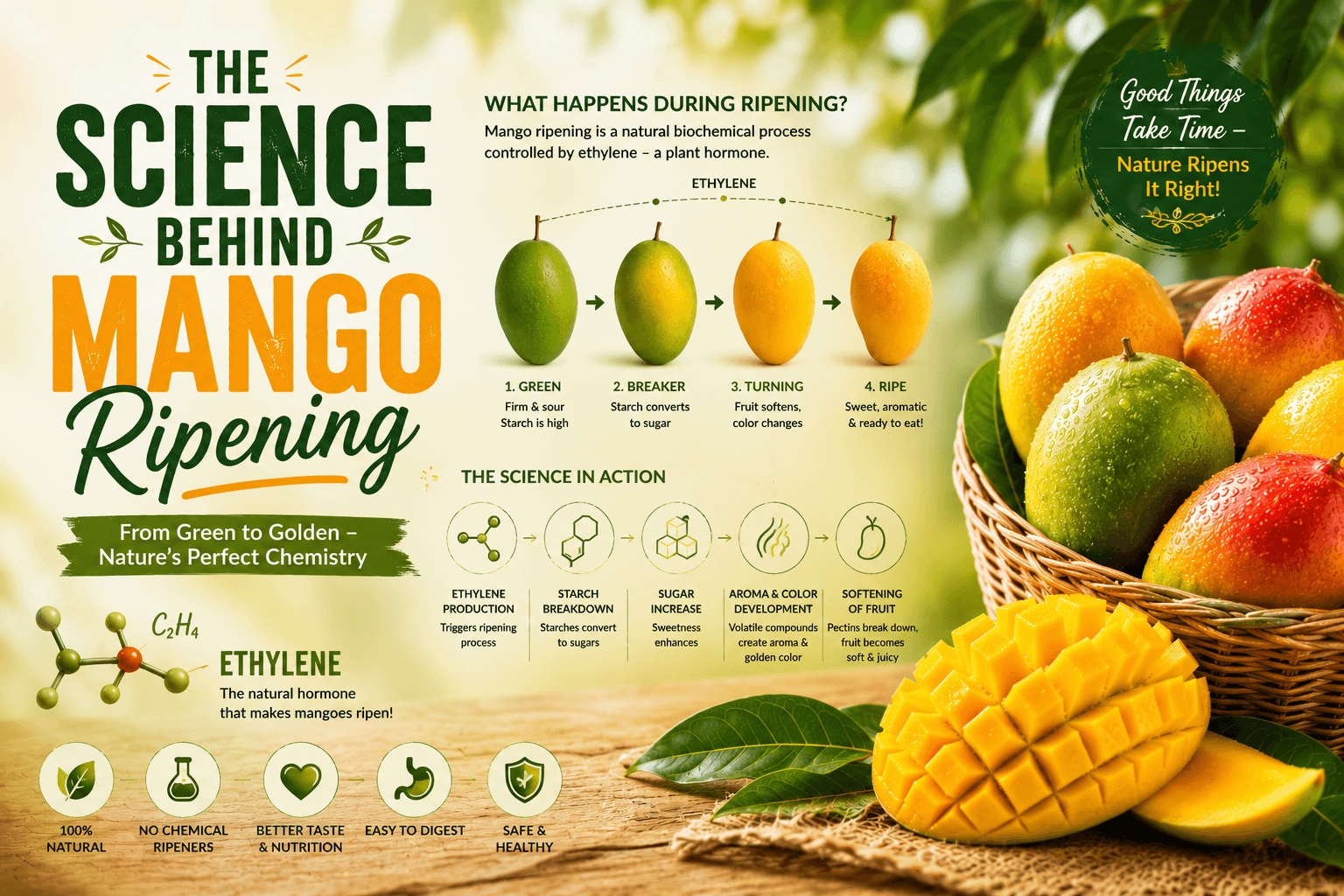
Have you ever wondered why a hard, green mango gradually turns soft, fragrant, and incredibly sweet after a few days? This remarkable transformation isn’t magic—it’s science. Mango ripening is a natural biological process involving plant hormones, enzymes, and complex chemical changes that enhance the fruit’s flavor, texture, aroma, and color.
Understanding how mangoes ripen can help you choose better fruit, store it properly, and appreciate the care that goes into producing premium-quality mangoes. It also explains why naturally ripened mangoes are preferred by consumers who value authentic taste and freshness.
In this article, we’ll explore the fascinating science behind mango ripening, what happens inside the fruit during this process, and why natural ripening produces the best eating experience.
What Is Mango Ripening?
Ripening is the final stage of fruit development after harvesting.
During this stage, the mango undergoes several natural changes:
- It becomes softer.
- The flesh turns juicier.
- Natural sweetness increases.
- Aroma develops.
- Skin color changes in many varieties.
- Acidity gradually decreases.
These changes make the fruit more enjoyable to eat while enhancing its nutritional appeal.
Mangoes Continue to Ripen After Harvest
One of the most interesting characteristics of mangoes is that they are climacteric fruits.
This means they continue to ripen even after being picked from the tree, provided they have reached the proper stage of maturity before harvest.
This ability allows farmers to:
- Harvest fruit at the ideal maturity stage.
- Reduce damage during transportation.
- Improve shelf life.
- Deliver mangoes that ripen naturally after harvest.
The Role of Ethylene
The key driver behind mango ripening is a naturally occurring plant hormone called ethylene.
Ethylene acts as a signal that tells the fruit to begin the ripening process.
As ethylene production increases, it triggers a series of natural changes inside the mango, including:
- Starch conversion.
- Sugar development.
- Cell wall softening.
- Aroma formation.
- Pigment changes.
This entire process is carefully regulated by the fruit itself.
How Starch Turns Into Natural Sugars
One of the biggest transformations during ripening is the conversion of stored starch into simple natural sugars.
Special enzymes gradually break down starch, increasing sweetness and improving the fruit’s flavor.
As a result, ripe mangoes taste:
- Sweeter
- Richer
- More flavorful
- Less starchy
This is one of the reasons why unripe mangoes have a tart taste, while ripe mangoes are naturally sweet.
Why Mangoes Become Softer
Texture changes occur because natural enzymes slowly break down components of the fruit’s cell walls.
This process makes the flesh:
- Softer
- Creamier
- Juicier
- Easier to bite
The degree of softness depends on the mango variety and the stage of ripeness.
The Development of Mango Aroma
The wonderful fragrance of ripe mangoes develops during ripening.
Natural compounds known as volatile aromatic compounds increase as the fruit matures, creating the distinctive tropical aroma associated with different mango varieties.
Each variety develops its own unique fragrance profile.
For example:
- Himsagar is known for its rich aroma.
- Alphonso has a distinctive fruity fragrance.
- Kesar develops a sweet saffron-like aroma.
Why the Color Changes
Many people associate ripeness with color, but not all mango varieties change in the same way.
During ripening:
- Green pigments (chlorophyll) gradually break down.
- Yellow, orange, or red pigments become more visible.
- Beta-carotene levels become more noticeable in the flesh.
However, some varieties, such as Langra, remain mostly green even when fully ripe.
This is why color alone should never be used to judge ripeness.
Does Ripening Change Nutrition?
The overall nutritional value of mangoes remains impressive throughout ripening.
Ripe mangoes naturally provide:
- Vitamin C
- Vitamin A (from beta-carotene)
- Vitamin E
- Potassium
- Folate
- Dietary fiber
- Natural antioxidants
While small nutrient levels may shift slightly as ripening progresses, ripe mangoes remain an excellent addition to a balanced diet.
Factors That Affect Mango Ripening
Several environmental conditions influence how quickly mangoes ripen.
These include:
Temperature
Warm temperatures generally speed up natural ripening, while cooler temperatures slow it down.
Air Circulation
Good airflow helps create consistent ripening conditions.
Fruit Maturity
Only mangoes harvested at the correct stage of maturity will ripen properly.
Variety
Different varieties naturally ripen at different speeds.
Why Naturally Ripened Mangoes Are Preferred
Naturally ripened mangoes are appreciated because they gradually develop:
- Better flavor.
- Rich aroma.
- Smooth texture.
- Balanced sweetness.
- Excellent eating quality.
This slow, natural process allows the fruit to reach its full potential before consumption.
How to Tell If a Mango Is Ripe
Instead of relying only on color, look for several signs together.
A ripe mango often has:
- A pleasant fruity aroma near the stem.
- Slight softness when gently pressed.
- Smooth skin.
- Full, rounded appearance.
- Appropriate color for its variety.
These indicators are generally more reliable than color alone.
Tips for Ripening Mangoes at Home
To encourage natural ripening:
- Keep mangoes at room temperature.
- Avoid refrigeration until they are ripe.
- Store them in a dry, well-ventilated place.
- Check them daily for softness and aroma.
Once ripe, refrigeration can help slow further ripening and preserve freshness for a few more days.
Common Myths About Mango Ripening
Myth 1: Every Yellow Mango Is Ripe
Not always. Some mangoes turn yellow before reaching full ripeness, while others stay green even when perfectly ripe.
Myth 2: Soft Mangoes Are Always Overripe
Not necessarily. Slight softness usually indicates good ripeness. Extremely soft fruit with damaged skin may be overripe.
Myth 3: Bigger Mangoes Ripen Faster
Ripening speed depends more on variety, maturity, and storage conditions than on size.
Final Thoughts
Mango ripening is one of nature’s most fascinating processes. From the release of ethylene and the conversion of starch into natural sugars to the development of aroma, texture, and vibrant color, every stage contributes to the delicious fruit we enjoy each summer.
Understanding the science behind ripening helps consumers choose better mangoes, store them correctly, and appreciate the remarkable journey from orchard to table. Naturally ripened mangoes reward patience with exceptional sweetness, rich fragrance, and outstanding flavor, making every bite a true celebration of nature.
Experience Naturally Ripened Premium Malda Mangoes
Enjoy the authentic taste of premium Malda Mangoes sourced directly from trusted orchards in West Bengal. Our mangoes are handpicked at the ideal stage of maturity, naturally ripened, carefully graded, thoroughly quality-checked, and securely packed before being delivered fresh across India. Taste the difference that careful cultivation and natural ripening make in every bite.