

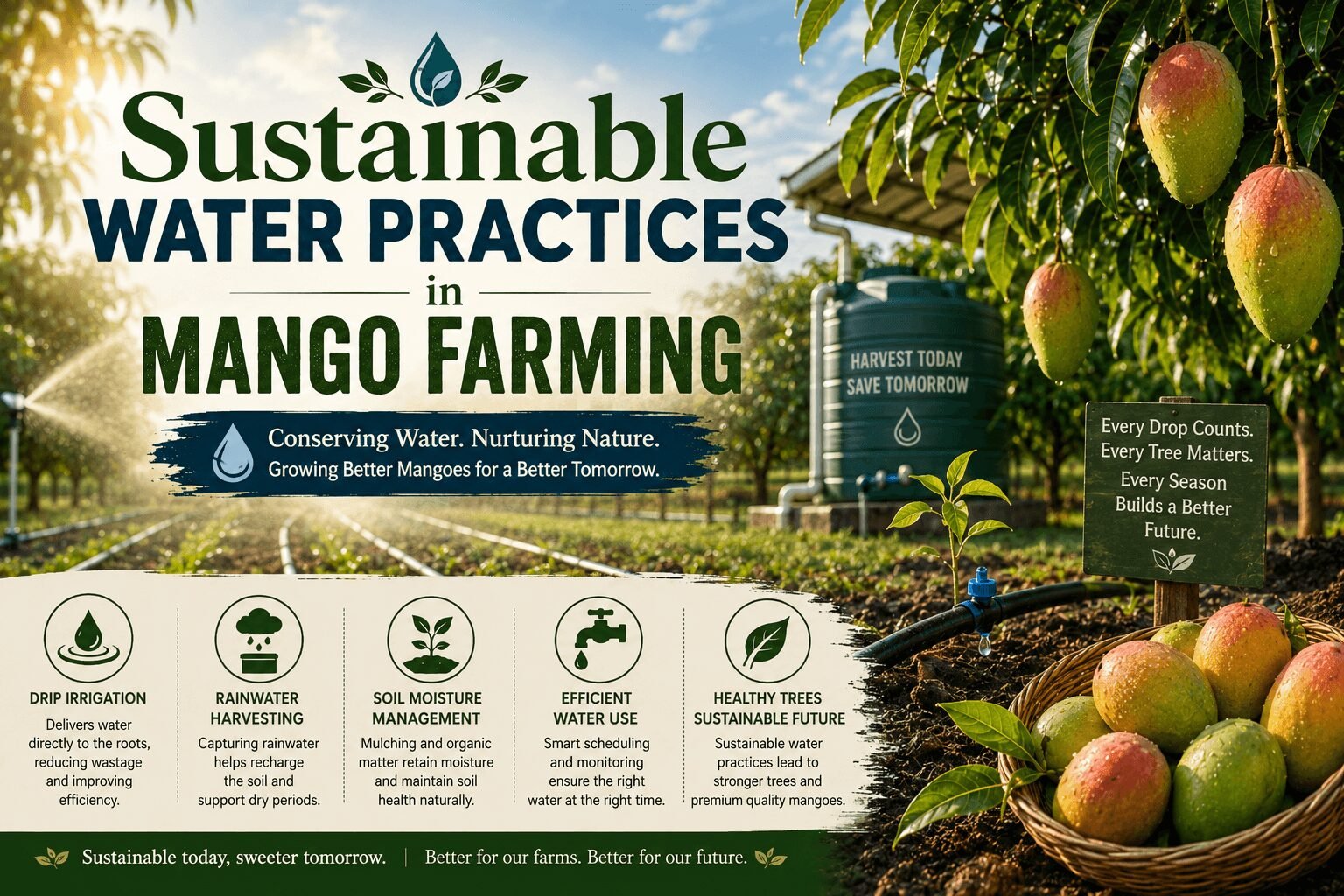
Water is one of the most valuable resources in agriculture, and its responsible use is essential for growing healthy, high-quality mangoes. While mango trees are known for their adaptability, they still require carefully managed irrigation and healthy soil moisture throughout different stages of their growth. Sustainable water practices help growers maintain productive orchards while using water efficiently and protecting natural resources for future generations.
Modern mango farming combines traditional knowledge with practical irrigation techniques that improve water efficiency without compromising fruit quality. By understanding the water needs of mango trees, monitoring seasonal weather, and adopting responsible orchard management practices, growers can support healthy tree growth while minimizing unnecessary water use.
In this article, we’ll explore sustainable water practices in mango farming and how they contribute to healthier orchards, premium fruit quality, and long-term agricultural sustainability.
Why Water Management Matters
Water plays an important role throughout the life cycle of a mango tree.
Proper water management helps:
- Support healthy root development.
- Encourage balanced tree growth.
- Maintain soil moisture.
- Improve fruit development.
- Reduce unnecessary water loss.
- Promote long-term orchard health.
Efficient irrigation benefits both the trees and the environment.
Understanding the Water Needs of Mango Trees
Mango trees require different amounts of water at different stages of growth.
These stages include:
- Young tree establishment.
- Vegetative growth.
- Flowering.
- Fruit development.
- Post-harvest recovery.
Carefully adjusting irrigation according to the season helps maintain healthy orchards.
Drip Irrigation – A Smart Solution
Drip irrigation has become one of the most effective water management methods in modern mango farming.
Its advantages include:
- Delivering water directly to the root zone.
- Reducing evaporation losses.
- Improving irrigation efficiency.
- Supporting consistent soil moisture.
- Minimizing water wastage.
Many growers use drip systems to provide precise irrigation while conserving water.
Rainwater Conservation
Rainwater is an important natural resource for orchards.
Growers may support water conservation through practices such as:
- Rainwater harvesting.
- Farm ponds.
- Water storage systems.
- Surface runoff management.
- Natural groundwater recharge.
Capturing seasonal rainfall helps improve water availability during drier periods.
Maintaining Healthy Soil
Healthy soil plays a major role in water conservation.
Good soil management helps:
- Retain moisture.
- Improve water infiltration.
- Reduce runoff.
- Support strong root systems.
- Encourage beneficial soil organisms.
Fertile soils help trees make better use of available water.
Mulching for Moisture Conservation
Many orchards use mulch around mango trees.
Mulching can help:
- Reduce surface evaporation.
- Moderate soil temperature.
- Suppress weed growth.
- Improve moisture retention.
- Add organic matter over time.
This simple practice supports healthier soil conditions throughout the year.
Monitoring Weather and Irrigation
Efficient irrigation depends on understanding changing weather conditions.
Growers often monitor:
- Rainfall.
- Temperature.
- Humidity.
- Soil moisture.
- Seasonal forecasts.
These observations help determine when irrigation is needed and when natural rainfall is sufficient.
Efficient Irrigation Scheduling
Instead of watering on fixed dates, many growers adjust irrigation schedules based on orchard conditions.
Factors considered include:
- Tree age.
- Soil type.
- Weather.
- Growth stage.
- Recent rainfall.
Thoughtful scheduling improves water efficiency while supporting healthy tree growth.
Preventing Water Stress
Both too little and too much water can affect mango trees.
Balanced irrigation helps:
- Maintain healthy foliage.
- Support fruit development.
- Encourage strong roots.
- Reduce unnecessary stress on trees.
Proper water management contributes to consistent fruit quality.
Sustainable Orchard Planning
Responsible water use is part of a broader approach to sustainable orchard management.
Many growers also focus on:
- Soil conservation.
- Efficient resource use.
- Biodiversity support.
- Responsible pruning.
- Long-term orchard health.
Together, these practices create resilient and productive orchards.
Technology Supporting Water Conservation
Modern technology helps growers make informed irrigation decisions.
Useful tools include:
- Soil moisture sensors.
- Weather stations.
- Irrigation controllers.
- Mobile monitoring applications.
- Farm management software.
These technologies help optimize water use while maintaining healthy orchards.
How Malda Growers Use Water Responsibly
The mango orchards of Malda in West Bengal produce premium varieties including:
- Himsagar.
- Fazli.
- Lakshmanbhog.
- Gopalbhog.
- Khirsapati.
Growers in the region understand the importance of efficient water management. By combining fertile alluvial soils, careful irrigation scheduling, soil conservation, seasonal observation, and generations of orchard expertise, they help maintain healthy trees and produce mangoes known for their naturally sweet flavor, rich aroma, smooth, fibre-light pulp, and premium quality.
Benefits of Sustainable Water Practices
Responsible water management supports:
- Healthy orchard growth.
- Better soil conditions.
- Efficient resource use.
- Long-term productivity.
- Premium fruit quality.
- Environmental sustainability.
These practices benefit both growers and future generations.
Interesting Facts About Water in Mango Farming
Here are a few fascinating facts:
- Drip irrigation delivers water directly to the root zone of mango trees, improving efficiency.
- Healthy soils naturally retain moisture for longer periods.
- Mulching helps reduce evaporation and supports soil health.
- Rainwater harvesting can supplement irrigation during dry seasons.
- Efficient irrigation contributes to healthier trees and consistent fruit production.
Final Thoughts
Sustainable water practices are essential for the future of mango farming. By using water wisely, maintaining healthy soils, conserving rainfall, and adopting efficient irrigation methods, growers can produce premium-quality mangoes while protecting valuable natural resources.
The success of every mango orchard depends on balancing the needs of the trees with responsible environmental stewardship. Through a combination of traditional farming knowledge and modern water management techniques, experienced growers continue to produce delicious mangoes while supporting sustainable agriculture for years to come.
Experience Premium Malda Mangoes
Experience the authentic taste of premium Malda Mangoes sourced directly from trusted orchards in West Bengal. Our Himsagar, Fazli, Lakshmanbhog, Gopalbhog, and Khirsapati mangoes are handpicked at peak maturity, naturally ripened, carefully graded, thoroughly quality-checked, and securely packed before being delivered fresh across India. By combining sustainable water practices, responsible orchard management, and generations of farming expertise, our farm-direct mangoes deliver exceptional freshness, naturally sweet flavor, rich aroma, and premium quality in every harvest.