

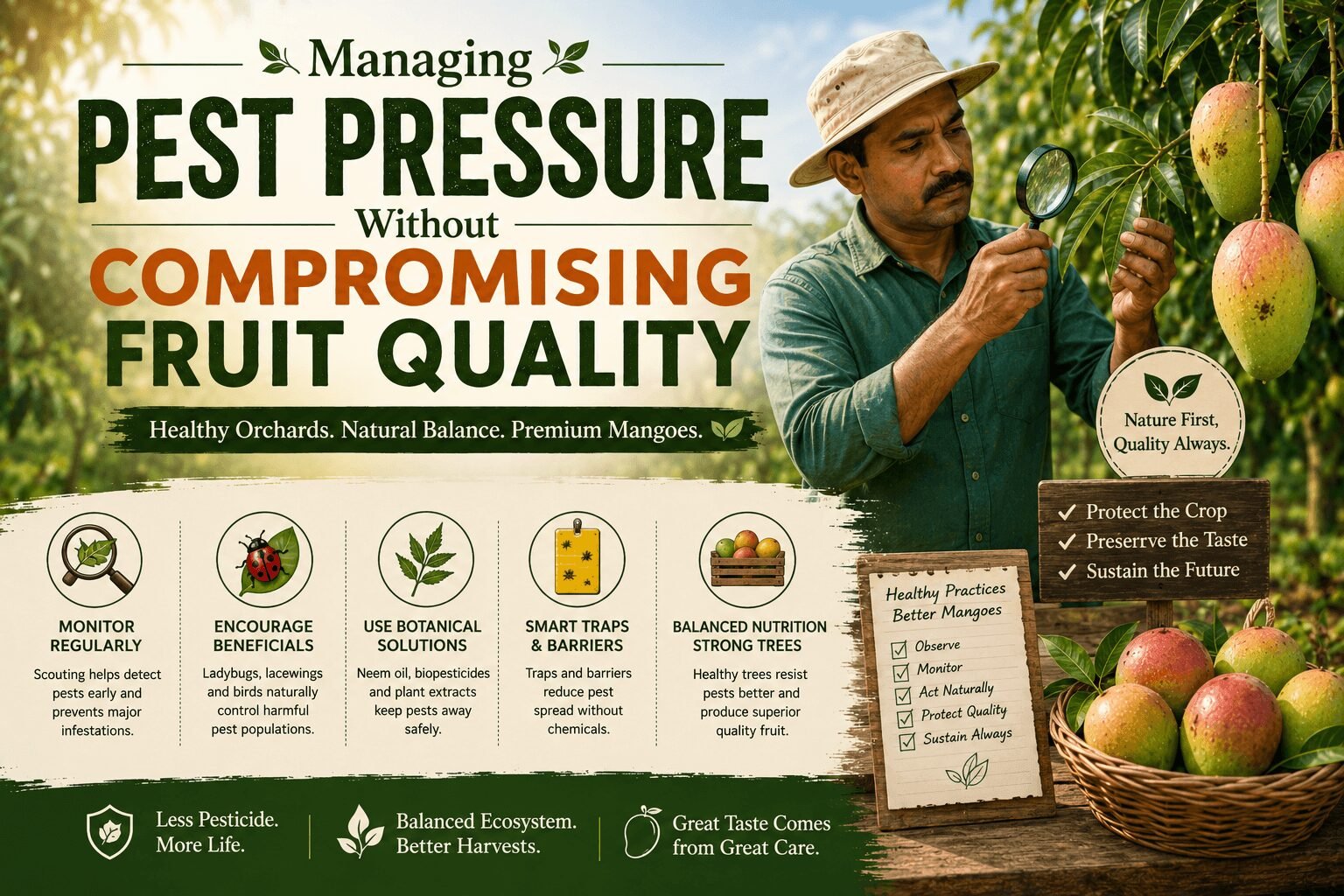
Growing premium-quality mangoes requires continuous care throughout the year, and one of the most important responsibilities for growers is managing pest pressure while maintaining healthy orchards and high-quality fruit. Mango trees, like many fruit crops, naturally interact with insects and other organisms throughout their life cycle. The key to successful orchard management is not simply reacting to problems but preventing them through careful observation, timely action, and sustainable farming practices.
Experienced mango growers understand that protecting fruit quality starts long before harvest. Healthy orchards, balanced ecosystems, proper irrigation, regular pruning, and continuous monitoring all contribute to reducing pest pressure while supporting strong tree growth. Rather than relying on a single solution, successful orchard management combines multiple preventive practices that help produce clean, flavorful, and premium-quality mangoes.
In this guide, we’ll explore how growers manage pest pressure responsibly without compromising the taste, freshness, or quality of the mangoes consumers enjoy.
Understanding Pest Pressure in Mango Orchards
Pest pressure refers to the level of insect activity or other organisms that may affect orchard health during the growing season.
Its impact can vary depending on:
- Weather conditions.
- Orchard hygiene.
- Tree health.
- Seasonal changes.
- Local environment.
Because these factors change every year, growers regularly monitor orchard conditions throughout the season.
Prevention Is Better Than Cure
Experienced growers focus on preventing problems before they become serious.
Preventive orchard practices include:
- Regular orchard inspections.
- Maintaining healthy trees.
- Removing damaged plant material.
- Proper pruning.
- Balanced irrigation.
- Good soil management.
Healthy orchards are generally more resilient to seasonal challenges.
Regular Orchard Monitoring
Frequent observation allows growers to detect changes early.
Routine monitoring includes checking:
- Leaves.
- Flowers.
- Developing fruit.
- Branches.
- Tree canopy.
- Overall orchard condition.
Early identification allows growers to respond promptly while protecting fruit quality.
Maintaining Orchard Hygiene
Clean orchards create healthier growing environments.
Good orchard hygiene involves:
- Removing fallen fruit.
- Clearing damaged branches.
- Managing weeds.
- Cleaning plant debris.
- Keeping pathways clear.
These simple practices support overall orchard health throughout the year.
Healthy Trees Are Naturally Stronger
Well-maintained trees are better prepared to cope with environmental stress.
Growers support tree health through:
- Efficient irrigation.
- Healthy soil management.
- Seasonal pruning.
- Balanced nutrition.
- Post-harvest care.
Strong trees contribute to better fruit development and consistent quality.
Supporting Beneficial Insects
Not every insect in a mango orchard is harmful.
Many beneficial insects help maintain a balanced orchard ecosystem by supporting natural pollination and ecological balance.
Growers often encourage biodiversity by maintaining healthy orchard environments that attract:
- Bees.
- Butterflies.
- Other beneficial insects.
A balanced ecosystem contributes to healthier orchards over time.
Proper Air Circulation Through Pruning
Pruning is important for more than tree shape.
It also helps:
- Improve airflow.
- Increase sunlight penetration.
- Maintain a healthy canopy.
- Encourage vigorous new growth.
- Make orchard monitoring easier.
Well-managed trees create conditions that support healthy fruit development.
Balanced Water Management
Efficient irrigation helps reduce unnecessary stress on mango trees.
Growers carefully manage:
- Irrigation schedules.
- Soil moisture.
- Rainfall observations.
- Drainage conditions.
Balanced water management supports healthier orchards and better-quality fruit.
Healthy Soil Supports Healthy Trees
Productive orchards begin with healthy soil.
Good soil management includes:
- Maintaining organic matter.
- Improving soil structure.
- Conserving moisture.
- Supporting beneficial microorganisms.
- Preventing erosion.
Healthy roots help trees grow stronger and produce premium-quality mangoes.
Careful Harvesting Protects Fruit Quality
Even healthy fruit requires proper handling during harvest.
Growers use:
- Gentle harvesting techniques.
- Picking poles.
- Collection bags.
- Protective crates.
- Careful transportation.
These practices reduce bruising and help preserve freshness.
Post-Harvest Orchard Care
Orchard management continues after the harvest season ends.
Growers focus on:
- Cleaning the orchard.
- Seasonal pruning.
- Soil improvement.
- Tree recovery.
- Preparing for the next flowering cycle.
Healthy recovery supports long-term orchard productivity.
Modern Technology Supports Better Orchard Management
Many growers combine traditional farming knowledge with modern technology.
Useful tools include:
- Weather stations.
- Soil moisture sensors.
- Orchard records.
- Farm management software.
- Irrigation monitoring systems.
These tools help growers make informed decisions throughout the growing season.
Why Malda Growers Produce Premium Mangoes
The mango orchards of Malda in West Bengal are renowned for producing premium varieties including:
- Himsagar.
- Fazli.
- Lakshmanbhog.
- Gopalbhog.
- Khirsapati.
Growers in the region combine generations of orchard expertise with responsible management practices, including regular monitoring, healthy soil management, efficient irrigation, careful pruning, and thoughtful post-harvest care. These efforts help produce mangoes known for their naturally sweet flavor, rich aroma, smooth, fibre-light pulp, and outstanding quality.
Sustainable Orchard Management
Many successful orchards follow sustainable practices that support long-term productivity.
These include:
- Efficient resource use.
- Water conservation.
- Soil health improvement.
- Biodiversity support.
- Continuous orchard monitoring.
- Responsible post-harvest care.
Sustainable farming benefits both growers and future generations.
Appreciating the Work Behind Every Mango
Consumers often see only the final fruit, but every premium mango represents months of careful observation and dedicated orchard management.
By focusing on prevention, maintaining healthy orchards, and continuously monitoring tree health, growers help ensure that every harvest delivers fruit with excellent flavor, freshness, and quality.
Interesting Facts About Pest Management in Mango Farming
Here are a few interesting facts:
- Healthy orchards are generally more resilient to seasonal challenges.
- Regular orchard inspections help growers identify changes before they become larger issues.
- Good pruning improves airflow and supports healthier tree growth.
- Maintaining biodiversity contributes to a balanced orchard ecosystem.
- Post-harvest orchard care is just as important as activities during the growing season.
Final Thoughts
Managing pest pressure without compromising fruit quality requires knowledge, patience, and year-round dedication. Rather than relying on a single solution, experienced mango growers use preventive orchard management practices that support healthy trees, balanced ecosystems, and premium fruit production.
From maintaining orchard hygiene and supporting beneficial insects to careful irrigation, pruning, and continuous monitoring, every step contributes to producing fresh, flavorful mangoes that consumers can enjoy with confidence. Behind every delicious mango is the commitment of growers who work throughout the year to protect both their orchards and the quality of every harvest.
Experience Premium Malda Mangoes
Experience the authentic taste of premium Malda Mangoes sourced directly from trusted orchards in West Bengal. Our Himsagar, Fazli, Lakshmanbhog, Gopalbhog, and Khirsapati mangoes are handpicked at peak maturity, naturally ripened, carefully graded, thoroughly quality-checked, and securely packed before being delivered fresh across India. Through responsible orchard management, sustainable farming practices, and generations of expertise, our farm-direct mangoes deliver naturally sweet flavor, rich aroma, exceptional freshness, and premium quality in every box.