

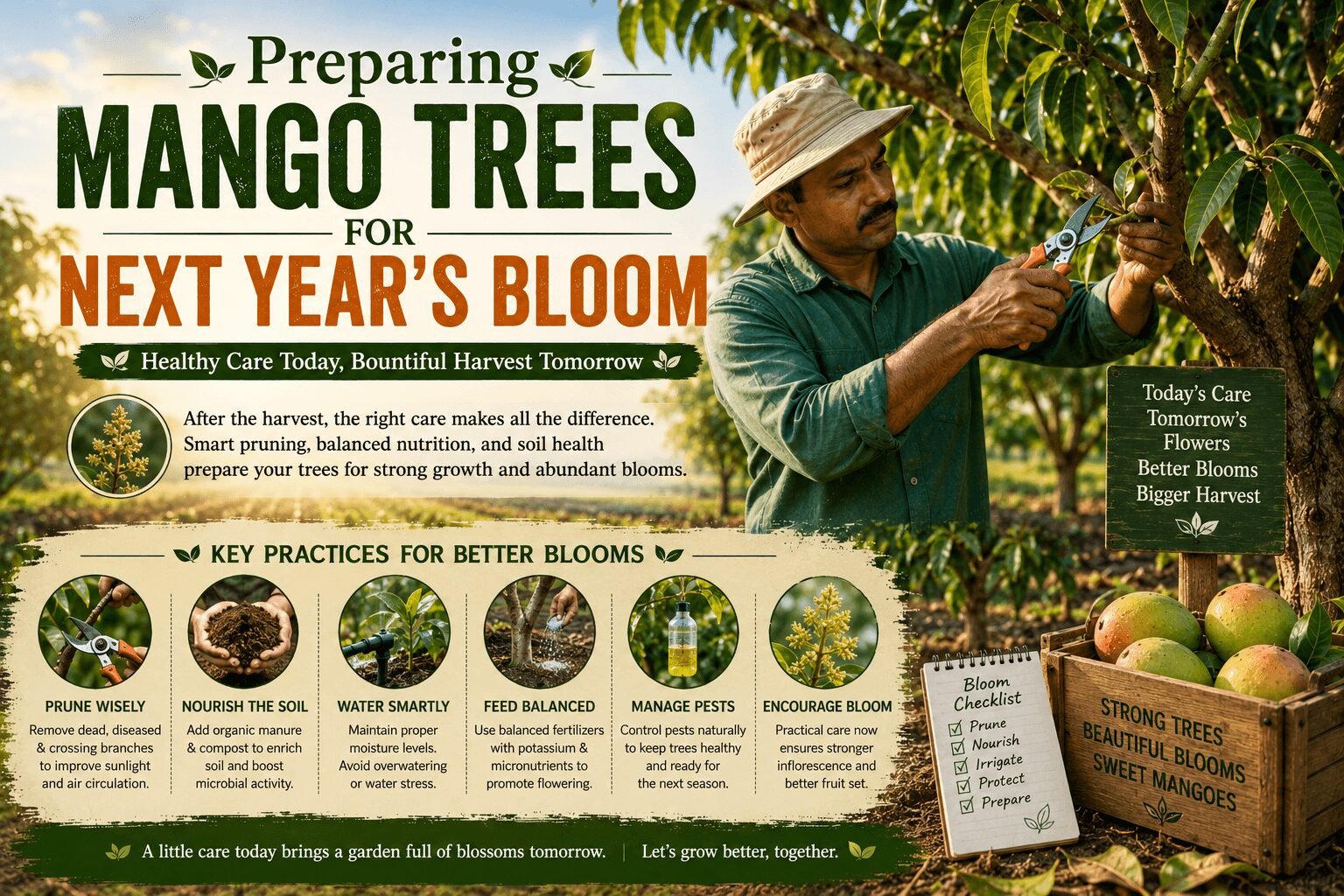
A successful mango harvest doesn’t begin when flowers appear—it begins months earlier with careful planning and year-round orchard management. Once the current harvest is complete, experienced growers immediately start preparing mango trees for the next flowering season. Every step taken after harvest influences the health of the trees, the strength of future blooms, and the quality of the next crop.
Preparing mango trees for their next bloom is a gradual process that involves restoring tree health, maintaining fertile soil, managing irrigation, encouraging healthy vegetative growth, and carefully monitoring orchard conditions. Healthy trees are more likely to produce strong flowering, better fruit set, and premium-quality mangoes in the following season.
In this article, we’ll explore how growers prepare mango trees for next year’s bloom and why consistent orchard care throughout the year is essential for producing exceptional mangoes.
Why the Post-Harvest Period Is So Important
Once mangoes have been harvested, the trees begin recovering from months of fruit production.
This recovery period allows trees to:
- Restore energy reserves.
- Develop healthy new shoots.
- Strengthen their root systems.
- Build a healthy canopy.
- Prepare for future flowering.
Proper post-harvest care lays the foundation for the next growing season.
Restoring Tree Health
Healthy trees are more likely to produce vigorous flowering.
Growers focus on:
- Monitoring overall tree condition.
- Encouraging balanced growth.
- Supporting healthy leaf development.
- Maintaining strong branches.
- Observing seasonal changes.
Strong, healthy trees are better prepared for the next bloom.
Pruning After Harvest
Pruning is one of the most important orchard management practices.
Careful pruning helps:
- Remove damaged branches.
- Improve air circulation.
- Increase sunlight penetration.
- Encourage healthy new shoots.
- Maintain tree structure.
New vegetative growth produced after pruning often plays an important role in the next flowering cycle.
Healthy Soil for Healthy Trees
Healthy soil supports every stage of mango tree development.
Growers maintain soil health by:
- Adding organic matter.
- Conserving soil moisture.
- Improving soil structure.
- Supporting beneficial microorganisms.
- Preventing erosion.
Healthy soil encourages stronger root development and long-term orchard productivity.
Efficient Irrigation Management
Water requirements change throughout the year.
Growers carefully adjust irrigation according to:
- Tree growth stage.
- Weather conditions.
- Soil moisture.
- Seasonal rainfall.
Efficient irrigation helps maintain healthy trees without wasting valuable water resources.
Encouraging New Vegetative Growth
Following harvest, mango trees naturally begin producing new leaves and shoots.
Healthy vegetative growth helps:
- Restore tree energy.
- Build stronger branches.
- Improve canopy development.
- Support future flowering.
Well-developed shoots provide the foundation for the next productive season.
Supporting Natural Pollinators
Healthy orchards encourage biodiversity.
Growers often maintain conditions that attract:
- Bees.
- Butterflies.
- Other beneficial insects.
Strong pollinator populations support successful flowering when the next bloom arrives.
Monitoring Orchard Conditions
Experienced growers continuously observe their orchards throughout the year.
Important observations include:
- Tree health.
- Leaf development.
- Soil moisture.
- Weather patterns.
- Irrigation needs.
Regular monitoring helps growers make informed decisions as conditions change.
Learning from the Previous Harvest
Every mango season provides valuable experience.
Growers review:
- Harvest timing.
- Fruit quality.
- Weather conditions.
- Orchard performance.
- Tree growth.
These observations help improve orchard management in future seasons.
Sustainable Orchard Management
Preparing trees for the next bloom also involves long-term sustainability.
Responsible orchard practices include:
- Efficient irrigation.
- Soil conservation.
- Balanced resource management.
- Biodiversity support.
- Responsible pruning.
- Continuous orchard care.
Healthy orchards remain productive for many years through consistent management.
The Role of Orchard Records
Many growers maintain detailed orchard records.
These records help track:
- Flowering history.
- Irrigation schedules.
- Weather conditions.
- Tree performance.
- Harvest observations.
Accurate records improve planning for future flowering seasons.
Why Malda Growers Produce Exceptional Mangoes
The mango orchards of Malda in West Bengal are famous for premium varieties including:
- Himsagar.
- Fazli.
- Lakshmanbhog.
- Gopalbhog.
- Khirsapati.
Growers in the region understand that exceptional mangoes begin with healthy trees. Through post-harvest recovery, seasonal pruning, careful irrigation, healthy soil management, and continuous orchard observation, they prepare their trees for strong flowering each year. Combined with fertile alluvial soils and generations of orchard expertise, these practices help produce mangoes celebrated for their naturally sweet flavor, rich aroma, smooth, fibre-light pulp, and premium quality.
Preparing for Seasonal Changes
As the seasons change, growers continue adapting orchard management practices.
They remain attentive to:
- Temperature variations.
- Rainfall patterns.
- Tree growth.
- Soil conditions.
- Future flowering opportunities.
This flexibility helps orchards remain healthy under changing environmental conditions.
Interesting Facts About Mango Flowering
Here are a few fascinating facts:
- Healthy vegetative growth after harvest contributes to future flowering.
- Pruning improves tree structure and encourages strong new shoots.
- Soil health and irrigation play important roles throughout the year.
- Every flowering season is influenced by the previous year’s orchard care.
- Experienced growers prepare for flowering months before blooms appear.
Final Thoughts
Preparing mango trees for next year’s bloom is a year-round commitment that begins as soon as the current harvest ends. Through thoughtful pruning, soil care, irrigation management, orchard monitoring, and sustainable farming practices, growers help trees recover and prepare for another productive season.
Every beautiful mango blossom represents months of dedicated work behind the scenes. The care invested in orchards long before flowering begins is one of the key reasons premium mangoes continue to delight consumers with their exceptional flavor, aroma, and quality year after year.
Experience Premium Malda Mangoes
Experience the authentic taste of premium Malda Mangoes sourced directly from trusted orchards in West Bengal. Our Himsagar, Fazli, Lakshmanbhog, Gopalbhog, and Khirsapati mangoes are handpicked at peak maturity, naturally ripened, carefully graded, thoroughly quality-checked, and securely packed before being delivered fresh across India. Through careful post-harvest recovery, sustainable orchard management, and generations of farming expertise, our farm-direct mangoes deliver exceptional freshness, naturally sweet flavor, rich aroma, and premium quality in every harvest.