

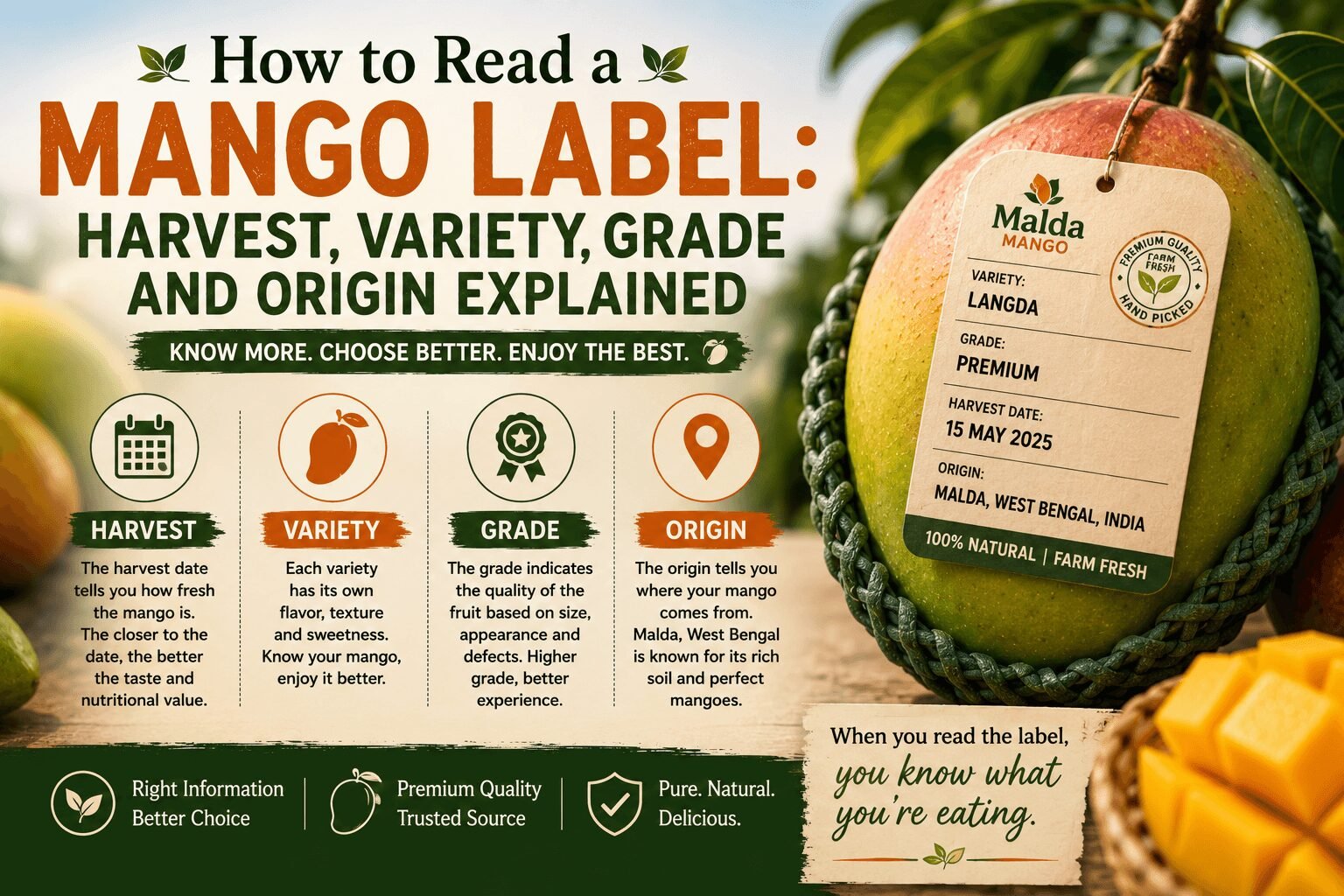
Buying mangoes can sometimes feel like a guessing game. You may see different varieties, sizes, grades, harvest information, and origin details on mango boxes or labels, but what do these details actually mean?
A mango label provides useful information about where the fruit came from, what variety it is, how it was graded, and sometimes when it was harvested or packed. Understanding these details can help shoppers make more informed choices and select mangoes according to their preferred taste, texture, size, and intended use.
Whether you’re buying mangoes from a local market, supermarket, or ordering them online, knowing how to read the label can make the experience easier.
Let’s break down the most important information you may find on a mango label.
Why Mango Labels Matter
A label is more than just a sticker on a mango box. It can provide useful information about the product and its journey from orchard to consumer.
Depending on the seller and packaging requirements, a mango label may include:
- Mango variety.
- Country or region of origin.
- Harvest or packing date.
- Grade.
- Net weight.
- Number of fruits.
- Producer or packer details.
- Batch or lot number.
- Storage information.
- Traceability information.
Not every label will contain all of these details, but understanding the common terms can help you shop with greater confidence.
1. Mango Variety
One of the first details to check is the variety.
Different mango varieties have different characteristics, including flavor, aroma, color, fibre content, pulp texture, and size.
Some popular Indian mango varieties include:
- Himsagar.
- Alphonso.
- Kesar.
- Langra.
- Dasheri.
- Chausa.
- Fazli.
- Lakshmanbhog.
- Gopalbhog.
- Banganapalli.
For example, Himsagar is particularly known for its rich flavor, smooth pulp, and relatively low fibre content, while Fazli is recognized for its large fruit size and substantial amount of pulp.
Knowing the variety helps you understand what kind of eating experience to expect.
2. Harvest Date
Some mango labels provide a harvest date or harvest period.
This indicates when the mangoes were picked from the orchard.
The harvest date can be useful because mangoes naturally change in texture, aroma, and sweetness as they ripen.
However, the harvest date should not be confused with the date when the mango reaches peak eating quality. Depending on the variety and handling process, a mango may continue ripening after harvest.
3. Packing Date
A label may also include a packing date.
This tells you when the mangoes were packed for distribution rather than when they were harvested.
The difference is important because mangoes may be harvested, sorted, graded, and packed at different times.
When buying packaged mangoes, checking both available dates can give you a better understanding of their journey.
4. Understanding Mango Grade
The word grade can be confusing because grading systems may differ between growers, packers, markets, and regions.
Generally, grading is used to classify fruit based on characteristics such as:
- Size.
- Weight.
- Appearance.
- Maturity.
- Physical condition.
- Uniformity.
A higher grade does not necessarily mean a mango will taste better than every mango in a lower grade. Taste is influenced by variety, maturity, growing conditions, and handling.
The grade primarily helps establish consistency in the commercial quality of the fruit.
5. Mango Size and Weight
Labels may mention the average weight or size category of mangoes.
For example, a box might contain a specific number of mangoes within a particular weight range.
Size can be useful when purchasing mangoes for different purposes.
Large mangoes:
Often suitable for gifting, family consumption, or serving as individual portions.
Medium mangoes:
Convenient for everyday eating and household use.
Smaller mangoes:
Can work well for snacks, desserts, smoothies, and recipes.
Remember that fruit size does not automatically determine sweetness or flavor.
6. Origin of the Mangoes
The origin tells you where the mangoes were grown.
The label might mention:
- Country.
- State.
- District.
- Growing region.
- Orchard or producer.
Origin can be especially useful for Indian mangoes because different regions are associated with different varieties and growing conditions.
For example, Malda in West Bengal is widely known for varieties such as Himsagar, Fazli, Lakshmanbhog, and Gopalbhog.
7. Why Origin Can Influence Mango Flavor
Growing conditions can influence the characteristics of mangoes.
Factors such as:
- Soil.
- Temperature.
- Rainfall.
- Humidity.
- Sunlight.
- Orchard management.
can contribute to differences in fruit characteristics.
This is one reason mangoes of the same variety grown in different regions may not taste exactly the same.
8. Producer or Grower Information
Some labels identify the grower, farm, producer, or packing company.
This information can provide greater transparency about where the mangoes came from.
When purchasing premium or farm-direct mangoes, producer information can also make it easier to understand the supply chain.
9. Batch or Lot Number
You may see a batch number or lot number on packaged mangoes.
This is primarily a traceability identifier.
It allows suppliers and businesses to connect a particular batch of fruit with its handling and distribution records.
For consumers, it can be useful if they need to contact the seller about a particular box or shipment.
10. Net Weight
The net weight tells you how much mango is included in the package, excluding the packaging itself.
This is particularly useful when comparing different boxes.
For example, two boxes may contain different numbers of mangoes but have similar total weights.
Checking net weight can help you understand what you’re actually purchasing.
11. Number of Mangoes in the Box
Some mango boxes specify the approximate or exact number of fruits included.
This information can help families plan their purchase.
For example:
- A smaller box may be suitable for an individual or couple.
- A medium box may work well for a family.
- A larger box may be useful for gifting or larger households.
The number of mangoes should always be considered together with their average size and total weight.
12. Ripening Information
Some mango labels may provide information about ripening.
Mangoes are climacteric fruits, meaning they can continue to ripen after harvest.
As they ripen, changes can occur in:
- Firmness.
- Aroma.
- Color.
- Texture.
- Sweetness.
A label may provide storage or ripening instructions to help consumers enjoy the fruit at the right stage.
13. Storage Instructions
Storage information can help you protect mango quality after purchase.
Depending on their ripeness, mangoes may be kept at room temperature until they reach the desired stage. Once ripe, refrigeration can generally slow further ripening.
Always follow the storage instructions provided by the seller or packer, particularly for packaged fruit.
14. Understanding Origin vs. Seller Location
One important distinction is the difference between where mangoes were grown and where they were sold or packed.
For example, a company may sell mangoes in Delhi while the mangoes were grown in West Bengal.
The seller’s location does not necessarily indicate the fruit’s agricultural origin.
If you specifically want mangoes from a particular region, look for the origin or growing-region information on the label.
15. How Labels Help When Buying Indian Mangoes
India produces an enormous range of mango varieties, and labels can make it easier to distinguish between them.
If you’re looking for a specific variety, check:
Variety → Origin → Grade → Weight → Harvest/Packing Information
This simple checklist can help you compare different options before making a purchase.
What to Check Before Buying Mangoes
Before purchasing packaged mangoes, take a moment to check:
Variety
Does the label clearly identify the mango variety?
Origin
Do you know where the mangoes were grown?
Grade
What quality or size classification has been provided?
Weight
How much fruit is included?
Harvest or Packing Date
Is relevant date information available?
Ripening Information
Are there instructions for ripening and storage?
Seller or Producer
Is the supplier information clearly provided?
These details can help you make a more informed purchase.
Why Malda Mango Labels Matter
Malda, West Bengal, is famous for its mango-growing heritage and diverse varieties.
Premium varieties associated with the region include:
- Himsagar.
- Fazli.
- Lakshmanbhog.
- Gopalbhog.
- Khirsapati.
When buying Malda mangoes, checking the origin and variety on the label can help you distinguish authentic regional produce from generic mangoes simply marketed as “Indian mangoes.”
A clear label provides greater transparency and helps consumers understand what they are buying.
Labels Are Helpful, But They Don’t Tell the Whole Story
A mango label can provide important information, but it cannot describe every characteristic of the fruit.
Taste can vary because of:
- Growing conditions.
- Weather.
- Tree age.
- Harvest maturity.
- Storage.
- Ripening conditions.
- Natural variation between individual fruits.
Two mangoes from the same box can therefore have slightly different flavors or textures.
Final Thoughts
Understanding a mango label doesn’t have to be complicated. By looking at the variety, origin, grade, weight, harvest or packing information, and storage instructions, you can better understand the mangoes you’re buying.
Labels also provide valuable transparency by connecting consumers with information about the fruit’s journey from orchard to table.
Whether you’re looking for a fragrant Himsagar from Malda, a large Fazli, or another popular Indian variety, learning how to read the label can help you choose mangoes that match your preferences and expectations.
Experience Premium Malda Mangoes
Experience the authentic taste of premium Malda Mangoes sourced directly from trusted orchards in West Bengal. Our Himsagar, Fazli, Lakshmanbhog, Gopalbhog, and Khirsapati mangoes are handpicked at peak maturity, naturally ripened, carefully graded, thoroughly quality-checked, and securely packed before being delivered fresh across India. Clear variety and origin information helps you understand exactly what you’re buying, while our careful handling ensures exceptional freshness, rich aroma, naturally sweet flavor, and premium quality in every box.