

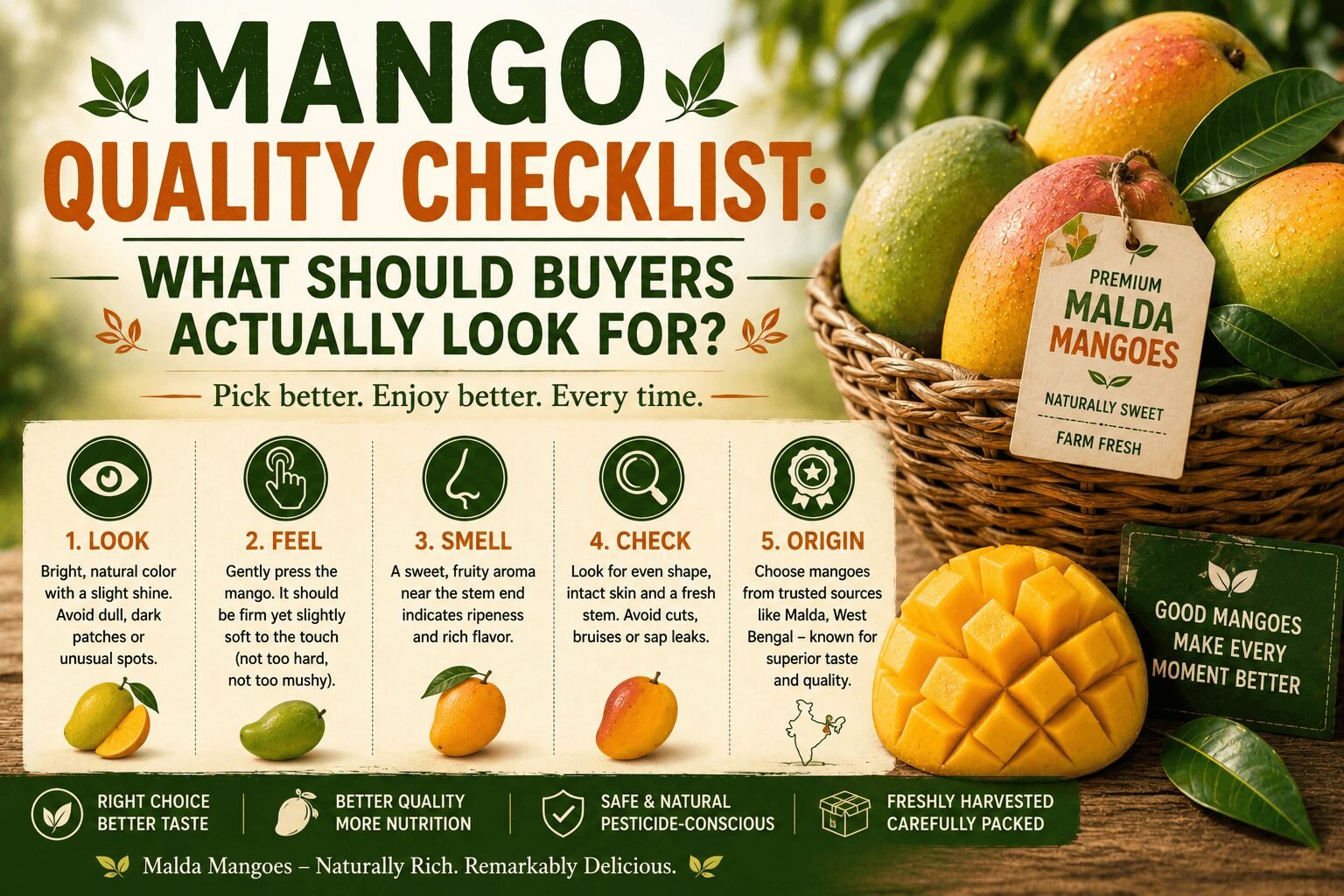
Buying mangoes can be exciting, but choosing the best ones is not always easy. A mango may look attractive on the outside yet still be underripe, overripe, fibrous, or lacking in flavor. Whether you’re buying mangoes from a local market, supermarket, fruit seller, or ordering them online, knowing what to look for can help you make a better choice.
Mango quality depends on several factors, including variety, maturity, growing conditions, harvesting, handling, storage, and ripening. There is no single feature that can tell you whether a mango is perfect. Instead, buyers should consider several signs together.
This mango quality checklist explains the key things to look for before buying fresh mangoes.
Why Mango Quality Matters
Good-quality mangoes should offer a pleasant combination of:
- Fresh aroma.
- Appropriate firmness.
- Good pulp texture.
- Natural sweetness.
- Proper maturity.
- Healthy appearance.
- Minimal physical damage.
The ideal characteristics can vary depending on the mango variety and how you plan to use it.
1. Check the Mango Variety
The first thing buyers should consider is the variety.
Different mango varieties naturally have different:
- Flavors.
- Aromas.
- Sizes.
- Shapes.
- Fibre levels.
- Pulp textures.
- Ripening characteristics.
Popular Indian varieties include Alphonso, Himsagar, Kesar, Dasheri, Langra, Chausa, Fazli, Lakshmanbhog, and Gopalbhog.
If you prefer smooth, fibre-light pulp, choose varieties known for those characteristics rather than judging every mango using the same standard.
2. Look at the Overall Appearance
A good mango should generally have a healthy appearance appropriate to its variety.
Check for:
- Major cuts.
- Deep bruises.
- Excessive black spots.
- Shriveling.
- Signs of decay.
- Unusual leakage.
Minor marks or natural variations in skin color do not necessarily mean that a mango is poor quality.
3. Don’t Judge Ripeness by Color Alone
One common mistake is assuming that a mango must turn bright yellow or orange when ripe.
Mango skin color varies significantly between varieties.
Some mangoes may remain:
- Green.
- Yellow-green.
- Yellow.
- Orange.
- Red-blushed.
Therefore, color should be considered alongside firmness, aroma, and other maturity indicators.
4. Check the Aroma
A ripe mango often develops a noticeable fruity aroma.
Gently smell the mango near the stem.
A pleasant, sweet, fruity fragrance can indicate that the fruit is approaching or has reached eating maturity.
If there is little aroma, the mango may still need time to ripen.
An unpleasant fermented or sour smell may indicate overripening or deterioration.
5. Feel the Firmness
Firmness is another useful indicator.
A mango that is extremely hard may need additional time to ripen.
A ripe mango may have a slight amount of give when gently pressed.
However, it should not feel excessively soft, mushy, or watery.
The ideal firmness varies by variety, so use gentle pressure rather than squeezing the fruit forcefully.
6. Check the Skin for Damage
Before buying, inspect the skin carefully.
Avoid fruit with:
- Deep cuts.
- Large bruises.
- Broken skin.
- Mold.
- Significant leaking.
- Extensive darkened areas.
Small cosmetic marks may simply be natural imperfections and do not necessarily affect the edible pulp.
7. Consider the Mango’s Weight
A mango that feels relatively heavy for its size can indicate good flesh and moisture content, although weight alone cannot guarantee flavor.
Compare mangoes of similar size rather than comparing very small and very large fruits.
This can be a useful additional check when selecting individual mangoes.
8. Examine the Shape
Mango shape varies naturally between varieties.
Some are:
- Oval.
- Long and slender.
- Rounded.
- Elongated.
- Large and broad.
Therefore, an unusual shape isn’t automatically a sign of poor quality.
Instead, become familiar with the typical shape of the variety you’re buying.
9. Look for Proper Maturity
Maturity is one of the most important factors affecting mango quality.
Harvest maturity and eating ripeness are not always the same thing.
Many mangoes are harvested at a mature stage and then allowed to ripen before consumption.
A properly matured mango should develop its characteristic:
- Aroma.
- Texture.
- Flavor.
- Sweetness.
during the ripening process.
10. Check for Signs of Overripening
Mangoes can also become too ripe.
Signs may include:
- Extremely soft areas.
- Leaking juice.
- Fermented smell.
- Excessive skin wrinkling.
- Dark, damaged patches.
If you plan to eat the mango immediately, a fully ripe fruit may be ideal. For later consumption, slightly firmer fruit may be more appropriate.
11. Consider Where the Mango Came From
Origin can provide useful information.
The label may identify:
- Country.
- State.
- District.
- Growing region.
- Producer.
Different regions are associated with different varieties and growing conditions.
For example, Malda in West Bengal has a long history of mango cultivation and is known for several distinctive varieties.
12. Check the Harvest or Packing Information
When buying packaged mangoes, look for available harvest or packing information.
These details can help you understand how recently the fruit was harvested or prepared for distribution.
Remember that packing date and harvest date are not necessarily the same.
13. Check the Grade and Size
Commercial mangoes may be sorted according to:
- Weight.
- Size.
- Appearance.
- Maturity.
- Uniformity.
Grade can help buyers understand the commercial classification of the fruit.
However, a higher grade doesn’t automatically guarantee that every mango will taste better than a lower-grade fruit.
14. Consider the Source
Where you buy mangoes matters.
Look for sellers who provide clear information about:
- Variety.
- Origin.
- Harvesting.
- Ripening.
- Packaging.
- Storage.
Transparent information can make it easier to understand what you’re purchasing.
15. Think About How You Will Use the Mangoes
The “best” mango depends partly on how you plan to enjoy it.
For eating fresh
Choose varieties with excellent aroma, sweetness, and smooth pulp.
For smoothies
Soft, juicy varieties with plenty of pulp can work well.
For desserts
Choose flavorful mangoes with rich pulp and strong aroma.
For fruit salads
Firm but ripe mangoes can hold their shape better.
For gifting
Consider attractive, uniform fruit with reliable packaging and clear variety information.
Mango Quality Checklist at a Glance
Before buying mangoes, ask yourself:
| What to Check | What to Look For |
|---|---|
| Variety | Does it match your taste preference? |
| Appearance | Healthy skin with no major damage |
| Aroma | Pleasant fruity fragrance |
| Firmness | Appropriate firmness for its ripeness |
| Weight | Good weight for its size |
| Skin | No major cuts, mold, or leakage |
| Maturity | Mature and suitable for your intended use |
| Origin | Clear growing region or source |
| Grade | Suitable size and quality classification |
| Packaging | Clean, protective, and appropriate |
| Storage | Suitable conditions and instructions |
What About Naturally Ripened Mangoes?
If you prefer naturally ripened mangoes, ask the seller how the fruit is handled after harvest.
Properly managed mangoes can continue their natural ripening process after being harvested at an appropriate maturity stage.
Buyers should look for clear information about:
- Harvest maturity.
- Ripening practices.
- Storage.
- Handling.
- Delivery.
Transparency helps consumers make informed choices.
Why Malda Mangoes Are Worth Checking Closely
Malda, West Bengal, is one of India’s well-known mango-growing regions.
The region is associated with varieties such as:
- Himsagar.
- Fazli.
- Lakshmanbhog.
- Gopalbhog.
- Khirsapati.
Each variety has its own characteristics, so buyers should evaluate mangoes according to the variety rather than applying one universal standard.
Himsagar, for example, is appreciated for its rich flavor, smooth texture, and relatively low fibre content. Fazli is known for its large size and generous pulp.
Understanding the variety makes it easier to know what characteristics to expect.
Common Mango Buying Mistakes
Choosing only by color
Skin color differs between varieties and isn’t a reliable standalone indicator of ripeness.
Squeezing mangoes too hard
Excessive pressure can bruise the fruit and damage the pulp.
Assuming bigger means better
Large size doesn’t automatically mean better flavor.
Ignoring aroma
A mango’s fragrance can provide useful information about its ripening stage.
Buying without checking the source
Clear origin and handling information can help you make a more informed decision.
Final Thoughts
Choosing a high-quality mango doesn’t require expert knowledge. A simple checklist can help you evaluate the fruit more carefully.
Start with the variety and origin, then examine the appearance, aroma, firmness, weight, maturity, and overall condition. If you’re buying packaged mangoes, also check the grade, harvest or packing information, packaging, and storage instructions.
Most importantly, remember that every mango variety has its own natural characteristics. A green-skinned mango isn’t necessarily underripe, and a beautifully colored mango isn’t automatically the sweetest.
Understanding what you’re buying is the key to enjoying better mangoes.
Experience Premium Malda Mangoes
Experience the authentic taste of premium Malda Mangoes sourced directly from trusted orchards in West Bengal. Our Himsagar, Fazli, Lakshmanbhog, Gopalbhog, and Khirsapati mangoes are handpicked at peak maturity, naturally ripened, carefully graded, thoroughly quality-checked, and securely packed before being delivered fresh across India. With clear variety and origin information and careful handling from orchard to doorstep, we help you choose and enjoy mangoes with exceptional freshness, rich aroma, naturally sweet flavor, and premium quality.