

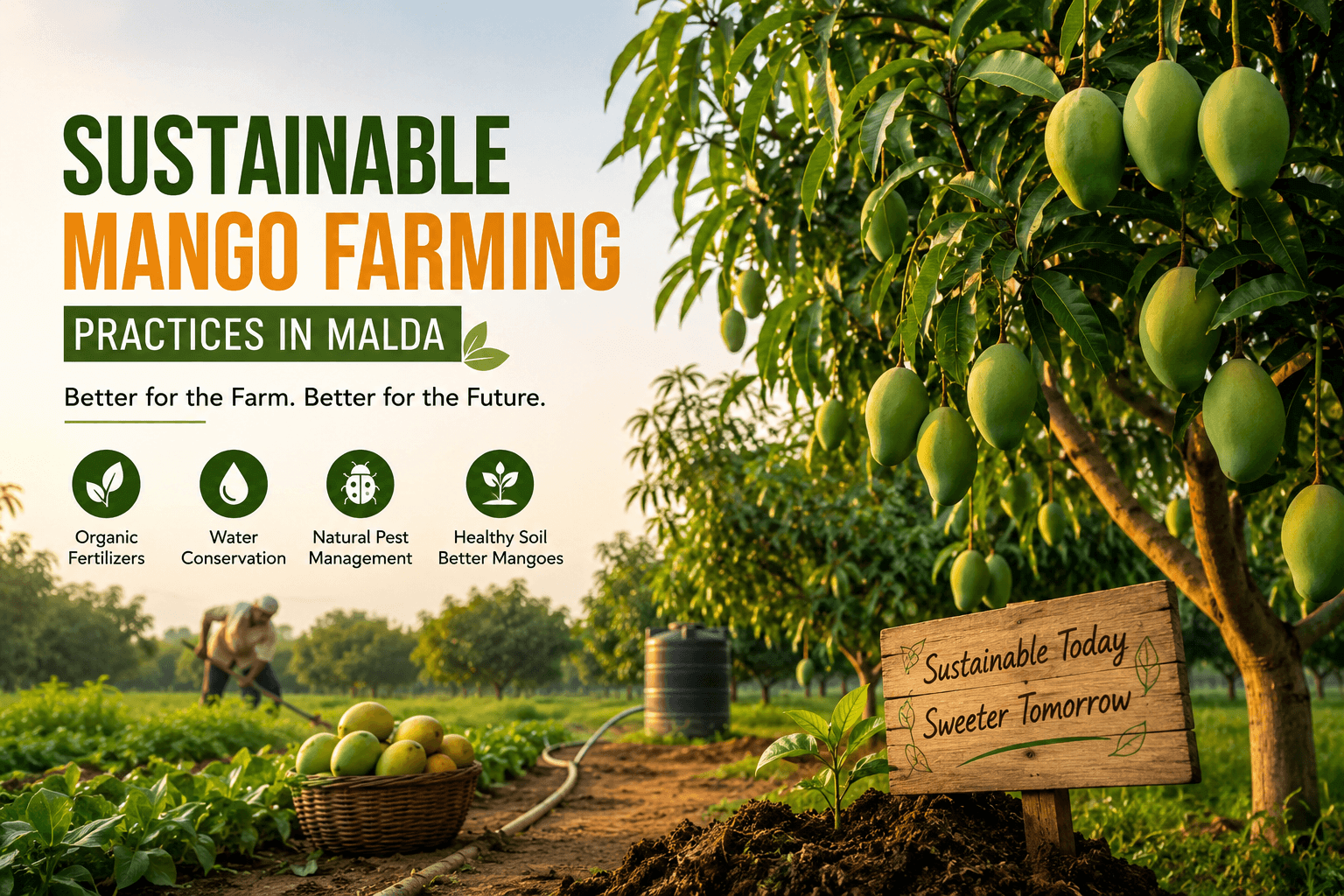
Sustainability has become an important part of modern agriculture, and mango farming is no exception. As consumer awareness grows and environmental conservation becomes increasingly important, farmers are adopting practices that help protect natural resources while maintaining high-quality fruit production. In Malda, one of India’s most famous mango-growing regions, many growers combine traditional farming wisdom with sustainable orchard management to ensure healthy harvests for generations to come.
Sustainable mango farming is not about changing everything overnight. Instead, it focuses on making thoughtful decisions that improve soil health, conserve water, protect biodiversity, and maintain productive orchards without compromising fruit quality. These practices help farmers produce premium Malda Mangoes while preserving the land that supports their livelihoods.
Let’s explore the sustainable farming methods that contribute to healthier orchards and a more environmentally responsible future.
What Is Sustainable Mango Farming?
Sustainable mango farming is an approach that balances agricultural productivity with environmental responsibility.
Its objectives include:
- Conserving natural resources
- Maintaining healthy orchards
- Protecting soil quality
- Using water efficiently
- Supporting biodiversity
- Ensuring long-term productivity
The goal is to grow high-quality mangoes while reducing unnecessary pressure on the environment.
Conserving Water Through Efficient Irrigation
Water conservation is one of the cornerstones of sustainable mango farming.
Instead of applying excessive amounts of water, farmers carefully manage irrigation based on:
- Soil moisture
- Weather conditions
- Tree age
- Growth stage
- Seasonal rainfall
Many orchards also adopt efficient irrigation methods, such as drip irrigation, which delivers water directly to the root zone while reducing wastage.
Protecting Soil Health
Healthy soil is essential for sustainable agriculture.
Farmers focus on preserving soil quality by:
- Preventing erosion
- Improving soil structure
- Maintaining organic matter
- Encouraging beneficial microorganisms
- Avoiding unnecessary soil degradation
Healthy soil supports strong root development and contributes to better fruit production year after year.
Mulching to Reduce Water Loss
Mulching is a simple yet highly effective sustainable farming practice.
By placing organic materials around the base of mango trees, farmers can:
- Retain soil moisture
- Reduce evaporation
- Suppress weed growth
- Moderate soil temperature
- Improve soil quality over time
Mulching also helps reduce irrigation requirements during hot summer months.
Responsible Orchard Management
Sustainable farming involves continuous care rather than reactive intervention.
Farmers regularly:
- Inspect tree health
- Monitor fruit development
- Prune damaged branches
- Maintain orchard cleanliness
- Remove unhealthy plant material
These routine practices help maintain productive orchards while reducing unnecessary losses.
Encouraging Biodiversity
Healthy orchards support a variety of beneficial organisms.
Maintaining biodiversity helps:
- Encourage natural pollinators
- Support ecological balance
- Improve flowering success
- Promote healthier growing conditions
Pollinating insects such as bees play a valuable role in successful fruit production.
Balanced Nutrient Management
Sustainable farming encourages responsible nutrient management instead of excessive input use.
Farmers work to:
- Maintain fertile soil
- Support healthy tree growth
- Encourage flowering
- Promote fruit development
- Preserve long-term orchard productivity
Balanced nutrition allows trees to remain productive without placing unnecessary stress on the environment.
Proper Tree Spacing
Well-planned orchards contribute to sustainability.
Adequate spacing between mango trees improves:
- Air circulation
- Sunlight penetration
- Tree growth
- Orchard maintenance
- Overall productivity
Healthy spacing also helps reduce competition for water and nutrients.
Careful Harvesting Practices
Sustainability continues through harvest.
Experienced workers handpick mangoes carefully to:
- Reduce fruit damage
- Maintain quality
- Minimize waste
- Protect tree branches
- Improve customer satisfaction
Gentle handling helps preserve the freshness of every mango.
Reducing Post-Harvest Losses
One important aspect of sustainable farming is minimizing waste after harvest.
Growers achieve this through:
- Careful grading
- Protective packaging
- Efficient transportation
- Timely dispatch
- Proper storage practices
Reducing losses benefits both farmers and consumers while making better use of available resources.
Combining Traditional Knowledge with Modern Innovation
Malda’s farming community has cultivated mangoes for generations.
Today, many growers combine this traditional expertise with modern improvements such as:
- Efficient irrigation systems
- Scientific orchard monitoring
- Better planning
- Improved logistics
- Responsible resource management
This balanced approach helps increase productivity while protecting natural resources.
Why Sustainability Benefits Consumers
Sustainable farming doesn’t just help the environment—it also benefits customers.
Healthy orchards often produce mangoes that are:
- Naturally sweet
- Juicy
- Aromatic
- Fresh
- Consistently high in quality
Consumers also gain confidence knowing their mangoes are grown with long-term environmental care in mind.
The Future of Mango Farming in Malda
As agriculture continues to evolve, sustainability will play an even greater role in orchard management.
Future improvements may include:
- More efficient irrigation
- Advanced soil monitoring
- Better water conservation
- Improved orchard planning
- Greater adoption of environmentally responsible farming methods
These developments will help ensure that Malda continues producing premium mangoes for future generations.
Final Thoughts
Sustainable mango farming is about protecting both today’s harvest and tomorrow’s orchards. By conserving water, maintaining healthy soil, encouraging biodiversity, reducing waste, and combining traditional knowledge with modern agricultural practices, Malda’s growers are building a more resilient and environmentally responsible mango industry.
Every premium Malda Mango represents not only exceptional taste but also the thoughtful care that goes into preserving the orchards for future generations. Supporting sustainably managed farms helps ensure that the rich legacy of Malda’s mango cultivation continues for years to come.
Enjoy Sustainably Grown Malda Mangoes
Experience the authentic taste of mangoes grown with care for both people and the environment. Our premium Malda Mangoes are sourced directly from trusted orchards where experienced farmers follow responsible farming practices, naturally ripen every fruit, handpick each mango at the ideal stage of maturity, and carefully quality-check every harvest before secure delivery across India.