

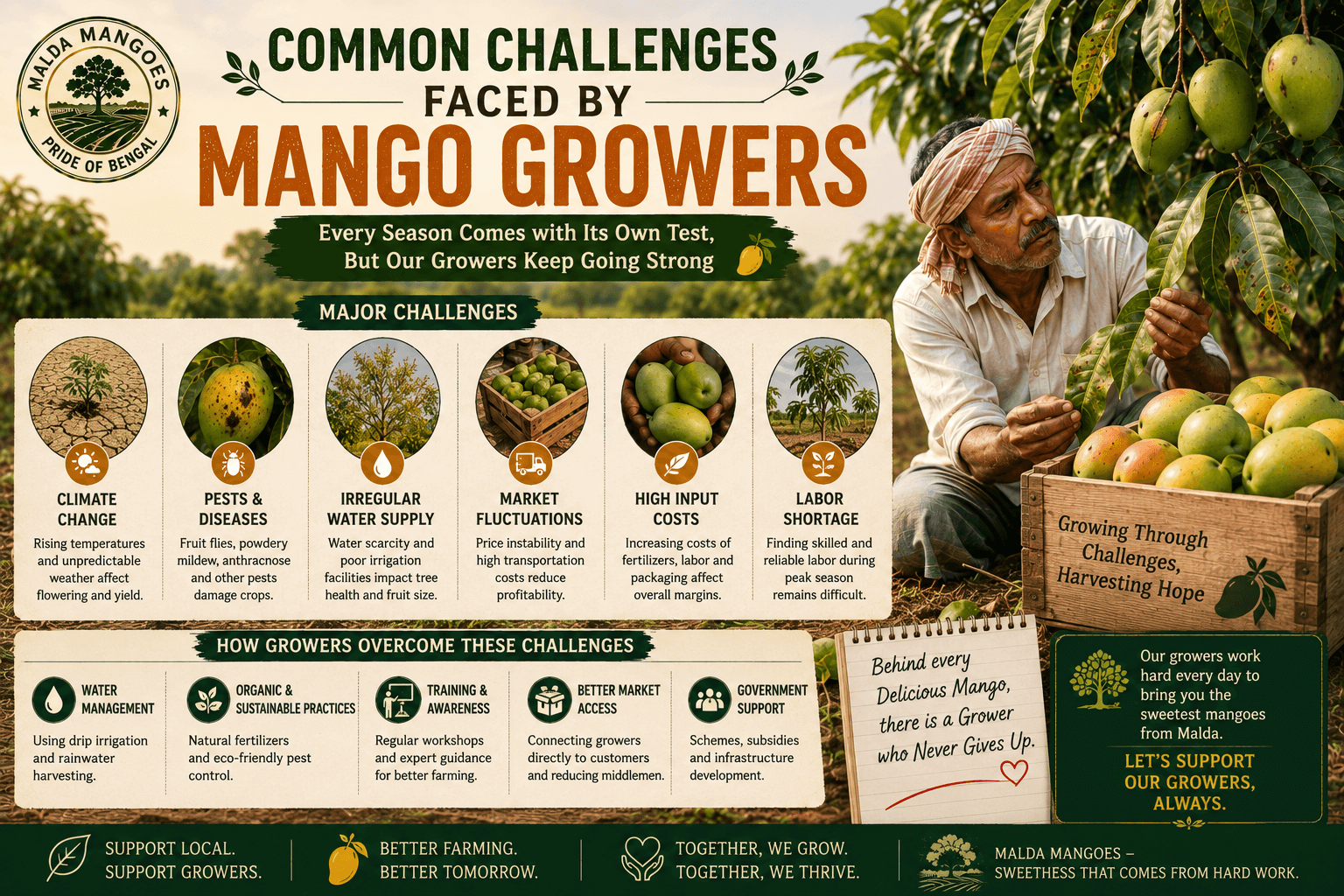
Growing premium-quality mangoes is both an art and a science. While the sight of lush orchards filled with ripe, golden mangoes may seem effortless, the journey from planting a sapling to harvesting mature fruit involves overcoming numerous challenges. Every season presents new obstacles that require careful planning, experience, and constant attention.
In regions like Malda, one of India’s most celebrated mango-producing districts, farmers rely on generations of knowledge along with modern agricultural practices to protect their orchards and maintain consistent fruit quality. From unpredictable weather to irrigation management and post-harvest handling, every stage of mango cultivation requires thoughtful decision-making.
Let’s explore the most common challenges faced by mango growers and how experienced farmers work to overcome them.
Unpredictable Weather Conditions
Weather is one of the biggest factors influencing mango production.
Mango trees depend on seasonal changes for healthy flowering, fruit development, and harvesting. However, unexpected weather events can affect these natural processes.
Some common weather-related challenges include:
- Unseasonal rainfall
- Heatwaves
- Strong winds
- Storms
- Temperature fluctuations
- Extended dry spells
Farmers closely monitor weather forecasts and adjust orchard management practices to reduce potential risks whenever possible.
Managing Water Availability
Water management is essential for maintaining healthy mango orchards.
Too little water may stress the trees, while excessive watering can affect root health and fruit quality.
Growers carefully monitor:
- Soil moisture
- Rainfall
- Irrigation schedules
- Tree age
- Growth stage
Efficient irrigation systems and careful planning help conserve water while supporting healthy tree growth.
Pest Management
Like many fruit crops, mango trees can attract insects that may affect leaves, flowers, or developing fruit.
Instead of relying solely on corrective measures, experienced farmers focus on preventive orchard management by:
- Conducting regular inspections
- Maintaining orchard cleanliness
- Monitoring tree health
- Removing affected plant material
- Following responsible pest management practices
Healthy orchards are generally more resilient against pest-related challenges.
Plant Diseases
Fungal and bacterial diseases can sometimes affect mango trees, particularly when environmental conditions become favorable for their development.
To reduce the risk of disease, growers focus on:
- Proper pruning
- Good air circulation
- Orchard hygiene
- Timely monitoring
- Balanced irrigation
Early identification allows farmers to respond before problems spread throughout the orchard.
Flower and Fruit Drop
Not every flower on a mango tree develops into a mature fruit.
Natural flower and fruit drop is a normal part of the mango life cycle, but excessive loss may occur due to environmental stress or unfavorable growing conditions.
Farmers work to minimize unnecessary fruit drop by maintaining healthy trees through proper irrigation, nutrition, and orchard care.
Soil Health Management
Healthy soil is the foundation of a productive mango orchard.
Over time, soil conditions may change due to weather, cultivation practices, or natural nutrient depletion.
Farmers regularly focus on:
- Maintaining soil fertility
- Improving soil structure
- Conserving moisture
- Preventing erosion
- Supporting beneficial microorganisms
Strong soil helps trees remain productive for many years.
Weed Control
Weeds compete with mango trees for water, nutrients, and sunlight.
Regular orchard maintenance helps:
- Reduce competition
- Improve tree growth
- Keep orchards clean
- Support efficient irrigation
- Simplify orchard management
Keeping weeds under control contributes to healthier trees and better fruit development.
Labour During Harvest Season
Harvesting mangoes requires skilled labour and careful timing.
Since mangoes are handpicked to prevent bruising, growers depend on experienced workers who understand:
- Proper harvesting techniques
- Fruit maturity
- Safe handling
- Sorting procedures
Finding sufficient labour during the busy harvest season can sometimes be challenging.
Protecting Fruit Quality During Transportation
Growing high-quality mangoes is only part of the journey.
After harvesting, farmers and suppliers must ensure the fruit reaches customers in excellent condition.
This involves:
- Careful grading
- Protective packaging
- Proper ventilation
- Timely dispatch
- Reliable transportation
Efficient post-harvest handling helps preserve freshness and reduce damage during transit.
Market Demand and Seasonal Supply
Mangoes are seasonal fruits, and demand often changes throughout the harvest period.
Growers must carefully plan:
- Harvest timing
- Storage
- Distribution
- Sales channels
- Customer demand
Many farmers now work with online sellers and direct-to-consumer brands to reach customers across India more efficiently.
Adapting to Modern Farming
While traditional farming knowledge remains invaluable, modern agriculture continues to evolve.
Today’s growers are adopting improvements such as:
- Drip irrigation
- Better orchard planning
- Scientific monitoring
- Improved packaging
- Digital marketing
- Online order fulfillment
Combining tradition with innovation helps farmers remain competitive while maintaining fruit quality.
The Importance of Experience
One of the greatest strengths of Malda’s mango industry is the experience of its farmers.
Generations of growers have developed practical knowledge about:
- Orchard planning
- Seasonal care
- Irrigation
- Pruning
- Harvest timing
- Fruit grading
This expertise enables them to respond effectively to changing conditions each season.
Why These Challenges Matter to Consumers
Every challenge faced by growers ultimately influences the quality of the mangoes customers enjoy.
Through careful orchard management and responsible farming practices, experienced growers continue to produce mangoes known for their:
- Sweet flavor
- Rich aroma
- Juicy texture
- Attractive appearance
- Freshness
- Premium quality
Their dedication ensures that consumers receive the best possible fruit despite the challenges of mango farming.
Final Thoughts
Mango farming is a year-round commitment that requires patience, expertise, and resilience. From managing unpredictable weather and irrigation to protecting orchards from pests, maintaining soil health, and ensuring safe transportation, farmers face many challenges before a single mango reaches the market.
The success of Malda’s mango industry is a testament to the dedication of its growers, who combine generations of agricultural knowledge with modern farming practices to consistently produce premium-quality fruit. Every fresh Malda Mango is a reflection of their hard work and unwavering commitment to excellence.
Enjoy Premium Malda Mangoes from Trusted Growers
Behind every box of our premium Malda Mangoes is the dedication of experienced farmers who carefully manage their orchards throughout the year. From nurturing healthy trees to overcoming seasonal challenges, every step is taken to ensure exceptional quality. Naturally ripened, handpicked, thoroughly quality-checked, and securely packed, our mangoes are delivered fresh across India so you can enjoy the authentic taste of Malda’s finest harvests.