

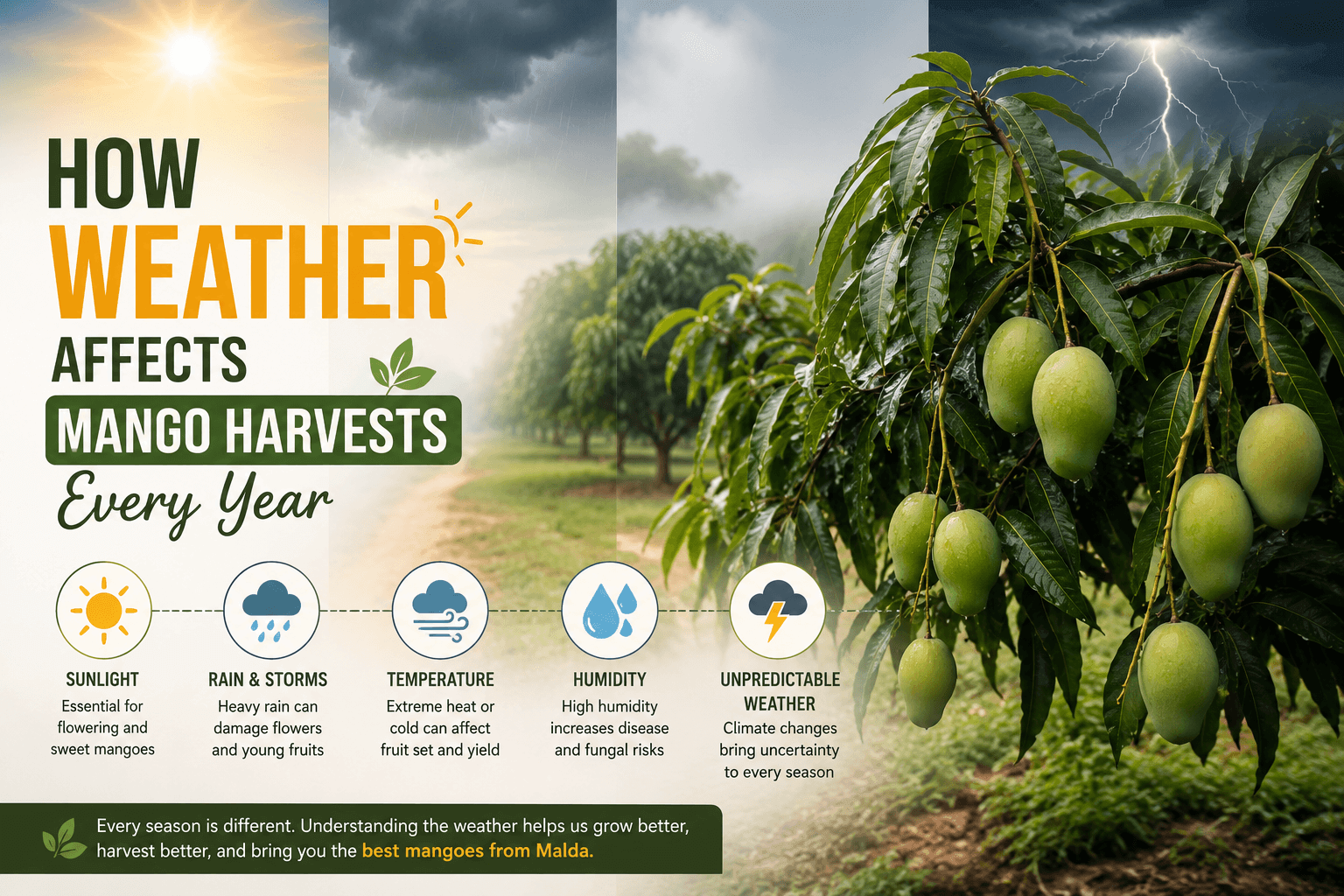
Weather is one of the most important factors in successful mango farming. While experienced farmers carefully manage irrigation, pruning, soil health, and orchard maintenance, they cannot control nature. Every year, changing weather conditions influence how mango trees flower, develop fruit, and ultimately produce a harvest.
In Malda, one of India’s most renowned mango-growing regions, farmers closely observe seasonal weather patterns throughout the year. The right balance of sunshine, rainfall, humidity, and temperature helps produce the sweet, juicy mangoes that the region is famous for. However, unexpected weather changes can impact both the quantity and quality of the harvest.
Understanding how weather affects mango production helps us appreciate the hard work behind every mango and the expertise required to grow premium fruit season after season.
Why Weather Is Crucial for Mango Farming
Mango trees go through several important growth stages each year, including:
- Vegetative growth
- Flowering
- Pollination
- Fruit setting
- Fruit development
- Harvesting
Each stage depends on suitable weather conditions. Even small changes in temperature or rainfall at the wrong time can influence the overall harvest.
The Role of Temperature
Temperature has a direct impact on the growth and productivity of mango trees.
Warm Conditions Support Healthy Growth
Mango trees thrive in warm tropical and subtropical climates. Adequate warmth encourages:
- Healthy leaf growth
- Strong branch development
- Proper flowering
- Good fruit formation
- Natural ripening
Malda’s warm summers provide ideal conditions for growing premium mangoes.
Extreme Heat Can Stress Trees
Although mango trees tolerate warm weather well, prolonged heatwaves can create stress.
Very high temperatures may lead to:
- Faster soil moisture loss
- Increased water requirements
- Heat stress in young trees
- Slower fruit development if water becomes limited
This is why farmers closely monitor irrigation during the hottest months.
Rainfall and Mango Production
Rainfall plays an important role throughout the growing season.
Timely Rainfall Benefits Orchards
Moderate rainfall helps:
- Replenish soil moisture
- Support healthy tree growth
- Improve nutrient availability
- Reduce dependence on irrigation
Balanced rainfall contributes to healthy orchards.
Excess Rain Can Create Challenges
Heavy or unseasonal rainfall may affect:
- Flower development
- Pollination
- Fruit setting
- Harvest activities
- Orchard accessibility
Excess moisture can also increase the need for careful orchard management.
Sunshine Helps Build Sweetness
Sunlight is essential for photosynthesis, the process through which mango trees produce the energy needed for growth.
Adequate sunshine helps:
- Develop healthy foliage
- Support flowering
- Improve fruit color
- Enhance natural sweetness
- Promote even fruit ripening
Long sunny days are one of the reasons Malda Mangoes are known for their rich flavor.
Humidity and Orchard Health
Humidity affects both tree growth and orchard management.
Balanced humidity supports healthy development, but prolonged periods of high humidity may require additional monitoring to maintain tree health and reduce the risk of certain plant diseases.
Experienced growers improve air circulation through pruning and regular orchard maintenance to keep trees healthy.
Wind and Storms
Strong winds are another weather-related challenge.
Storms may:
- Break branches
- Damage flowers
- Cause immature fruit to fall
- Affect tree structure
Farmers regularly inspect orchards after storms and remove damaged branches to protect the remaining trees.
Seasonal Changes Throughout the Year
Each season brings different weather conditions and different farming activities.
Winter
- Trees prepare for flowering.
- Farmers monitor orchard health.
- Pruning and maintenance are often completed.
Spring
- Flowering begins.
- Pollination takes place.
- Fruit setting starts.
Summer
- Mangoes grow and mature.
- Irrigation becomes especially important.
- Harvesting begins for many varieties.
Monsoon
- Late-season varieties may still be harvested.
- Farmers prepare orchards for the next growth cycle.
- Soil moisture is naturally replenished.
Understanding these seasonal patterns helps growers plan orchard activities more effectively.
How Farmers Adapt to Changing Weather
Although weather cannot be controlled, experienced farmers take many steps to reduce its impact.
These include:
- Monitoring weather forecasts
- Adjusting irrigation schedules
- Applying mulch to conserve moisture
- Pruning trees for better airflow
- Maintaining healthy soil
- Inspecting orchards regularly
- Harvesting fruit at the right stage
Careful planning helps protect both trees and fruit throughout the season.
Climate Variability and Modern Farming
In recent years, weather patterns have become less predictable in many agricultural regions.
To adapt, many growers are adopting modern practices such as:
- Efficient irrigation systems
- Soil moisture monitoring
- Sustainable orchard management
- Improved drainage
- Better harvest planning
These methods help farmers respond more effectively to changing environmental conditions.
Why Healthy Orchards Handle Weather Better
Well-maintained orchards are generally more resilient to seasonal challenges.
Healthy mango trees benefit from:
- Strong root systems
- Fertile soil
- Balanced irrigation
- Regular pruning
- Responsible orchard management
These practices help trees withstand periods of heat, rainfall, and changing weather more effectively.
Weather’s Impact on Mango Quality
The weather experienced throughout the growing season influences the final quality of the fruit.
Favorable conditions contribute to mangoes that are:
- Naturally sweet
- Juicy
- Aromatic
- Smooth in texture
- Attractive in appearance
- Rich in flavor
This is why every mango season is slightly different, making each harvest unique.
Final Thoughts
Weather plays a vital role in every stage of mango cultivation, from flowering to harvest. While farmers cannot control rainfall, temperature, or storms, they rely on years of experience and modern farming techniques to manage their orchards effectively.
The premium-quality Malda Mangoes enjoyed across India are the result of careful planning, continuous orchard care, and the dedication of growers who adapt to changing weather conditions every year. Their expertise ensures that nature’s challenges are met with thoughtful solutions, producing delicious mangoes season after season.
Taste the Best of Every Mango Season
Every mango harvest tells the story of nature and the dedication of skilled farmers. Our premium Malda Mangoes are sourced directly from trusted orchards where experienced growers carefully manage their trees through every season. Naturally ripened, handpicked at peak maturity, thoroughly quality-checked, and securely packed, our mangoes are delivered fresh across India so you can enjoy the authentic taste of Malda’s finest harvests.