

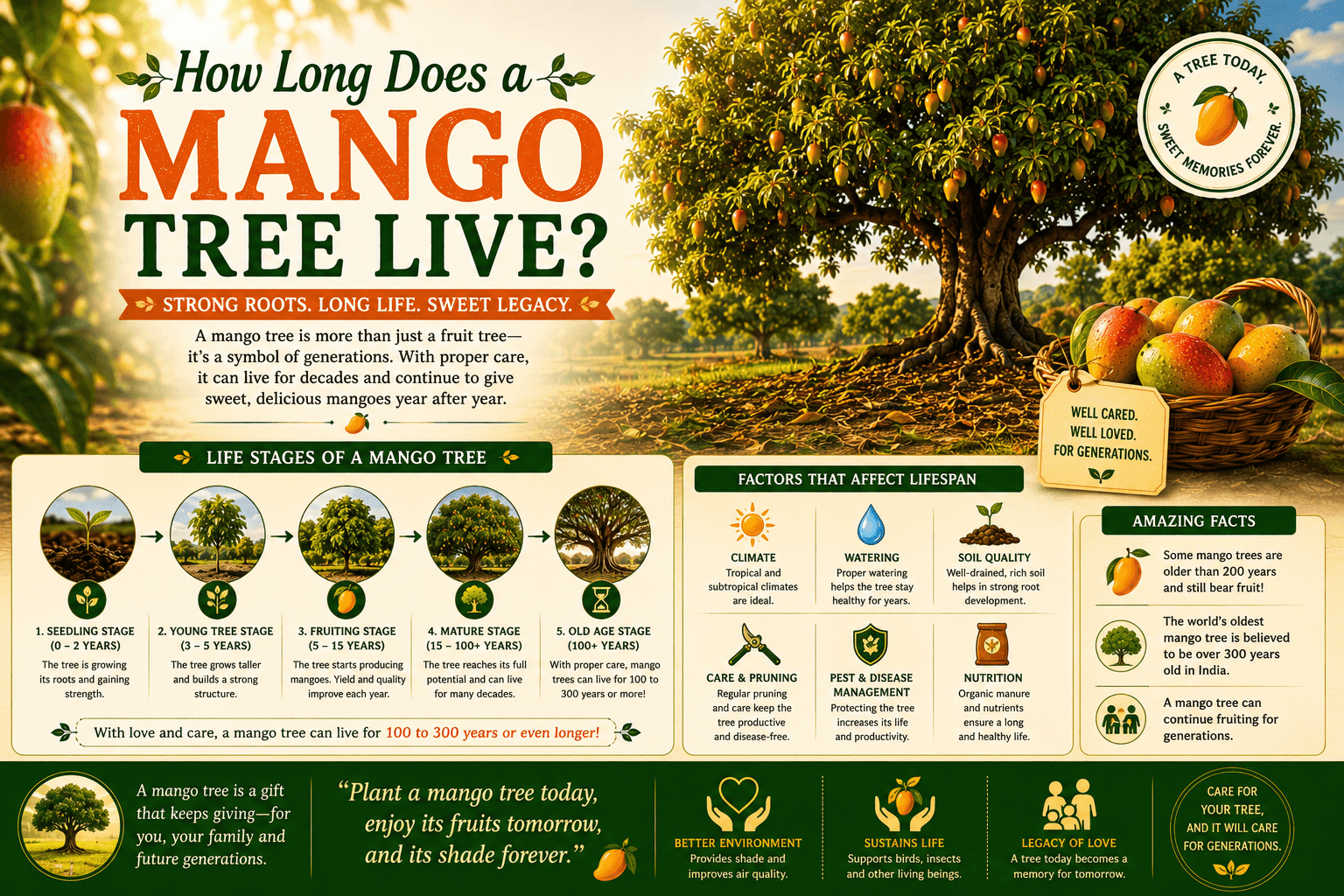
Mango trees are among the longest-living fruit trees in the world. Known for their lush evergreen foliage, fragrant blossoms, and delicious fruits, these remarkable trees can continue growing and producing mangoes for many decades with proper care. In fact, some mango trees are passed down through generations, becoming cherished landmarks in orchards and family gardens.
A mango tree’s lifespan depends on several factors, including the variety, climate, soil quality, orchard management, and overall growing conditions. Healthy trees that receive regular care can remain productive for many years while continuing to provide shade, beauty, and abundant harvests.
In this guide, we’ll explore how long mango trees live, what influences their longevity, how they change over time, and why proper orchard management is essential for maintaining healthy, productive trees.
The Average Lifespan of a Mango Tree
Mango trees are exceptionally long-lived compared to many other fruit trees.
Under favorable growing conditions:
- Many mango trees live for 50 to 100 years or more.
- Well-maintained orchard trees can remain productive for several decades.
- Some historic mango trees are believed to be well over 100 years old.
Their longevity makes mango trees valuable investments for both commercial growers and home gardeners.
The Life Cycle of a Mango Tree
Every mango tree goes through several stages of development.
1. Seedling Stage
The journey begins when a seed germinates or when a grafted sapling is planted.
During this stage, the young tree focuses on:
- Developing roots.
- Producing leaves.
- Building a strong trunk.
- Establishing healthy growth.
2. Juvenile Stage
As the tree grows, it forms a broader canopy and stronger branches.
This period is marked by:
- Rapid vegetative growth.
- Expanding root systems.
- Increased resistance to environmental stress.
3. Mature Fruiting Stage
Once mature, the tree begins flowering and producing fruit.
Healthy mature trees provide:
- Regular flowering.
- Seasonal mango harvests.
- Dense shade.
- Long-term productivity.
4. Senior Stage
Older mango trees may experience slower growth, but many continue producing fruit for years.
With proper care, senior trees often remain productive while contributing to orchard biodiversity and heritage.
What Determines a Mango Tree’s Lifespan?
Several factors influence how long a mango tree lives.
Climate
Warm tropical and subtropical climates provide ideal conditions for long-term growth.
Soil Quality
Fertile, well-drained soil supports:
- Healthy roots.
- Efficient nutrient uptake.
- Strong tree development.
Water Management
Proper irrigation helps maintain healthy growth while avoiding problems caused by excessive or insufficient moisture.
Sunlight
Full sunlight encourages:
- Photosynthesis.
- Flowering.
- Fruit production.
- Strong branch development.
Orchard Care
Routine maintenance significantly contributes to a tree’s longevity.
How Orchard Management Extends Tree Life
Experienced growers help trees remain healthy through practices such as:
- Regular pruning.
- Balanced nutrition.
- Irrigation management.
- Pest and disease monitoring.
- Mulching.
- Timely harvesting.
These practices reduce stress on the tree and promote long-term productivity.
Do Older Mango Trees Produce Better Fruit?
Older mango trees can continue producing excellent-quality fruit when they remain healthy.
Mature trees often benefit from:
- Extensive root systems.
- Large canopies.
- Stable growth patterns.
- Well-established nutrient absorption.
Fruit quality ultimately depends on overall tree health, growing conditions, and orchard management rather than age alone.
How Long Before a Mango Tree Produces Fruit?
The time to fruiting depends on how the tree was propagated.
Generally:
- Grafted trees begin bearing fruit earlier.
- Seed-grown trees usually require more years before producing mangoes.
Proper care and favorable growing conditions encourage healthy flowering and fruit development.
Can Mango Trees Live in Home Gardens?
Yes. Mango trees can thrive in home gardens where space and climate are suitable.
Home gardeners can support healthy growth by:
- Planting in a sunny location.
- Using well-drained soil.
- Watering appropriately.
- Pruning when necessary.
- Monitoring tree health regularly.
With consistent care, a home-grown mango tree can provide fruit for many years.
Challenges That Can Shorten a Mango Tree’s Life
Although mango trees are resilient, several factors may reduce their lifespan.
These include:
- Prolonged frost.
- Poor drainage.
- Severe drought.
- Nutrient deficiencies.
- Pest infestations.
- Plant diseases.
- Physical damage.
Early identification and proper management help minimize these risks.
Why Malda Is Ideal for Long-Lived Mango Trees
Malda in West Bengal is renowned for its favorable mango-growing environment.
The region offers:
- Fertile alluvial soils.
- Warm tropical climate.
- Suitable seasonal rainfall.
- Experienced orchard management.
- Generations of cultivation expertise.
These conditions support healthy, productive mango trees that continue producing premium fruit year after year.
Popular Malda varieties include:
- Himsagar.
- Fazli.
- Lakshmanbhog.
- Gopalbhog.
- Khirsapati.
Fascinating Facts About Mango Tree Longevity
Here are some interesting facts:
- Mango trees are evergreen and retain their foliage throughout the year.
- Healthy trees can continue flowering and fruiting for many decades.
- Large mature trees provide valuable shade for people and wildlife.
- Older trees often become important parts of local landscapes and family orchards.
- With proper care, mango trees can outlive several human generations.
These qualities make mango trees among the most treasured fruit trees in the world.
Caring for a Mango Tree Throughout Its Life
Long-lived mango trees benefit from regular care.
Important practices include:
- Annual pruning of damaged branches.
- Maintaining healthy soil with organic matter.
- Balanced fertilization based on tree needs.
- Efficient irrigation.
- Monitoring for pests and diseases.
- Harvesting fruit carefully to avoid damaging branches.
Consistent care helps maintain tree health and fruit quality over many decades.
Final Thoughts
A mango tree is much more than a seasonal fruit producer—it’s a long-term investment in nature. With the right combination of climate, fertile soil, sunlight, water, and expert care, mango trees can live for decades and continue rewarding growers with delicious fruit, cooling shade, and natural beauty.
Whether planted in a commercial orchard or a home garden, a healthy mango tree can become a lasting legacy for future generations. Its remarkable lifespan reflects the resilience of this beloved fruit tree and the importance of sustainable cultivation practices.
Experience Premium Malda Mangoes
Enjoy the authentic taste of premium Malda Mangoes sourced directly from trusted orchards in West Bengal. Our Himsagar, Fazli, Lakshmanbhog, Gopalbhog, and Khirsapati mangoes are handpicked at peak maturity, naturally ripened, carefully graded, thoroughly quality-checked, and securely packed before being delivered fresh across India. Grown on carefully maintained trees in fertile alluvial soils, our mangoes reflect generations of orchard expertise and a commitment to delivering exceptional quality from orchard to your doorstep.