

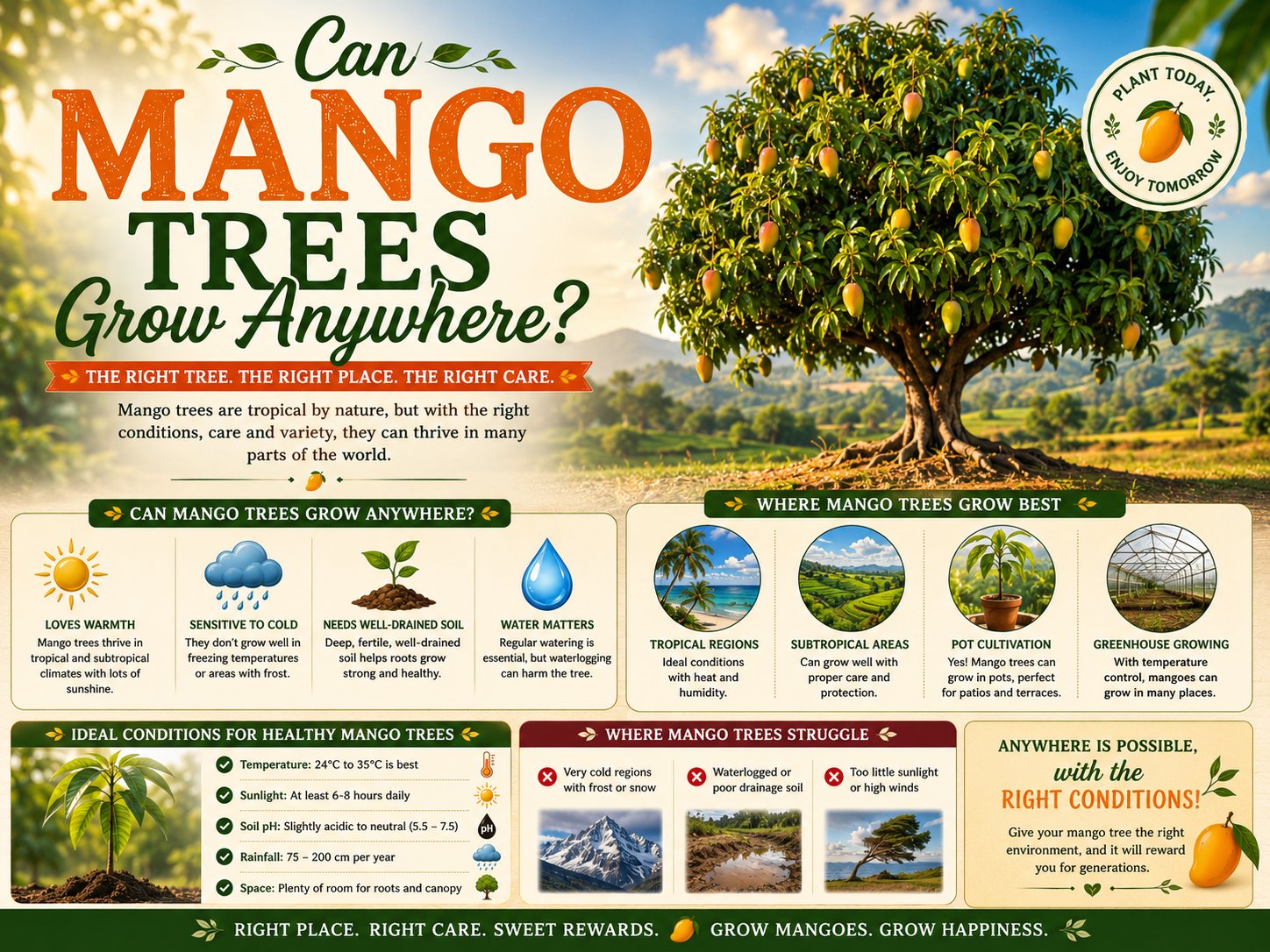
Mango trees are admired around the world for their lush green canopies, fragrant blossoms, and delicious fruits. Native to South Asia, they have been cultivated for thousands of years and today are grown in many tropical and subtropical regions. However, one common question among gardeners and fruit enthusiasts is: Can mango trees grow anywhere?
The simple answer is no. While mango trees are adaptable and can be grown in many parts of the world, they require specific environmental conditions to thrive and produce high-quality fruit. Factors such as temperature, sunlight, rainfall, soil type, and protection from frost all influence their growth and productivity.
In this guide, we’ll explore where mango trees grow best, what conditions they need, and why certain regions—including Malda in West Bengal—are famous for producing premium mangoes.
Where Did Mango Trees Originate?
Mango trees originated in South Asia and have been cultivated for centuries before spreading to other parts of the world through trade and exploration.
Today, mangoes are grown in:
- India
- Bangladesh
- Pakistan
- Thailand
- Indonesia
- Philippines
- Mexico
- Brazil
- Australia
- South Africa
- Egypt
- Kenya
- Several Caribbean nations
Although they are now cultivated on multiple continents, they still perform best in climates similar to their native habitat.
What Climate Do Mango Trees Need?
Mango trees flourish in tropical and subtropical climates where they receive abundant sunshine and warm temperatures throughout most of the year.
Ideal conditions include:
- Warm weather.
- Plenty of sunlight.
- Good air circulation.
- Moderate seasonal rainfall.
- A dry period during flowering and fruit development.
These conditions encourage healthy growth and quality fruit production.
Temperature Requirements
Temperature plays a crucial role in mango cultivation.
Mango trees generally perform best when they experience:
- Warm days.
- Mild nights.
- Minimal exposure to frost.
- Stable seasonal temperatures.
Extended periods of freezing weather can damage leaves, flowers, young fruit, and even mature trees.
Why Sunlight Is Essential
Mango trees need plenty of direct sunlight to grow vigorously.
Adequate sunlight supports:
- Photosynthesis.
- Healthy flowering.
- Fruit development.
- Natural sugar formation.
- Strong branch growth.
Most mango orchards are planted in open areas where trees receive full sunlight for much of the day.
Soil Conditions for Healthy Mango Trees
Although mango trees can adapt to different soil types, they perform best in well-drained, fertile soil.
Good soil characteristics include:
- Proper drainage.
- Rich organic matter.
- Good aeration.
- Balanced nutrients.
- Adequate moisture retention without waterlogging.
Healthy soil helps develop strong root systems and supports long-term tree growth.
Can Mango Trees Grow in Cold Climates?
Growing mango trees in cold climates can be challenging.
Low temperatures may:
- Slow growth.
- Damage flowers.
- Reduce fruit production.
- Injure young branches.
- Affect overall tree health.
In cooler regions, some gardeners grow mango trees in large containers that can be moved indoors or into protected spaces during cold weather. Even then, producing fruit may be more difficult than in tropical climates.
Rainfall and Water Requirements
Mango trees require water for healthy growth, especially during establishment.
However, excessive moisture around the roots can cause problems.
Successful orchards typically rely on:
- Balanced rainfall.
- Proper irrigation.
- Good drainage.
- Moist but not waterlogged soil.
Careful water management contributes to healthy fruit development.
Can Mango Trees Grow in Containers?
Yes, certain mango varieties can be grown in containers, particularly in areas where outdoor conditions are not ideal year-round.
Container growing is most successful when:
- A suitable variety is selected.
- The container is large enough for root development.
- The tree receives full sunlight.
- Regular watering and feeding are provided.
- The plant is protected from frost.
Container-grown trees may remain smaller than orchard-grown trees but can still be attractive additions to home gardens.
How Long Does It Take a Mango Tree to Bear Fruit?
The time required for a mango tree to produce fruit depends on how it was propagated.
Generally:
- Grafted trees often begin fruiting earlier.
- Seed-grown trees may take several more years before producing fruit.
Good care, healthy soil, and favorable climate all contribute to successful fruit production.
Why Orchard Management Matters
Even in ideal climates, proper orchard management is essential.
Experienced growers focus on:
- Irrigation management.
- Pruning.
- Nutrient application.
- Pest and disease management.
- Timely harvesting.
- Natural ripening practices.
These techniques help maintain healthy trees and consistent fruit quality.
Why Malda Is Ideal for Mango Cultivation
Malda in West Bengal is one of India’s most celebrated mango-growing regions.
Several natural advantages contribute to its success:
- Fertile alluvial soil.
- Warm tropical climate.
- Favorable seasonal weather.
- Experienced orchard management.
- Generations of mango-growing expertise.
These conditions support the cultivation of premium varieties including:
- Himsagar.
- Fazli.
- Lakshmanbhog.
- Gopalbhog.
- Khirsapati.
These mangoes are admired for their rich sweetness, smooth texture, and exceptional aroma.
Tips for Growing a Healthy Mango Tree
Whether planting in an orchard or a home garden, consider these tips:
- Choose a sunny location.
- Use well-drained soil.
- Water consistently without overwatering.
- Apply organic matter as needed.
- Prune to maintain a healthy canopy.
- Protect young trees from frost and strong winds.
- Monitor for pests and diseases.
Regular care supports healthy growth over many years.
Common Challenges
Mango growers may encounter challenges such as:
- Frost in colder climates.
- Excessive rainfall.
- Poor drainage.
- Nutrient deficiencies.
- Pest and disease pressure.
Managing these issues promptly helps protect tree health and fruit quality.
Final Thoughts
While mango trees are adaptable and can be grown in many parts of the world, they cannot thrive just anywhere. They perform best in warm tropical and subtropical regions with abundant sunshine, fertile well-drained soil, and protection from prolonged frost. When these conditions are combined with careful orchard management, mango trees can reward growers with healthy growth and delicious fruit for decades.
Whether you’re planting a mango tree in your backyard or simply curious about how your favorite fruit is grown, understanding the environmental needs of mango trees helps explain why regions like Malda have earned a reputation for producing some of India’s finest mangoes.
Experience Premium Malda Mangoes
Enjoy the authentic taste of premium Malda Mangoes sourced directly from trusted orchards in West Bengal. Our Himsagar, Fazli, Lakshmanbhog, Gopalbhog, and Khirsapati mangoes are handpicked at peak maturity, naturally ripened, carefully graded, thoroughly quality-checked, and securely packed before being delivered fresh across India. From fertile alluvial soils to expert orchard care, every mango reflects our commitment to delivering exceptional freshness, flavor, and quality from orchard to your doorstep.