

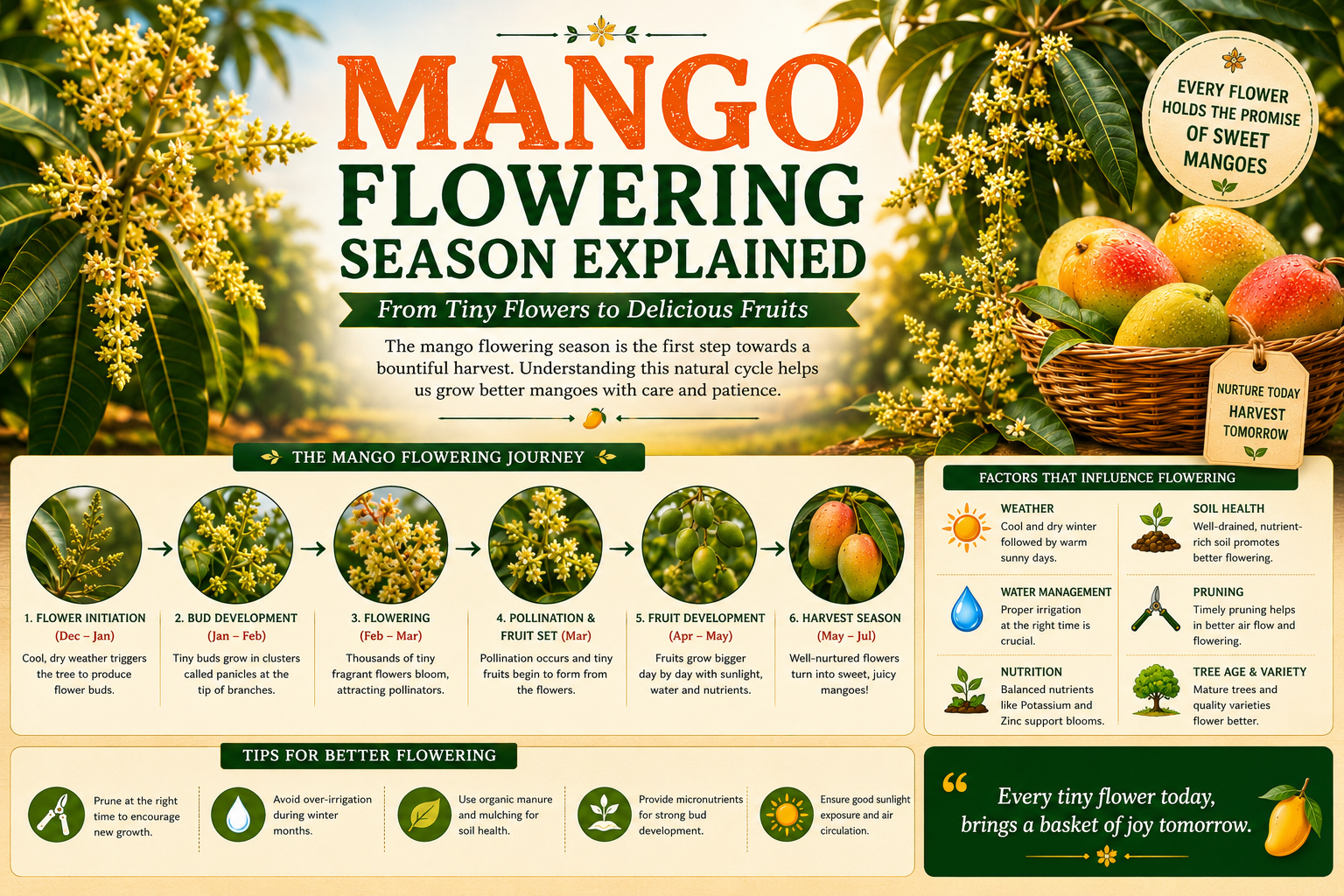
Every delicious mango begins its journey as a tiny flower. Before orchards are filled with colorful, juicy fruits, mango trees transform into breathtaking displays of delicate blossoms that signal the arrival of a new growing season. For mango growers, the flowering period is one of the most exciting and important stages of the year because it lays the foundation for the upcoming harvest.
The flowering season determines the potential yield, fruit quality, and overall success of the mango crop. Weather conditions, orchard management, pollination, and tree health all influence how well a mango tree flowers and how many blossoms eventually develop into fruit.
In this guide, we’ll explain the mango flowering season, what happens during this critical stage, the factors that influence flowering, and why regions like Malda in West Bengal produce some of India’s finest mangoes.
What Is the Mango Flowering Season?
The mango flowering season is the period when mature mango trees produce clusters of tiny flowers, known as panicles. These blossoms are the starting point of every mango and play a crucial role in fruit production.
Flowering marks the transition from vegetative growth to the reproductive phase of the tree. Healthy flowering is essential for producing a successful mango crop.
When Do Mango Trees Flower?
The exact flowering season varies depending on:
- Climate.
- Geographic region.
- Mango variety.
- Weather conditions.
In many mango-growing regions of India, flowering generally begins during the cooler months and continues into early spring, while fruit development follows in the months afterward.
Because local weather patterns differ from year to year, the exact timing may vary slightly.
What Does a Mango Blossom Look Like?
Mango flowers grow in large branching clusters called panicles.
Each panicle contains:
- Hundreds to thousands of tiny flowers.
- Small cream, pale yellow, or pinkish blossoms.
- A pleasant fragrance that attracts pollinators.
Although a panicle may contain many flowers, only a small percentage naturally develop into mature mangoes.
Types of Mango Flowers
A mango flower cluster usually contains two kinds of flowers:
Male Flowers
Male flowers produce pollen but do not develop into fruit.
Their primary role is to support pollination.
Bisexual (Perfect) Flowers
These flowers contain both male and female reproductive structures and have the potential to develop into mangoes after successful pollination.
The balance between flower types varies among mango varieties.
Why Flowering Is So Important
The flowering stage determines much of the tree’s fruit production potential.
Successful flowering contributes to:
- Better fruit set.
- Higher yields.
- Improved fruit quality.
- Uniform crop development.
- Healthy harvests.
Poor flowering often leads to reduced fruit production.
The Role of Pollination
Pollination is essential for fruit formation.
Mango flowers are commonly pollinated by:
- Bees.
- Flies.
- Butterflies.
- Other beneficial insects.
As these insects move between flowers, they transfer pollen, increasing the chances of successful fertilization and fruit development.
Healthy pollinator populations are valuable for productive orchards.
Weather Conditions That Affect Flowering
Several environmental factors influence the flowering season.
Temperature
Moderate seasonal temperatures encourage healthy flower development.
Sunshine
Adequate sunlight supports:
- Flower formation.
- Photosynthesis.
- Tree health.
- Fruit development.
Rainfall
Dry weather during flowering is generally more favorable than prolonged rain, which can interfere with pollination and increase the risk of flower-related diseases.
Wind
Gentle air movement can assist pollinator activity, while strong winds may damage delicate blossoms.
Orchard Management During Flowering
Experienced mango growers carefully manage orchards during the flowering season.
Important practices include:
- Proper irrigation.
- Balanced nutrition.
- Pruning before flowering.
- Monitoring pests.
- Managing diseases.
- Protecting pollinators.
Healthy orchard management supports better fruit production.
Why Do Some Flowers Fall Off?
It is completely natural for many mango flowers to fall before developing into fruit.
Reasons include:
- Natural thinning by the tree.
- Limited pollination.
- Weather conditions.
- Nutrient availability.
- Competition among developing fruits.
Only a small percentage of blossoms ultimately become mature mangoes.
From Flower to Mango
After successful pollination and fertilization, the flower begins transforming into a tiny fruit.
The stages include:
- Flowering.
- Pollination.
- Fertilization.
- Fruit set.
- Fruit development.
- Maturation.
- Harvesting.
This remarkable journey takes several months and depends on favorable growing conditions.
Common Challenges During Flowering
Growers monitor flowering carefully because several challenges may affect crop success.
These include:
- Unseasonal rainfall.
- Strong winds.
- Pest infestations.
- Plant diseases.
- Nutrient deficiencies.
- Temperature fluctuations.
Early management helps protect blossoms and improve fruit set.
Why Malda Is Ideal for Mango Flowering
Malda in West Bengal offers favorable conditions for healthy flowering.
The region benefits from:
- Fertile alluvial soils.
- Suitable seasonal temperatures.
- Good sunlight.
- Experienced orchard management.
- Generations of mango-growing expertise.
These conditions help produce premium varieties such as:
- Himsagar.
- Fazli.
- Lakshmanbhog.
- Gopalbhog.
- Khirsapati.
Healthy flowering contributes to the exceptional quality and flavor of these celebrated mangoes.
Supporting Healthy Flowering at Home
If you grow a mango tree in your garden, you can encourage healthy flowering by:
- Planting it in full sunlight.
- Providing well-drained soil.
- Watering appropriately.
- Avoiding excessive nitrogen fertilization before flowering.
- Pruning damaged branches.
- Encouraging pollinators in your garden.
Consistent care increases the likelihood of healthy blossoms and fruit production.
Interesting Facts About Mango Flowers
Here are some fascinating facts about mango blossoms:
- A single panicle can contain hundreds or even thousands of tiny flowers.
- Only a small percentage of flowers naturally develop into fruit.
- Mango blossoms attract a wide variety of beneficial pollinating insects.
- Flowering is one of the most important stages in determining the size of the upcoming harvest.
- Healthy flowering often reflects good orchard management and favorable environmental conditions.
Final Thoughts
The mango flowering season is one of the most remarkable phases in the life of a mango tree. Every fragrant blossom represents the possibility of a future mango, making this period essential for both growers and mango lovers alike. From pollination and fruit set to careful orchard management, every step contributes to producing the sweet, juicy mangoes enjoyed during the summer season.
By understanding how mango trees flower and what influences this process, we gain a greater appreciation for the dedication, expertise, and natural conditions required to grow premium-quality fruit. The next time you enjoy a ripe mango, remember that its journey began months earlier with a cluster of delicate blossoms swaying gently in the orchard.
Experience Premium Malda Mangoes
Enjoy the authentic taste of premium Malda Mangoes sourced directly from trusted orchards in West Bengal. Our Himsagar, Fazli, Lakshmanbhog, Gopalbhog, and Khirsapati mangoes are handpicked at peak maturity, naturally ripened, carefully graded, thoroughly quality-checked, and securely packed before being delivered fresh across India. From the first blossoms of the flowering season to the final harvest, every mango reflects generations of orchard expertise, fertile alluvial soils, and a commitment to exceptional quality.