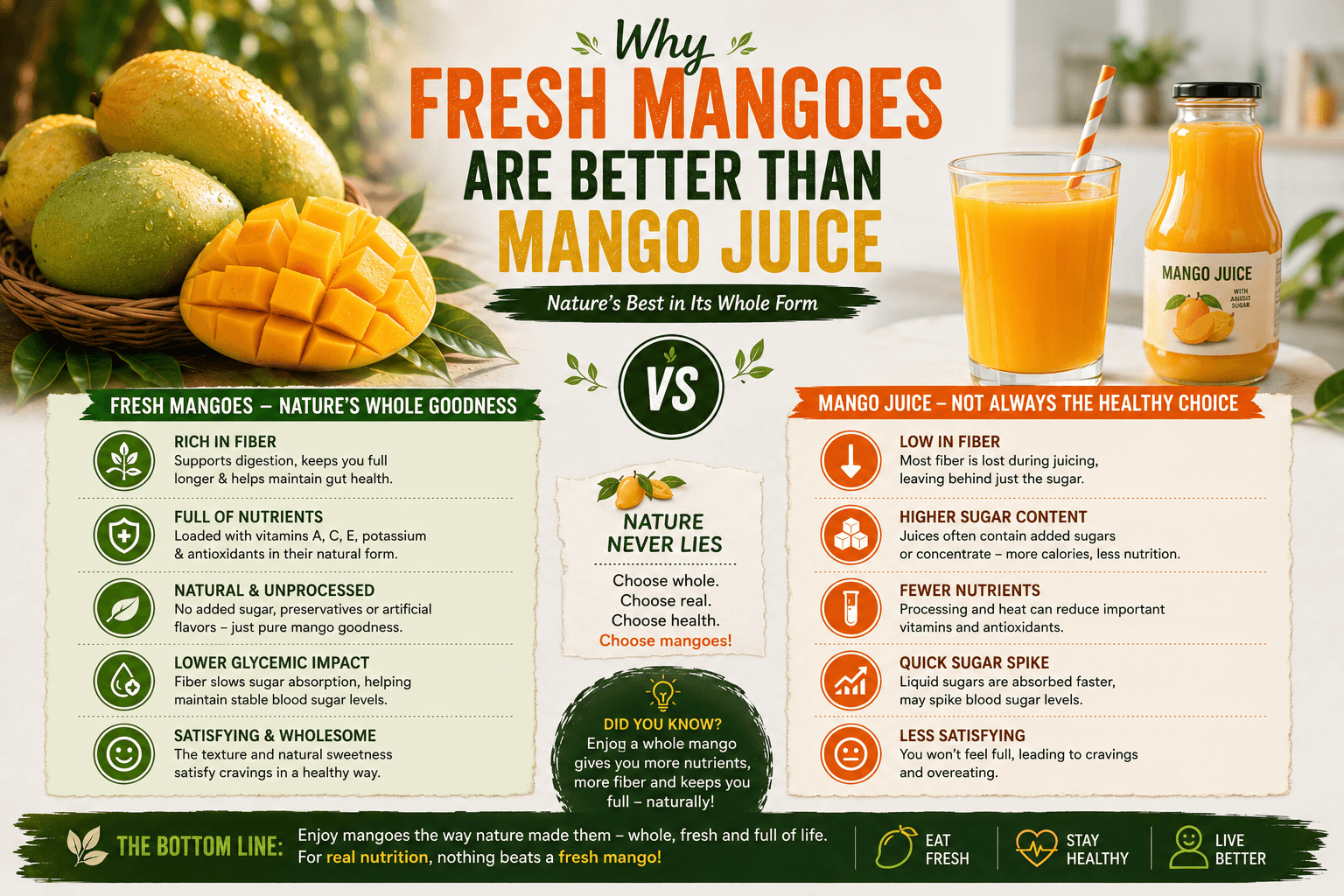
Mangoes are one of the most popular tropical fruits, enjoyed for their naturally sweet taste, juicy texture, and impressive nutritional value. While many people love drinking mango juice, eating a fresh, whole mango often provides more nutritional benefits. Whole fruits contain dietary fiber, natural water, vitamins, minerals, and beneficial plant compounds that may be reduced during juice processing.
This doesn’t mean mango juice cannot be enjoyed, but when choosing between the two, fresh mangoes are generally the more nutritious option. Understanding the differences can help you make healthier choices during mango season.
In this article, we’ll compare fresh mangoes and mango juice, explain their nutritional differences, and explore why whole mangoes are often considered the better choice.
Fresh Mangoes Provide More Dietary Fiber
One of the biggest advantages of eating fresh mangoes is their fiber content.
Dietary fiber plays an important role in a healthy diet by helping to:
- Support normal digestion.
- Promote regular bowel movements.
- Increase feelings of fullness after meals.
- Support overall digestive health.
During the juicing process, much of the fruit’s fiber is removed, especially in filtered juices.
Whole Mangoes Help You Feel Fuller
Fresh mangoes require chewing, and their fiber content contributes to satiety.
Compared with drinking juice, eating whole mangoes may help you:
- Feel satisfied for longer.
- Reduce the temptation to snack shortly afterward.
- Better manage portion sizes.
This makes whole fruit a more filling snack option for many people.
Mangoes Are Rich in Essential Nutrients
Fresh mangoes naturally provide many important nutrients, including:
- Vitamin C
- Vitamin A (from beta-carotene)
- Vitamin E
- Vitamin K
- Folate
- Potassium
- Copper
- Dietary fiber
- Natural antioxidants
Many of these nutrients remain in juice, but the overall nutritional balance is often better when eating the whole fruit.
Natural Sugars vs. Added Sugars
Fresh mangoes contain naturally occurring fruit sugars that develop as the fruit ripens.
Some packaged mango juices may also contain:
- Added sugar
- Sweeteners
- Flavorings
- Preservatives
Reading the nutrition label is important when purchasing packaged juice.
Choosing fresh mangoes allows you to enjoy natural sweetness without unnecessary ingredients.
Fresh Mangoes Support Hydration
Mangoes contain a high percentage of water, making them a refreshing summer fruit.
Eating fresh mangoes contributes to daily fluid intake while also providing fiber and essential nutrients.
Whole Fruit Offers a Better Nutrient Package
Whole mangoes provide a combination of:
- Fiber
- Water
- Vitamins
- Minerals
- Antioxidants
- Naturally occurring sugars
These nutrients work together as part of the fruit’s natural structure, offering benefits that processed juices may not fully provide.
Better Portion Awareness
It’s often easier to consume a large amount of juice quickly than it is to eat several whole mangoes.
Drinking multiple glasses of juice may result in consuming more calories and natural sugars without feeling as full.
Eating fresh mangoes naturally encourages more mindful portion sizes.
Less Processing, More Natural Goodness
Fresh mangoes are minimally processed.
They go from the orchard to your table with very little alteration.
In contrast, many commercial juices undergo processes such as:
- Filtration
- Pasteurization
- Concentration
- Reconstitution
- Packaging
Although these processes improve shelf life and food safety, they may change the texture and overall eating experience.
Fresh Mangoes Are More Versatile
Whole mangoes can be enjoyed in many healthy ways.
Try them:
- Fresh as a snack.
- In fruit salads.
- Mixed with Greek yogurt.
- In overnight oats.
- Added to smoothies.
- Topped on chia pudding.
- In homemade salsa.
- As part of breakfast bowls.
These options help increase fruit intake while keeping meals interesting.
Is Fresh Mango Always Better Than Juice?
In most situations, yes.
Fresh mangoes are generally preferred because they:
- Provide more fiber.
- Promote fullness.
- Encourage mindful eating.
- Contain no added ingredients.
- Offer excellent nutritional value.
However, freshly prepared mango juice without added sugar can still be enjoyed occasionally as part of a balanced diet.
Who Should Be Mindful of Juice Intake?
Some individuals may benefit from paying closer attention to fruit juice consumption, including:
- People managing diabetes.
- Individuals following calorie-controlled meal plans.
- Those limiting sugar intake.
- Young children, who should consume fruit juice in moderation according to dietary guidelines.
If you have specific health concerns, consult a healthcare professional or registered dietitian for personalized advice.
Choosing the Best Mangoes
For the greatest nutritional value and flavor, choose mangoes that are:
- Naturally ripened.
- Freshly harvested.
- Aromatic.
- Slightly soft when ripe.
- Free from major bruises.
Buying directly from trusted growers also helps ensure freshness and quality.
Final Thoughts
While both fresh mangoes and mango juice can be part of a healthy diet, eating the whole fruit usually offers greater nutritional benefits. Fresh mangoes provide dietary fiber, natural hydration, vitamins, minerals, and antioxidants in their original form, while also helping you feel fuller and making portion control easier.
If your goal is to enjoy the full nutritional value of mangoes, choosing fresh, naturally ripened fruit is generally the best option. Combined with a balanced diet and an active lifestyle, whole mangoes are a delicious and wholesome way to make the most of mango season.
Enjoy Premium Fresh Malda Mangoes
Experience the natural goodness of fresh, farm-direct Malda Mangoes. Our mangoes are sourced from trusted orchards in Malda, handpicked at the ideal stage of maturity, naturally ripened without artificial ripening agents, carefully quality-checked, and securely packed before being delivered fresh across India. Taste the difference that only premium, whole mangoes can offer.
FAQ