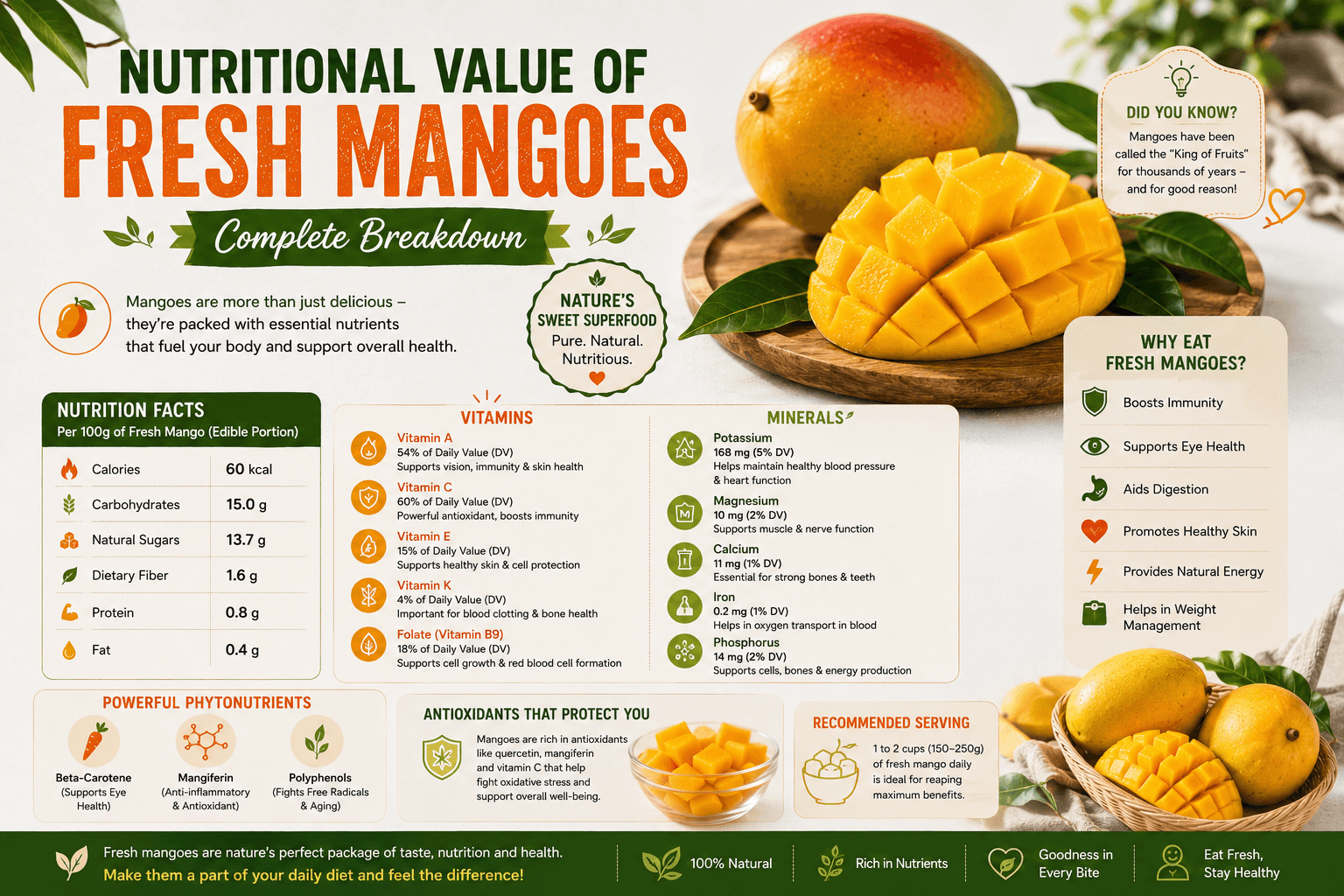
Mangoes are one of the world’s most popular tropical fruits, loved for their naturally sweet taste, vibrant color, and juicy texture. Beyond their delicious flavor, fresh mangoes are packed with essential vitamins, minerals, dietary fiber, antioxidants, and water, making them a nutritious addition to a balanced diet.
Whether you enjoy mangoes as a refreshing snack, in smoothies, fruit salads, breakfast bowls, or desserts, they offer a wide range of nutrients that support overall health. Understanding the nutritional profile of mangoes can help you make informed dietary choices and appreciate why they are often called the “King of Fruits.”
In this guide, we’ll take a complete look at the nutritional value of fresh mangoes, their health benefits, and practical ways to include them in your daily meals.
Nutritional Profile of Fresh Mangoes
Fresh mangoes are naturally rich in several essential nutrients while being low in fat and free from cholesterol.
A serving of fresh mango typically provides:
- Natural carbohydrates
- Dietary fiber
- Naturally occurring fruit sugars
- Vitamin C
- Vitamin A (from beta-carotene)
- Vitamin E
- Vitamin K
- Folate
- Potassium
- Copper
- Small amounts of magnesium and other essential minerals
- Water
- Natural antioxidants
Together, these nutrients contribute to a healthy and varied diet.
Calories in Fresh Mangoes
Mangoes are a moderate-calorie fruit that can fit into many healthy eating plans.
A typical serving of fresh mango provides energy primarily from naturally occurring carbohydrates, making it an excellent choice for a refreshing snack or part of a balanced meal.
The exact calorie content varies depending on the size and variety of the mango.
Carbohydrates and Natural Sugars
The natural sweetness of mangoes comes from carbohydrates that develop as the fruit ripens.
Unlike foods with added sugars, fresh mangoes also provide:
- Dietary fiber
- Vitamins
- Minerals
- Antioxidants
- Water
This combination makes whole mangoes a nutrient-rich food rather than simply a source of sugar.
Dietary Fiber
Fiber is one of the key nutritional advantages of eating whole mangoes.
Dietary fiber helps:
- Support normal digestion.
- Promote regular bowel movements.
- Increase feelings of fullness.
- Contribute to a balanced eating pattern.
Eating whole mangoes provides more fiber than drinking filtered mango juice.
Vitamin C
Mangoes are an excellent source of vitamin C.
Vitamin C contributes to:
- Normal immune function.
- Collagen formation for healthy skin.
- Improved absorption of iron from plant-based foods.
- Protection of cells from oxidative stress.
Including vitamin C-rich fruits in your diet supports overall health.
Vitamin A (Beta-Carotene)
The vibrant yellow-orange color of mangoes comes from beta-carotene, which the body converts into vitamin A.
Vitamin A contributes to:
- Maintaining normal vision.
- Healthy skin.
- Normal immune function.
This makes mangoes an excellent source of provitamin A carotenoids.
Vitamin E
Fresh mangoes also provide vitamin E, an antioxidant that helps protect cells from oxidative stress and supports overall health.
Vitamin K
Vitamin K plays a role in normal blood clotting and contributes to maintaining healthy bones.
Mangoes provide small but valuable amounts of this essential vitamin.
Folate
Folate is a B vitamin that supports:
- Normal cell growth.
- DNA synthesis.
- Healthy red blood cell formation.
It is especially important during periods of rapid growth, such as pregnancy, although individual nutritional needs vary.
Potassium
Potassium is an important mineral that contributes to:
- Normal muscle function.
- Proper nerve function.
- Maintaining normal blood pressure when consumed as part of a balanced diet.
Fresh mangoes provide potassium naturally.
Copper and Other Minerals
Mangoes also contain copper along with smaller amounts of other minerals such as magnesium.
These nutrients support various metabolic processes throughout the body.
Natural Antioxidants
Fresh mangoes contain several beneficial plant compounds, including:
- Beta-carotene
- Polyphenols
- Mangiferin
- Other antioxidant compounds
Antioxidants help protect cells from oxidative stress as part of an overall healthy diet.
Water Content and Hydration
Mangoes contain a significant amount of water, making them a refreshing fruit during hot summer months.
When combined with adequate fluid intake, water-rich fruits contribute to daily hydration.
Health Benefits of Fresh Mangoes
Regularly including fresh mangoes in a balanced diet may help support:
- Healthy digestion.
- Normal immune function.
- Eye health.
- Skin health.
- Hydration.
- Overall nutrient intake.
These benefits come from the combined effects of vitamins, minerals, fiber, antioxidants, and water.
Recommended Portion Size
For most healthy adults, a sensible serving is approximately:
- 1–2 cups of fresh sliced mango, or
- One medium-sized mango, depending on the variety.
Moderation helps ensure mangoes fit comfortably into a balanced eating pattern.
Healthy Ways to Enjoy Fresh Mangoes
Fresh mangoes can be enjoyed in many nutritious ways:
- Eat them as a fresh snack.
- Add them to yogurt.
- Blend them into smoothies.
- Mix them into fruit salads.
- Top oatmeal or overnight oats.
- Prepare chia seed pudding.
- Add them to grain bowls.
- Use them in homemade salsa.
These ideas make it easy to enjoy mangoes throughout the season.
Choosing the Best Mangoes
To maximize both taste and nutritional value, choose mangoes that are:
- Naturally ripened.
- Freshly harvested.
- Aromatic.
- Slightly soft when ripe.
- Free from significant bruises.
Farm-direct mangoes often provide excellent freshness and flavor.
Final Thoughts
Fresh mangoes are much more than a delicious seasonal fruit. They are a rich source of vitamin C, vitamin A, dietary fiber, antioxidants, potassium, folate, and other important nutrients that support overall health. Their natural sweetness, refreshing taste, and impressive nutritional profile make them an excellent addition to a balanced diet.
By choosing fresh, naturally ripened mangoes and enjoying them in moderate portions, you can take full advantage of their nutritional benefits while savoring one of nature’s most flavorful fruits.
Enjoy Premium Malda Mangoes
Experience the authentic taste and nutritional goodness of premium Malda Mangoes. Sourced directly from trusted orchards in Malda, our mangoes are handpicked at peak maturity, naturally ripened, carefully quality-checked, and securely packed before being delivered fresh across India. Enjoy farm-fresh mangoes that combine exceptional flavor with wholesome nutrition.
FAQ