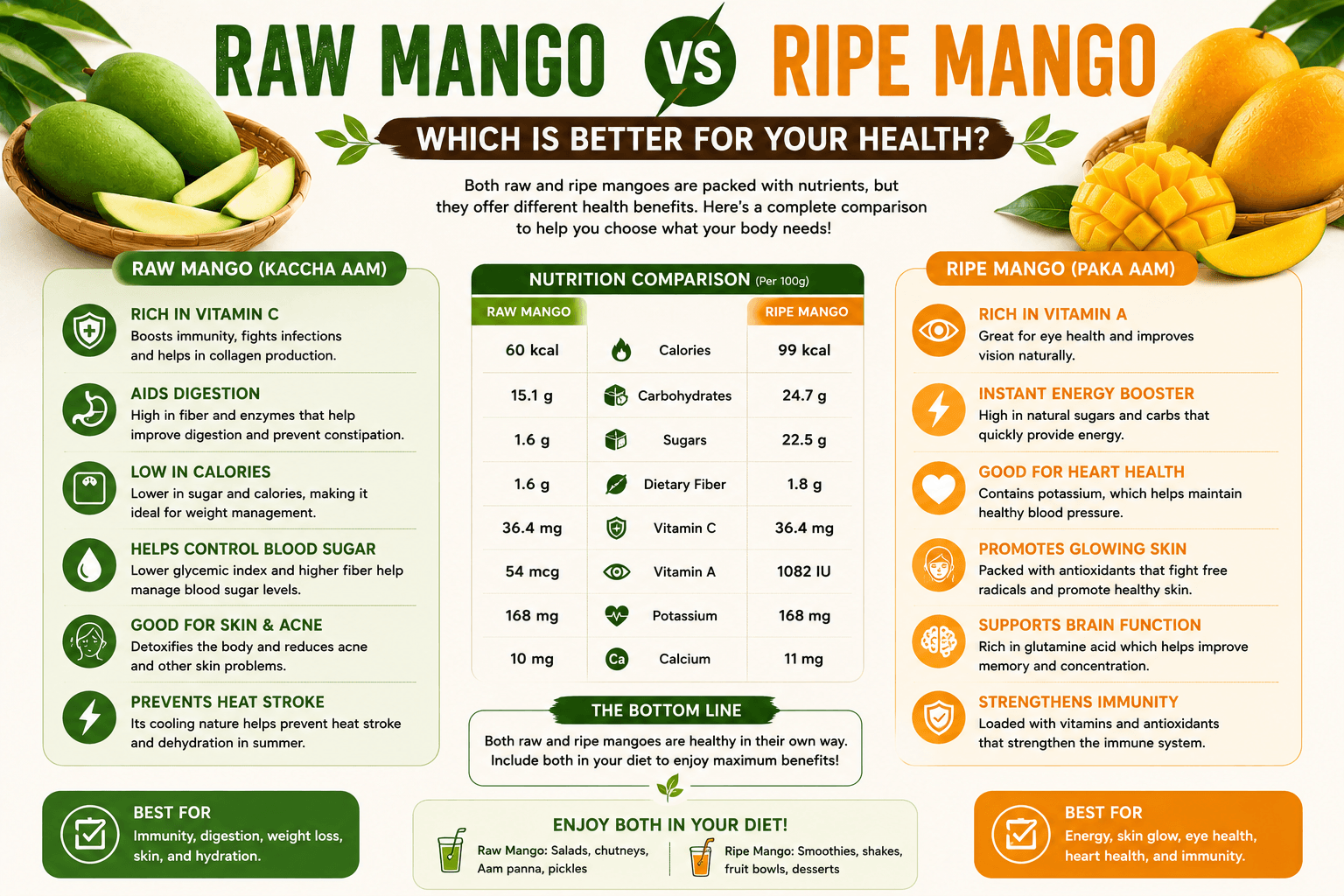
Mango is one of the most loved fruits in the world, enjoyed in both its raw and ripe forms. From tangy raw mango chutneys and pickles to sweet, juicy ripe mango desserts and smoothies, this versatile fruit offers unique flavors and nutritional benefits at every stage of ripeness.
But when it comes to health, many people wonder: Which is better—raw mango or ripe mango?
The answer depends on your nutritional needs, health goals, and personal preferences. Both raw and ripe mangoes contain valuable nutrients, but their nutritional profiles and health benefits differ significantly.
In this guide, we’ll compare raw mango and ripe mango in terms of nutrition, health benefits, digestion, immunity, weight management, and more.
What Is Raw Mango?
Raw mango refers to an unripe mango that is green, firm, and sour in taste. It is commonly used in:
- Pickles
- Chutneys
- Salads
- Aam Panna
- Traditional Indian recipes
Raw mangoes are especially popular during the summer season because of their refreshing and tangy flavor.
What Is Ripe Mango?
Ripe mango is the fully matured form of the fruit. It develops:
- Sweet taste
- Soft texture
- Rich aroma
- Bright yellow or orange flesh
Popular ripe mango varieties include Malda, Alphonso, Dashehari, Chausa, Langra, Himsagar, and Kesar.
Nutritional Comparison: Raw Mango vs Ripe Mango
Raw Mango
Raw mangoes are generally higher in:
- Vitamin C
- Certain antioxidants
- Organic acids
- Pectin
They contain less natural sugar compared to ripe mangoes.
Ripe Mango
Ripe mangoes are generally higher in:
- Vitamin A
- Beta-carotene
- Natural sugars
- Calories
- Antioxidants associated with fruit maturation
They offer a sweeter taste and higher energy content.
Which Has More Vitamin C?
Winner: Raw Mango
Raw mangoes contain significantly higher amounts of Vitamin C compared to ripe mangoes.
Vitamin C helps:
- Strengthen immunity
- Support collagen production
- Protect cells from oxidative stress
- Promote healthy skin
This makes raw mango an excellent choice for immune support.
Which Is Better for Eye Health?
Winner: Ripe Mango
Ripe mangoes are rich in beta-carotene, which the body converts into Vitamin A.
Vitamin A helps:
- Support vision
- Maintain eye health
- Protect against night blindness
- Support immune function
The ripening process increases carotenoid levels, making ripe mangoes particularly beneficial for eye health.
Which Is Better for Digestion?
Draw: Both Have Benefits
Raw mangoes contain pectin and dietary fiber that support digestion.
Ripe mangoes contain:
- Digestive enzymes
- Dietary fiber
- Natural compounds that aid digestion
While raw mango can help stimulate digestion, ripe mangoes may be easier for some people to digest due to their softer texture.
Which Is Better for Weight Management?
Slight Advantage: Raw Mango
Raw mangoes contain:
- Fewer calories
- Lower sugar content
- High fiber
These characteristics may help support weight management goals.
However, ripe mangoes can also be included in a balanced diet when consumed in moderation.
Which Is Better for Hydration?
Winner: Raw Mango
Raw mango-based drinks such as Aam Panna are popular during hot weather because they help:
- Support hydration
- Replenish electrolytes
- Refresh the body
Raw mango has traditionally been used to help cope with summer heat.
Which Is Better for Energy?
Winner: Ripe Mango
Ripe mangoes contain more natural sugars and carbohydrates, providing a quick source of energy.
This makes them an excellent snack for:
- Active individuals
- Athletes
- Growing children
- Anyone needing a natural energy boost
Which Is Better for Skin Health?
Winner: Ripe Mango
Ripe mangoes contain:
- Vitamin A
- Vitamin C
- Beta-carotene
- Antioxidants
These nutrients help:
- Support collagen production
- Maintain healthy skin
- Promote a natural glow
- Protect against oxidative stress
Which Is Better for Immunity?
Both Are Beneficial
Raw mangoes support immunity through their high Vitamin C content.
Ripe mangoes contribute through:
- Vitamin A
- Vitamin C
- Antioxidants
- Polyphenols
Both forms can support a healthy immune system when included in a balanced diet.
Taste and Culinary Uses
Raw Mango Uses
- Pickles
- Chutneys
- Salads
- Aam Panna
- Curries
Ripe Mango Uses
- Fresh fruit
- Smoothies
- Desserts
- Milkshakes
- Yogurt bowls
- Fruit salads
Each form offers unique culinary possibilities.
Can You Eat Both?
Absolutely.
Both raw and ripe mangoes provide valuable nutrients and health benefits. Including both in your diet allows you to enjoy a wider range of vitamins, antioxidants, and flavors.
The best choice depends on your personal health goals:
- Choose raw mango for higher Vitamin C and lower sugar.
- Choose ripe mango for Vitamin A, antioxidants, and natural energy.
Conclusion
When comparing raw mango vs ripe mango, there is no single winner. Both forms offer impressive nutritional benefits and can be part of a healthy diet.
Raw mango stands out for its Vitamin C content, lower sugar levels, and refreshing summer benefits. Ripe mango excels in Vitamin A, beta-carotene, antioxidants, and natural sweetness.
For most people, enjoying both raw and ripe mangoes throughout the season is the best way to take advantage of their unique health benefits while enjoying the incredible taste of India’s favorite fruit.
FAQ