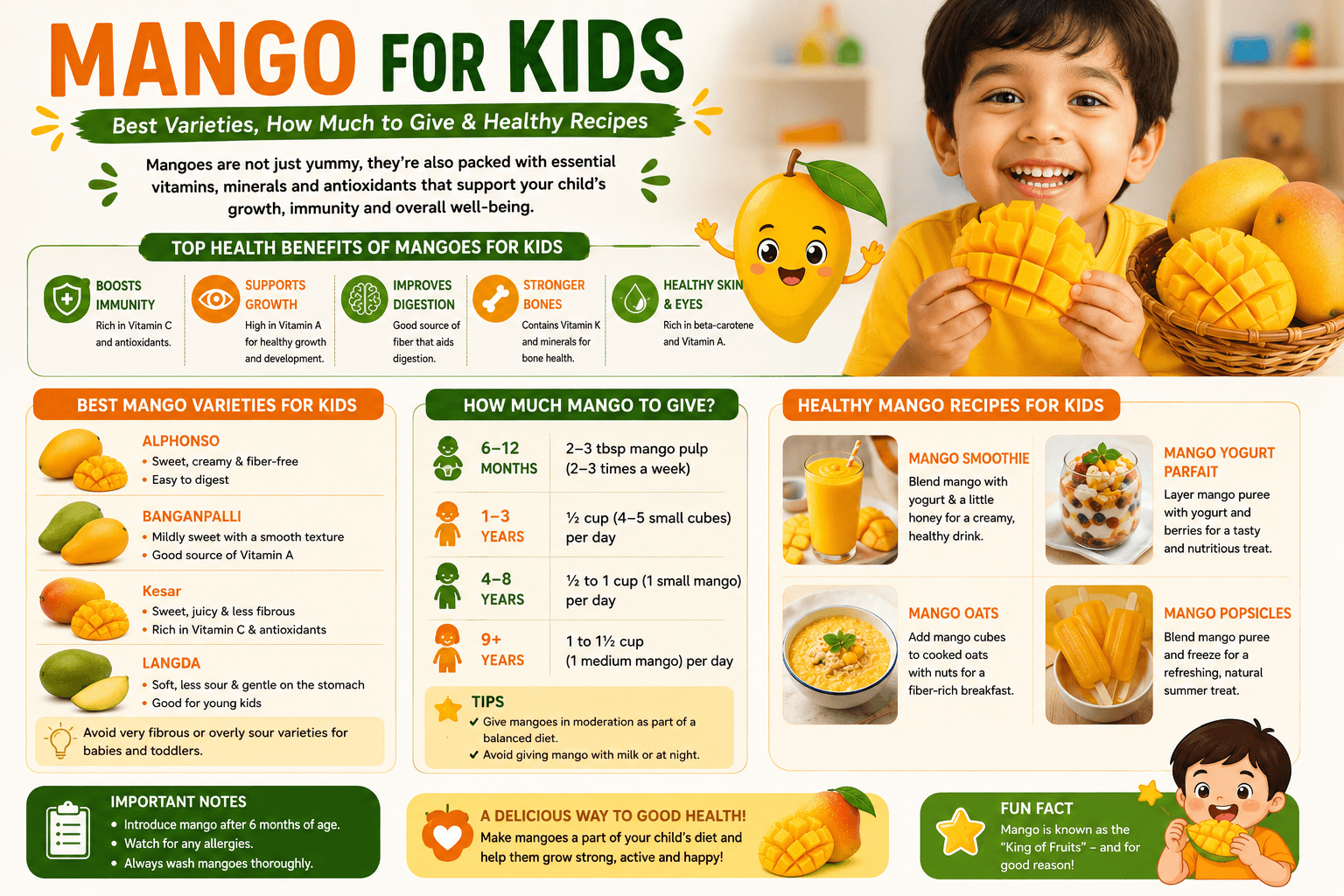
Mango is often called the “King of Fruits,” and for good reason. Its naturally sweet taste, soft texture, and rich nutritional profile make it one of the best fruits for growing children. Packed with vitamins, minerals, antioxidants, and dietary fiber, mangoes can be a healthy and delicious addition to your child’s diet.
Many parents wonder whether mangoes are good for kids, how much mango they should eat, and which varieties are best. In this guide, we’ll explore the nutritional benefits of mangoes for children, recommended serving sizes, the best mango varieties, and easy healthy recipes kids will love.
Are Mangoes Good for Kids?
Yes, mangoes are highly nutritious and can be an excellent fruit for children when consumed as part of a balanced diet.
Mangoes provide important nutrients such as:
- Vitamin C
- Vitamin A
- Folate
- Potassium
- Dietary Fiber
- Antioxidants
These nutrients support healthy growth, immunity, digestion, vision, and overall development.
Health Benefits of Mangoes for Children
1. Supports a Strong Immune System
Mangoes are rich in Vitamin C and Vitamin A, which help strengthen the immune system and support the body’s natural defenses against infections.
Regular consumption can help children maintain better overall health.
2. Promotes Healthy Growth and Development
Growing children require a variety of vitamins and minerals to support development.
Mangoes contain nutrients that contribute to:
- Cell growth
- Tissue repair
- Healthy development
- Nutrient absorption
3. Good for Eye Health
Vitamin A and beta-carotene found in mangoes help support:
- Healthy eyesight
- Vision development
- Eye protection
These nutrients are particularly important during childhood growth years.
4. Helps Maintain Healthy Digestion
Mangoes contain dietary fiber and natural digestive compounds that may help:
- Promote regular bowel movements
- Support digestive health
- Improve gut function
Fiber-rich fruits are important for maintaining a healthy digestive system.
5. Provides Natural Energy
Mangoes contain natural fruit sugars that provide energy for:
- School activities
- Sports
- Outdoor play
- Daily growth needs
Unlike processed sugary snacks, mangoes also provide vitamins and minerals.
Best Mango Varieties for Kids
Children often prefer mangoes that are sweet, juicy, and low in fiber.
Alphonso Mango
Known for:
- Rich sweetness
- Creamy texture
- Pleasant aroma
One of the most popular varieties among children.
Malda Mango
Malda mangoes are naturally sweet, juicy, and flavorful, making them an excellent choice for kids.
Dashehari Mango
Aromatic and sweet with soft flesh that children enjoy.
Himsagar Mango
Known for:
- Fibreless pulp
- Smooth texture
- Rich taste
Perfect for younger children.
Kesar Mango
Sweet and flavorful with bright orange pulp that appeals to many kids.
How Much Mango Should Kids Eat?
The ideal serving size depends on the child’s age, activity level, and overall diet.
Toddlers (1–3 Years)
- ¼ to ½ cup of mango pieces
Children (4–8 Years)
- ½ to 1 cup of mango pieces
Older Children (9–13 Years)
- 1 cup of mango pieces
Moderation is important as mangoes contain natural sugars.
Fresh fruit should be part of a varied diet that includes vegetables, whole grains, proteins, and dairy or dairy alternatives.
When Can Babies Start Eating Mango?
Many babies can begin eating mango after starting solid foods, typically around 6 months of age.
Mango should be:
- Soft and ripe
- Pureed or mashed
- Introduced gradually
Parents should consult their pediatrician before introducing new foods.
Healthy Mango Recipes for Kids
Mango Yogurt Bowl
Ingredients:
- Fresh mango cubes
- Plain yogurt
- Chopped nuts (for older children)
A nutritious breakfast or snack rich in protein and vitamins.
Mango Smoothie
Ingredients:
- Fresh mango
- Milk or yogurt
- Banana
Blend until smooth for a refreshing and healthy drink.
Mango Fruit Salad
Combine:
- Mango
- Apple
- Banana
- Grapes
A colorful and nutrient-rich snack.
Mango Popsicles
Blend fresh mango pulp and freeze in molds for a naturally sweet summer treat.
Mango Oatmeal Topping
Add diced mango to oatmeal for extra flavor and nutrition.
Tips for Serving Mango to Children
- Choose naturally ripened mangoes.
- Wash fruit thoroughly before serving.
- Remove the seed and peel.
- Cut into small, bite-sized pieces.
- Avoid adding extra sugar.
- Serve fresh whenever possible.
Are There Any Precautions?
While mangoes are safe for most children:
- Introduce gradually when trying for the first time.
- Monitor for any unusual reactions.
- Avoid excessive consumption.
- Follow age-appropriate portion sizes.
Most children tolerate mangoes very well and enjoy their natural sweetness.
Conclusion
Mangoes are one of the healthiest fruits you can include in your child’s diet. Rich in vitamins, minerals, fiber, and antioxidants, they support immunity, digestion, growth, vision, and overall wellness.
Varieties such as Malda, Alphonso, Dashehari, Himsagar, and Kesar are excellent choices for children due to their sweetness and appealing texture.
When served in age-appropriate portions and as part of a balanced diet, mangoes can be a delicious and nutritious treat that kids look forward to enjoying throughout mango season.
FAQ