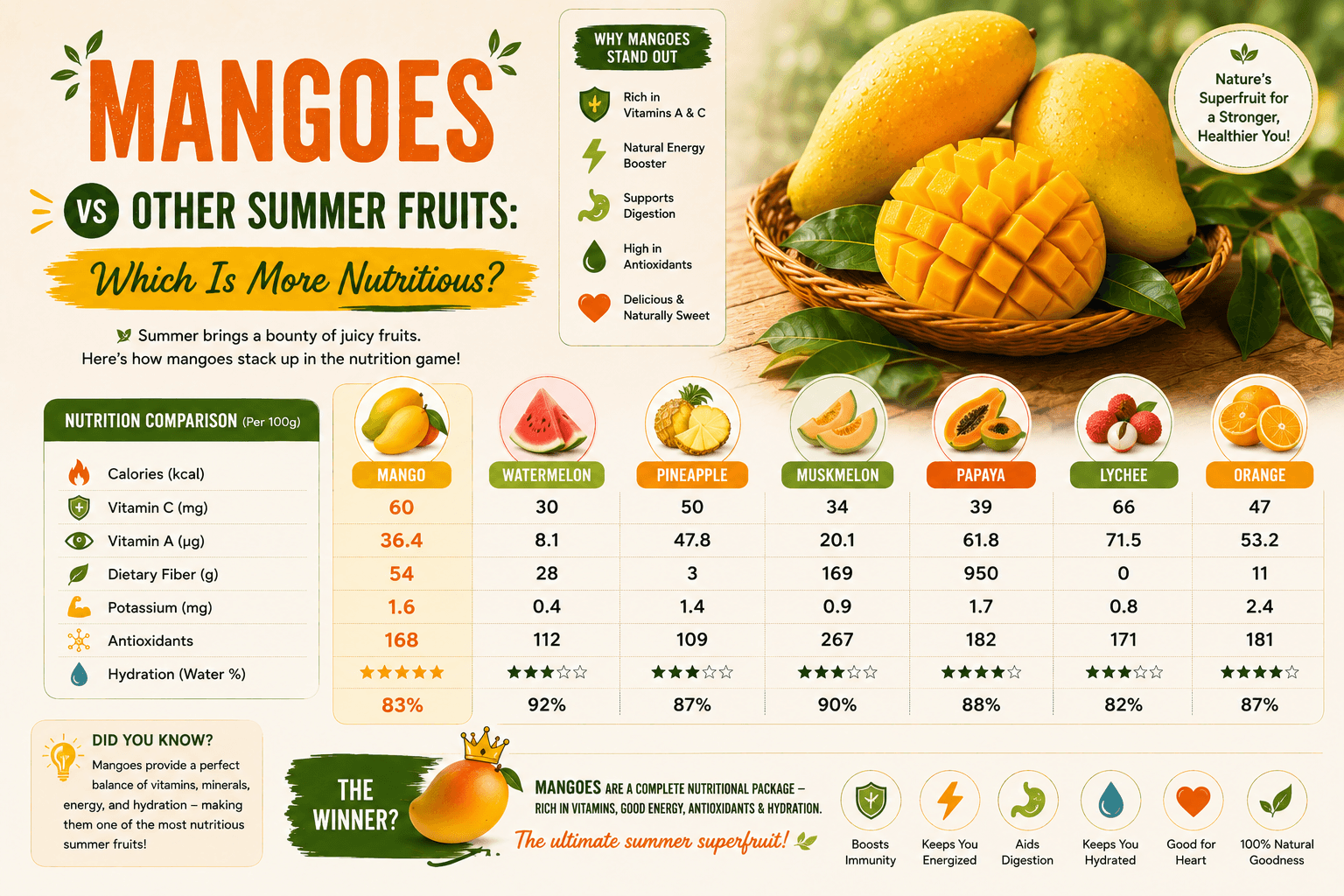
Summer is the perfect season to enjoy a variety of fresh, juicy fruits. From mangoes and watermelons to papayas, muskmelons, lychees, and pineapples, each fruit offers its own unique combination of vitamins, minerals, antioxidants, and hydration. Among them, mangoes are often called the “King of Fruits” because of their rich flavor and impressive nutritional profile.
But are mangoes actually more nutritious than other popular summer fruits? The answer isn’t as simple as choosing one winner. Every fruit has its own strengths, and the healthiest diet includes a variety of seasonal produce. However, mangoes stand out for their exceptional balance of vitamins, antioxidants, dietary fiber, and natural sweetness.
In this guide, we’ll compare mangoes with other common summer fruits to help you understand their nutritional differences and decide how they can fit into a balanced diet.
Why Summer Fruits Are Important
Seasonal fruits are naturally rich in nutrients that support overall health.
Most summer fruits provide:
- Vitamins
- Minerals
- Dietary fiber
- Natural antioxidants
- Water
- Naturally occurring fruit sugars
Eating a variety of fresh fruits helps improve nutrient intake while keeping meals colorful and enjoyable.
Nutritional Highlights of Mangoes
Fresh mangoes are packed with essential nutrients, including:
- Vitamin C
- Vitamin A (from beta-carotene)
- Vitamin E
- Vitamin K
- Folate
- Potassium
- Copper
- Dietary fiber
- Natural antioxidants
- Water
This combination makes mangoes one of the most nutrient-dense fruits available during the summer season.
Mangoes vs Watermelon
Mangoes
- Higher in dietary fiber.
- Rich source of vitamin A and vitamin C.
- Contains antioxidants such as beta-carotene and mangiferin.
- Naturally sweet and satisfying.
Watermelon
- Extremely high water content.
- Refreshing during hot weather.
- Contains vitamin C and lycopene.
- Lower in fiber than mangoes.
Best Choice: If hydration is your priority, watermelon is an excellent option. If you’re looking for more fiber and a broader range of vitamins, mangoes have an advantage.
Mangoes vs Papaya
Mangoes
- Rich in vitamin A and vitamin C.
- Naturally sweet with a creamy texture.
- Excellent source of antioxidants.
Papaya
- High in vitamin C.
- Contains dietary fiber.
- Naturally rich in papain, an enzyme involved in protein digestion.
Best Choice: Both fruits are nutritious. Mangoes provide more beta-carotene and a richer flavor, while papaya is often appreciated for its digestive benefits.
Mangoes vs Muskmelon
Mangoes
- Higher in dietary fiber.
- Rich in vitamin A and antioxidants.
- Naturally sweet and versatile.
Muskmelon
- High water content.
- Good source of vitamin C.
- Refreshing and low in calories.
Best Choice: Muskmelon is excellent for hydration, while mangoes provide a wider variety of nutrients and a higher fiber content.
Mangoes vs Lychee
Mangoes
- Higher in vitamin A.
- Rich in dietary fiber.
- Contains beneficial antioxidants.
Lychee
- Excellent source of vitamin C.
- Juicy and refreshing.
- Lower in fiber than mangoes.
Best Choice: Both fruits provide valuable nutrients, but mangoes offer a more balanced nutritional profile due to their fiber and vitamin A content.
Mangoes vs Pineapple
Mangoes
- Rich in vitamin A and vitamin C.
- Naturally creamy texture.
- High in antioxidants.
Pineapple
- Excellent source of vitamin C.
- Contains bromelain, a natural enzyme.
- Refreshing tropical flavor.
Best Choice: Pineapple is valued for bromelain, while mangoes provide more vitamin A and dietary fiber.
Nutritional Comparison at a Glance
| Nutrient | Mango | Watermelon | Papaya | Muskmelon | Lychee | Pineapple |
|---|---|---|---|---|---|---|
| Vitamin C | Excellent | Good | Excellent | Good | Excellent | Excellent |
| Vitamin A | Excellent | Moderate | Excellent | Good | Low | Low |
| Dietary Fiber | Good | Lower | Good | Moderate | Lower | Moderate |
| Water Content | High | Very High | High | Very High | High | High |
| Antioxidants | Excellent | Good | Excellent | Good | Good | Good |
| Natural Sweetness | High | Moderate | Moderate | Mild | High | Moderate |
Why Mangoes Stand Out
Mangoes combine several nutritional advantages in one fruit.
They provide:
- A rich source of vitamin C.
- Excellent amounts of beta-carotene (vitamin A).
- Dietary fiber.
- Natural antioxidants.
- Potassium.
- Folate.
- Water for hydration.
Few summer fruits offer such a broad combination of nutrients.
Can You Eat Different Summer Fruits Together?
Absolutely.
Combining different fruits increases the variety of nutrients in your diet.
Try mixing mangoes with:
- Watermelon
- Papaya
- Muskmelon
- Pineapple
- Kiwi
- Berries
- Pomegranate
Fruit salads are an easy way to enjoy diverse nutrients and refreshing flavors.
Choosing Fresh Seasonal Mangoes
To enjoy the best nutrition and taste, choose mangoes that are:
- Naturally ripened.
- Freshly harvested.
- Aromatic.
- Slightly soft when ripe.
- Free from major bruises.
Farm-direct mangoes often deliver the highest freshness and flavor.
Final Thoughts
Every summer fruit offers unique nutritional benefits, and there is no need to choose only one. Watermelon is excellent for hydration, papaya supports digestive health, muskmelon is refreshing and low in calories, pineapple provides bromelain, and lychee is rich in vitamin C.
However, mangoes stand out because they combine vitamin C, vitamin A, dietary fiber, antioxidants, potassium, folate, and natural sweetness in one delicious fruit. When enjoyed in moderate portions as part of a balanced diet, fresh mangoes are among the most nutritious and satisfying fruits you can eat during the summer season.
Enjoy Premium Malda Mangoes This Summer
Experience the exceptional taste and nutritional goodness of premium Malda Mangoes. Sourced directly from trusted orchards in Malda, our mangoes are handpicked at peak maturity, naturally ripened, carefully quality-checked, and securely packed before being delivered fresh across India. Add farm-fresh Malda Mangoes to your healthy summer diet and enjoy one of nature’s finest seasonal fruits.
FAQ