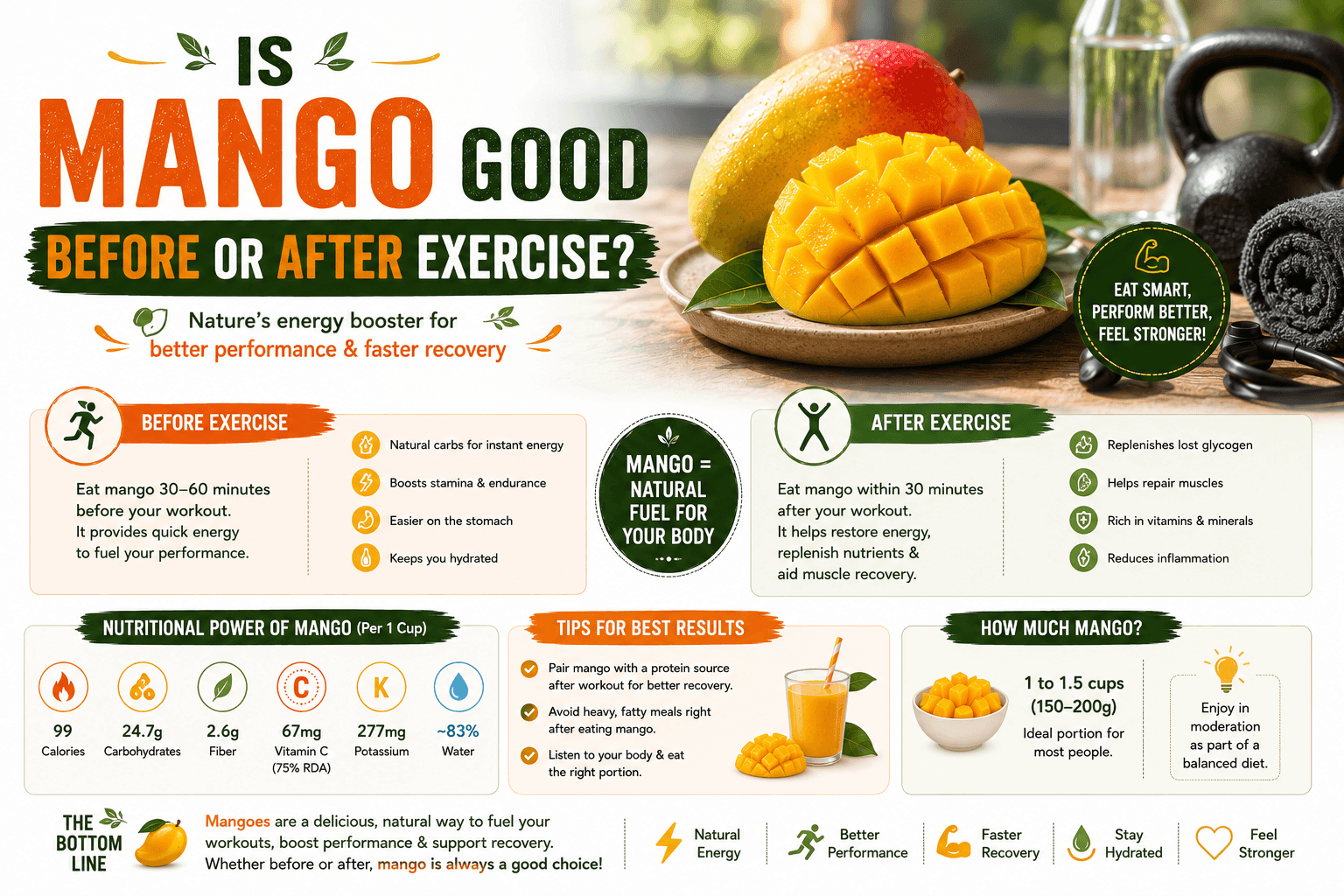
Whether you’re heading to the gym, going for a morning run, practicing yoga, or enjoying your favorite sport, nutrition plays an important role in helping your body perform and recover. Fruits are often recommended as part of a healthy eating pattern, and mangoes are no exception. Their naturally sweet taste, refreshing texture, and rich nutritional profile make them a popular choice during the summer months.
Many fitness enthusiasts ask whether it’s better to eat mangoes before a workout for energy or after exercise for recovery. The answer depends on your goals, the type of activity you’re doing, and your overall diet. Fresh, naturally ripened mangoes can be enjoyed both before and after exercise when eaten in appropriate portions and paired with other nutritious foods.
In this article, we’ll explore the nutritional benefits of mangoes for active individuals, the best times to enjoy them, and practical tips for incorporating them into your fitness routine.
Why Mangoes Are a Nutritious Fruit
Fresh mangoes are packed with nutrients that support overall health and wellness.
They naturally provide:
- Vitamin C
- Vitamin A (from beta-carotene)
- Vitamin E
- Vitamin K
- Folate
- Potassium
- Copper
- Dietary fiber
- Natural antioxidants
- Water
- Naturally occurring carbohydrates
These nutrients make mangoes a wholesome addition to a balanced diet.
Eating Mango Before Exercise
Fresh mangoes can be a great pre-workout snack because they provide naturally occurring carbohydrates, which are one of the body’s primary sources of energy during physical activity.
Eating a moderate serving before exercise may help:
- Provide readily available energy.
- Support endurance during longer workouts.
- Satisfy hunger before training.
- Offer natural hydration due to their water content.
Many people enjoy eating mangoes about 30 to 60 minutes before exercise, allowing enough time for digestion.
Benefits of Mango as a Pre-Workout Snack
Choosing fresh mangoes before exercise offers several advantages:
- Natural fruit sugars for energy.
- Vitamins and antioxidants.
- Refreshing taste during warm weather.
- Easy to digest for many people.
- Convenient and portable.
For a more balanced snack, pair mangoes with protein or healthy fats such as yogurt or a handful of nuts.
Eating Mango After Exercise
After a workout, your body needs nutrients to replenish energy stores and support recovery.
Fresh mangoes can be part of a balanced post-workout meal by providing:
- Naturally occurring carbohydrates.
- Vitamin C.
- Potassium.
- Water.
- Antioxidants.
Combining mangoes with a protein source can help create a satisfying recovery snack.
Healthy Post-Workout Pairings
Some nutritious ways to enjoy mangoes after exercise include:
- Mango with Greek yogurt.
- Mango smoothie with milk.
- Cottage cheese and fresh mango.
- Mango with mixed nuts.
- Mango and overnight oats.
- Mango protein smoothie.
These combinations provide a balance of carbohydrates and protein to complement an active lifestyle.
Potassium for Active Individuals
During exercise, especially in hot weather, the body loses fluids and electrolytes through sweat.
Mangoes naturally contain potassium, a mineral that contributes to:
- Normal muscle function.
- Proper nerve function.
- Maintaining normal fluid balance as part of a healthy diet.
While mangoes are not a replacement for sports drinks in cases of prolonged or intense exercise, they can contribute to a nutritious recovery meal.
Vitamin C Supports Recovery
Mangoes are an excellent source of vitamin C.
Vitamin C contributes to:
- Normal immune function.
- Collagen formation.
- Protection of cells from oxidative stress.
- Iron absorption.
These functions are valuable for maintaining overall health, especially for physically active individuals.
Dietary Fiber and Digestive Health
Fresh mangoes provide dietary fiber, which supports healthy digestion and promotes feelings of fullness.
However, if you’re planning a very intense workout, some people may prefer a smaller portion before exercise to avoid digestive discomfort.
Hydration During Summer Workouts
Fresh mangoes contain a significant amount of water, making them a refreshing fruit for people who exercise during India’s hot summers.
Remember that mangoes should complement—not replace—adequate water intake before, during, and after exercise.
How Much Mango Should You Eat?
For most healthy adults, a reasonable serving is:
- 1 cup of fresh sliced mango before exercise, or
- 1–2 cups after exercise, depending on your overall meal and activity level.
Individual needs vary based on body size, workout intensity, and nutritional goals.
Common Myths About Mango and Exercise
Myth 1: Mangoes Are Too Sweet for Fitness
Fact: Mangoes contain naturally occurring fruit sugars along with dietary fiber, vitamins, minerals, and antioxidants. They can fit into a balanced diet for active individuals.
Myth 2: Mangoes Should Never Be Eaten After Exercise
Fact: Mangoes can be an excellent source of carbohydrates after exercise, especially when paired with protein-rich foods.
Myth 3: Only Sports Supplements Improve Recovery
Fact: Whole foods like fresh fruits, dairy products, nuts, and whole grains also contribute to a nutritious recovery meal.
Myth 4: Mangoes Cause Weight Gain
Fact: Weight gain depends on total calorie intake and overall lifestyle, not on eating one particular fruit. Moderate portions of mangoes can be included in a healthy diet.
Choosing High-Quality Mangoes
For the best flavor and nutritional value, choose mangoes that are:
- Naturally ripened.
- Freshly harvested.
- Aromatic.
- Slightly soft when ripe.
- Free from significant bruises.
Farm-direct mangoes are often fresher and more flavorful.
Final Thoughts
Fresh mangoes can be enjoyed both before and after exercise as part of a balanced diet. Before a workout, they provide naturally occurring carbohydrates for energy, while after exercise they contribute carbohydrates, water, potassium, vitamin C, and antioxidants that support recovery and overall wellness.
The key is to enjoy mangoes in moderate portions, pair them with protein-rich foods when appropriate, stay hydrated, and maintain a varied diet that meets your individual fitness goals. Whether you’re an occasional walker or a dedicated athlete, fresh mangoes can be a delicious and nutritious addition to your active lifestyle.
Fuel Your Active Lifestyle with Premium Malda Mangoes
Enjoy naturally ripened, farm-fresh Malda Mangoes sourced directly from trusted orchards in Malda. Every mango is handpicked at peak maturity, carefully quality-checked, naturally ripened, and securely packed before being delivered fresh across India. Add the authentic taste and nutritional goodness of premium mangoes to your pre-workout snacks, post-workout meals, or everyday healthy diet.
FAQ