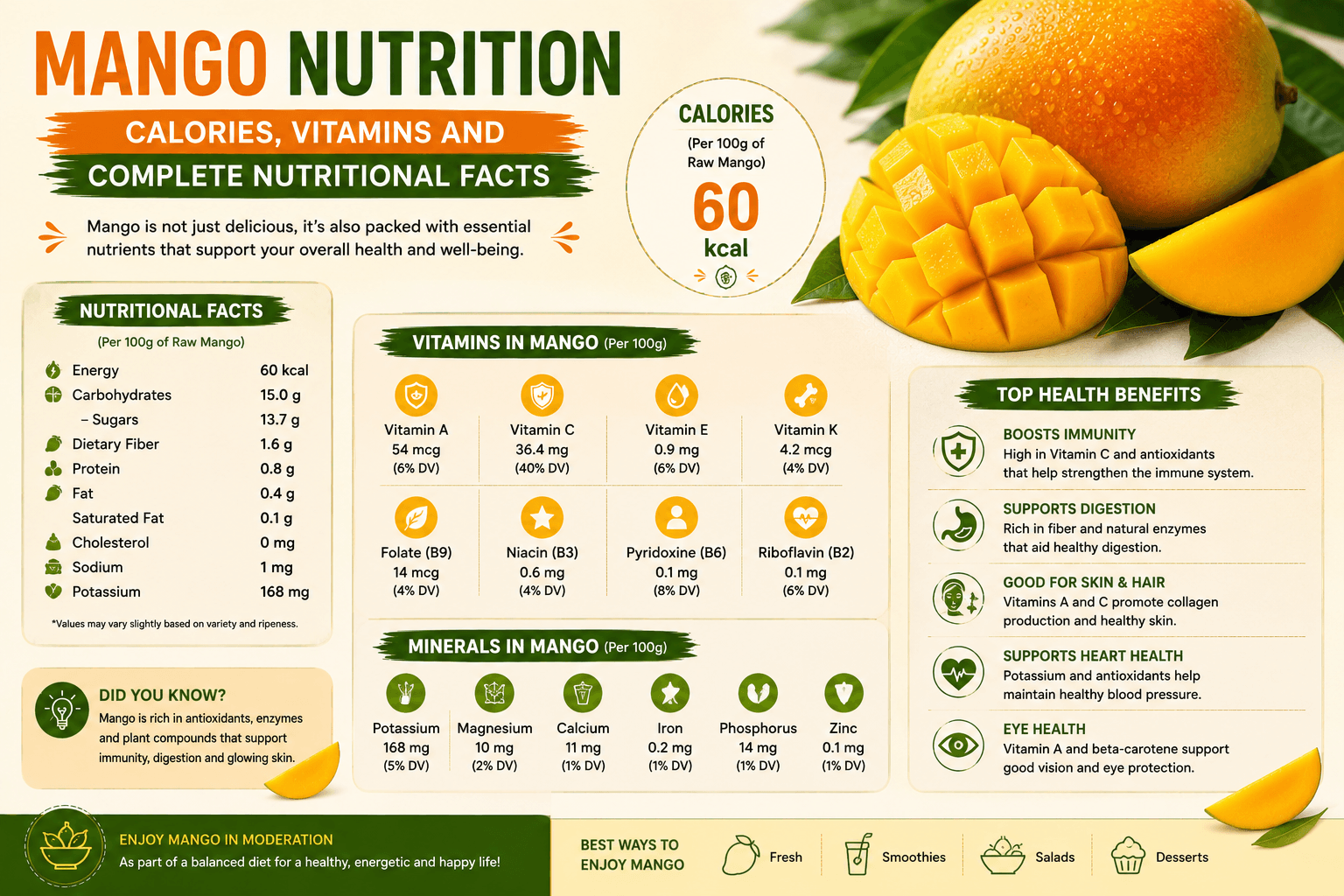
Mango is one of the most nutritious and delicious tropical fruits enjoyed around the world. Known as the “King of Fruits,” mangoes are packed with essential vitamins, minerals, antioxidants, and dietary fiber that support overall health and well-being.
Whether you enjoy Alphonso, Malda, Dashehari, Chausa, Langra, Himsagar, or Kesar mangoes, this naturally sweet fruit provides a wide range of nutrients that make it a healthy addition to your diet.
In this guide, we’ll explore mango calories, vitamins, minerals, and complete nutritional facts to help you understand why mangoes are considered one of nature’s healthiest fruits.
Mango Nutrition Facts (Per 100 Grams)
A 100-gram serving of fresh mango typically contains:
| Nutrient | Amount |
|---|---|
| Calories | 60 kcal |
| Carbohydrates | 15 g |
| Natural Sugars | 13.7 g |
| Dietary Fiber | 1.6 g |
| Protein | 0.8 g |
| Fat | 0.4 g |
| Vitamin C | 36.4 mg |
| Vitamin A | 54 mcg |
| Folate | 43 mcg |
| Potassium | 168 mg |
| Magnesium | 10 mg |
| Calcium | 11 mg |
| Water Content | Approximately 83% |
Nutritional values may vary slightly depending on the mango variety and ripeness.
How Many Calories Are in a Mango?
One of the most common questions people ask is whether mangoes are high in calories.
A 100-gram serving contains approximately 60 calories, making mangoes a nutrient-dense fruit that provides energy along with valuable vitamins and minerals.
A medium-sized mango typically contains between 120 and 150 calories depending on its size and variety.
Vitamins Found in Mangoes
Vitamin C
Mangoes are an excellent source of Vitamin C, which helps:
- Strengthen immunity
- Promote collagen production
- Support wound healing
- Protect cells from oxidative stress
A single serving of mango can provide a significant portion of your daily Vitamin C requirement.
Vitamin A
Mangoes contain beta-carotene, which the body converts into Vitamin A.
Vitamin A supports:
- Healthy vision
- Eye function
- Skin health
- Immune system performance
Vitamin E
Vitamin E acts as an antioxidant that helps protect cells from damage and supports healthy skin.
Vitamin K
Mangoes contain small amounts of Vitamin K, which plays a role in maintaining healthy bones and proper blood clotting.
B Vitamins
Mangoes provide several B vitamins, including:
- Vitamin B6
- Folate (Vitamin B9)
- Niacin
- Riboflavin
These nutrients help support metabolism, brain function, and energy production.
Important Minerals in Mangoes
Potassium
Potassium helps regulate fluid balance, muscle contractions, and blood pressure levels.
Magnesium
Magnesium supports:
- Muscle function
- Nerve function
- Bone health
- Energy production
Copper
Copper contributes to healthy red blood cell production and supports overall immune health.
Rich Source of Antioxidants
Mangoes contain powerful antioxidants such as:
- Mangiferin
- Beta-carotene
- Quercetin
- Gallic acid
- Astragalin
Antioxidants help combat free radicals and support overall cellular health.
Fiber Content in Mangoes
Mangoes contain dietary fiber, which helps:
- Support digestion
- Promote regular bowel movements
- Improve gut health
- Increase feelings of fullness
Including fiber-rich fruits like mangoes in your diet can contribute to better digestive health.
Are Mangoes Good for Weight Management?
Despite their natural sweetness, mangoes can be part of a balanced diet.
Benefits include:
- Low fat content
- High water content
- Dietary fiber for satiety
- Naturally sweet alternative to processed desserts
Moderation is key when including mangoes in a healthy eating plan.
Why Mangoes Are Considered a Superfruit
Mangoes offer a unique combination of:
- Vitamins
- Minerals
- Antioxidants
- Fiber
- Natural hydration
This nutritional profile makes mangoes one of the most beneficial fruits for overall health and wellness.
Best Ways to Enjoy Mangoes
You can enjoy mangoes in many delicious ways:
- Fresh slices
- Smoothies
- Fruit salads
- Yogurt bowls
- Mango shakes
- Desserts
- Chutneys
For maximum nutrition and flavor, choose naturally ripened mangoes sourced directly from trusted farms.
Conclusion
Mangoes are much more than a delicious tropical fruit. They are packed with essential nutrients including Vitamin C, Vitamin A, potassium, folate, antioxidants, and dietary fiber that support immunity, digestion, heart health, skin health, and overall wellness.
Whether you’re looking for a healthy snack or a nutritious addition to your diet, mangoes provide an excellent combination of taste and nutrition.
Enjoy fresh, naturally ripened mangoes as part of a balanced lifestyle and experience the many nutritional benefits this remarkable fruit has to offer.
FAQ