

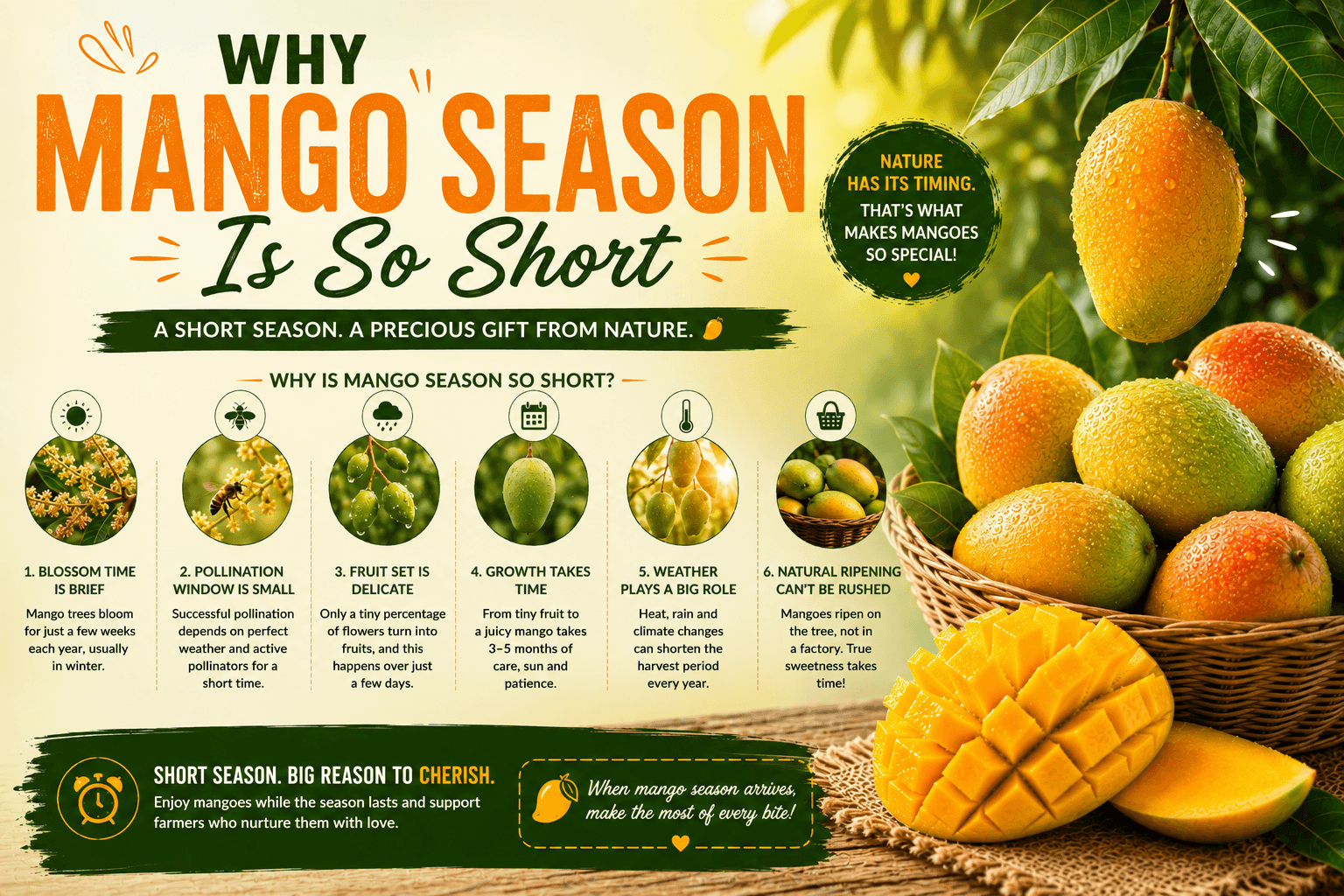
Every year, mango lovers eagerly wait for the arrival of fresh, juicy mangoes. For a few magical months, markets and orchards across India are filled with the irresistible aroma and vibrant colors of the country’s favorite fruit. Then, almost as quickly as it begins, mango season comes to an end, leaving many people wondering why such a beloved fruit is available for only a short time.
Unlike fruits that are harvested throughout the year, mangoes follow a natural seasonal cycle. Their growth depends on specific climatic conditions, flowering periods, pollination, fruit development, and careful harvesting. These natural processes cannot be rushed without affecting quality, which is why truly fresh mangoes are only available during a limited window each year.
In this article, we’ll explore the reasons behind the short mango season and why this limited availability makes fresh seasonal mangoes even more special.
Mangoes Follow Nature’s Calendar
Mango trees are seasonal fruit-bearing trees.
Unlike crops that can be grown continuously, mango trees complete one major fruiting cycle each year. This annual cycle includes:
- Dormancy
- New leaf growth
- Flowering
- Pollination
- Fruit set
- Fruit development
- Harvesting
- Recovery
Each stage requires time and favorable environmental conditions before the next can begin.
Flowering Happens Only Once a Year
One of the main reasons mango season is short is that mango trees typically flower only once each year.
During the flowering season:
- Thousands of blossoms appear.
- Bees and other pollinators visit the flowers.
- Pollination takes place.
- Only a small percentage of flowers develop into fruits.
If flowering is affected by unfavorable weather, the entire harvest can be reduced.
Fruit Development Takes Several Months
After successful pollination, mangoes need time to grow and mature.
During this period, the fruit gradually:
- Increases in size.
- Develops its seed.
- Stores starch.
- Builds flavor compounds.
- Accumulates nutrients.
Only after reaching physiological maturity are mangoes ready to be harvested.
This entire process cannot be significantly shortened without affecting fruit quality.
Climate Plays a Major Role
Mango trees require very specific weather conditions throughout their life cycle.
Ideal conditions include:
- Warm temperatures.
- Plenty of sunshine.
- Moderate rainfall.
- Dry weather during flowering and harvesting.
Heavy rain, strong winds, hailstorms, or unseasonal temperature changes can affect flowering, pollination, and fruit development, leading to shorter or less productive seasons.
Different Varieties Have Different Harvest Times
Although mango season feels short, different varieties actually ripen at different times.
For example:
Early-Season Mangoes
These are among the first to reach the market and signal the beginning of summer.
Mid-Season Mangoes
This is when the widest selection of premium varieties becomes available.
Late-Season Mangoes
Late varieties extend mango availability by several weeks before the season comes to an end.
Together, these staggered harvests help maximize the overall mango season, but each individual variety still has a relatively short harvest window.
Mangoes Cannot Be Harvested Year-Round
Unlike some fruits grown in controlled environments, mango trees depend on natural seasonal changes.
They require:
- Seasonal flowering.
- Natural fruit development.
- Proper maturation.
- Recovery after harvest.
Attempting to force continuous fruit production would place stress on the trees and reduce long-term orchard health.
Harvest Timing Is Critical
Farmers carefully monitor mangoes before harvesting.
Fruit is picked only after reaching the correct stage of maturity.
Harvesting too early can result in:
- Poor flavor.
- Lower sweetness.
- Uneven ripening.
- Reduced eating quality.
Waiting for proper maturity ensures naturally ripened mangoes develop their full sweetness and aroma.
Why Fresh Seasonal Mangoes Taste Better
One reason people look forward to mango season is that fresh seasonal mangoes offer exceptional quality.
They are often:
- Harvested at peak maturity.
- Naturally ripened.
- Rich in flavor.
- Aromatic.
- Juicy.
- Fresh from the orchard.
Seasonal harvesting allows the fruit to develop under ideal natural conditions.
Mango Trees Need Time to Recover
After the harvest ends, mango trees do not immediately begin producing another crop.
Instead, they enter a recovery phase during which they:
- Restore energy reserves.
- Produce new leaves.
- Strengthen branches.
- Develop healthy roots.
- Prepare for the following flowering season.
This recovery period is essential for maintaining healthy trees and consistent future harvests.
How Farmers Make the Most of the Season
Because the harvest window is limited, farmers carefully plan every stage of orchard management.
Key activities include:
- Pruning.
- Irrigation.
- Nutrient management.
- Pest monitoring.
- Pollinator protection.
- Harvest planning.
- Quality grading.
These practices help ensure that the short mango season delivers the highest possible quality.
Why Mango Season Feels Too Short
For mango lovers, the season often seems to disappear quickly because:
- Fresh mangoes are highly anticipated.
- Peak-quality fruit is available for only a few weeks.
- Popular varieties sell out rapidly.
- Seasonal demand is extremely high.
This limited availability makes every mango season feel special.
The Value of Buying Seasonal Mangoes
Choosing fresh seasonal mangoes offers several advantages.
You can enjoy:
- Better flavor.
- Rich aroma.
- Excellent texture.
- Maximum freshness.
- Farm-direct quality.
Seasonal fruit is often harvested closer to its ideal maturity, resulting in a superior eating experience.
Why Malda Mangoes Are Worth Waiting For
Malda in West Bengal is one of India’s most celebrated mango-growing regions.
Its famous varieties include:
- Himsagar
- Fazli
- Lakshmanbhog
- Gopalbhog
- Khirsapati
These premium mangoes are available only during their natural harvesting period, making them a true seasonal delicacy.
Final Thoughts
Mango season is short because nature has designed the fruit to follow a carefully balanced annual cycle. From flowering and pollination to fruit development, harvesting, and tree recovery, every stage takes time and depends on favorable environmental conditions.
Rather than seeing the short season as a limitation, it’s worth appreciating it as part of what makes fresh mangoes so special. Their limited availability encourages us to enjoy them at their peak, when they offer the best flavor, aroma, and quality. Every mango season is a reminder that some of nature’s finest gifts are worth waiting for.
Enjoy Premium Malda Mangoes While They’re in Season
Make the most of mango season with premium Malda Mangoes sourced directly from trusted orchards in West Bengal. Our Himsagar, Fazli, Lakshmanbhog, Gopalbhog, and Khirsapati mangoes are handpicked at peak maturity, naturally ripened, carefully graded, thoroughly quality-checked, and securely packed before being delivered fresh across India. Experience the authentic taste of farm-fresh seasonal mangoes before the harvest ends.