

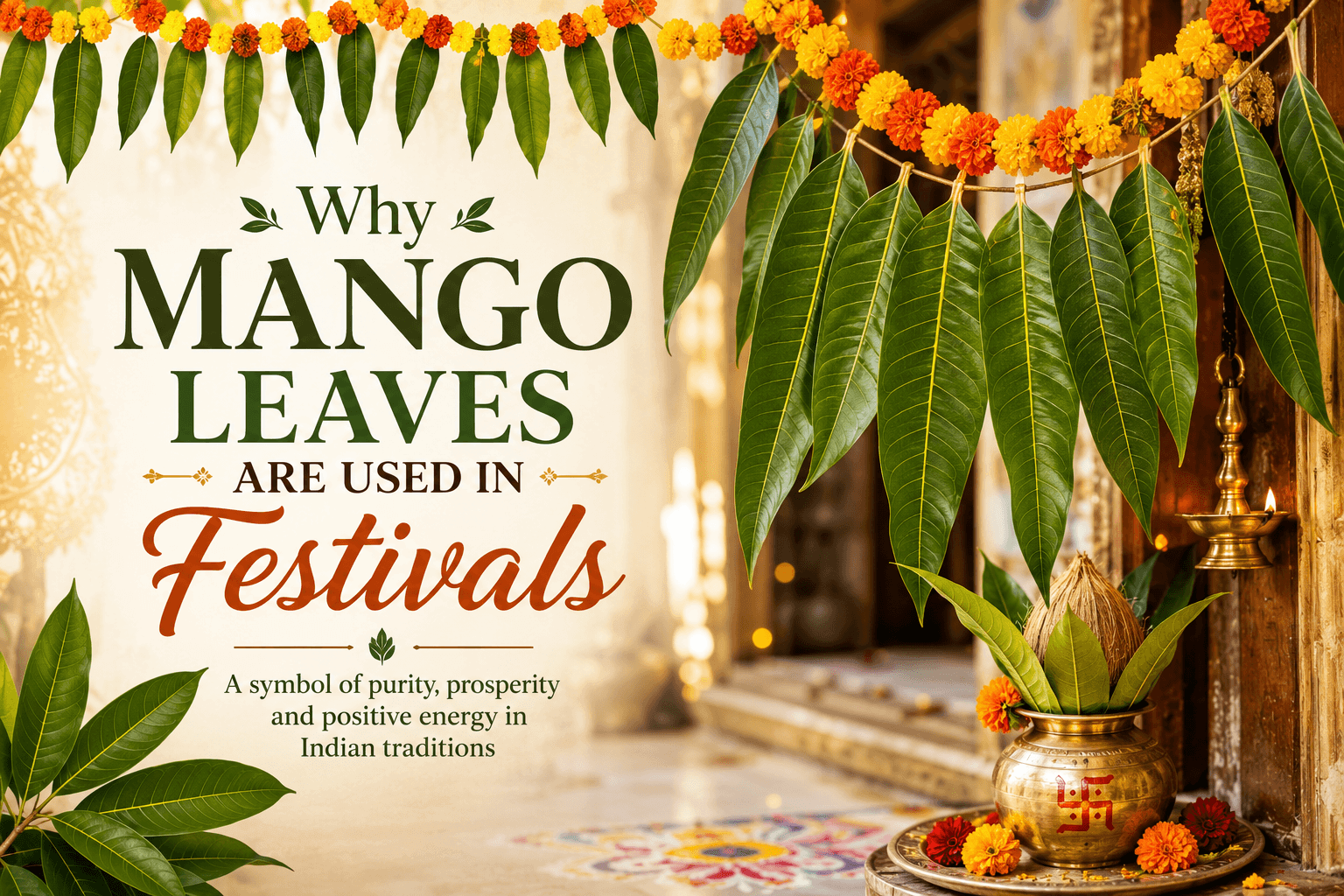
Across India, festivals are celebrated with vibrant decorations, colorful traditions, and meaningful rituals passed down through generations. Among the many symbols seen during these celebrations, mango leaves hold a special place. Whether adorning the entrance of a home, decorating temples, or being tied around ceremonial pots, mango leaves are considered an important part of many religious and cultural occasions.
For centuries, people have associated mango leaves with prosperity, good fortune, purity, and new beginnings. Their use extends beyond decoration—they represent hospitality, positivity, and respect for traditions that continue to unite families and communities during festive occasions.
In this article, we’ll explore why mango leaves are used in festivals, their historical and cultural significance, and how this timeless tradition remains meaningful in modern India.
The Cultural Importance of Mango Leaves
Mango trees have been valued in India for thousands of years, not only for their delicious fruit but also for their symbolic importance.
Mango leaves are widely regarded as symbols of:
- Prosperity.
- Good fortune.
- Abundance.
- Positivity.
- Peace.
- Growth.
- Renewal.
Because the mango tree is long-lived and productive, its leaves have come to represent continuity and well-being.
A Tradition Passed Down Through Generations
The practice of using mango leaves during festivals has been followed for centuries.
Families continue this tradition during:
- Religious ceremonies.
- Weddings.
- Housewarming celebrations.
- Harvest festivals.
- Community gatherings.
- Seasonal celebrations.
Passing these customs from one generation to the next helps preserve India’s rich cultural heritage.
Mango Leaf Torans at Home Entrances
One of the most familiar festival decorations is the toran, a garland traditionally made using fresh mango leaves.
These decorative leaf strings are often placed:
- Above the main entrance.
- At temple doorways.
- Around ceremonial spaces.
The toran serves as a welcoming symbol for guests and marks the occasion as a joyful celebration.
Mango Leaves in Religious Rituals
In many Indian traditions, mango leaves are used during religious ceremonies.
They are commonly seen:
- Around ceremonial pots (Kalash).
- Near prayer altars.
- During temple rituals.
- At festive gatherings.
Their presence reflects respect for long-standing customs and ceremonial practices.
Symbol of Prosperity and Abundance
One reason mango leaves are so widely used is their association with prosperity.
The mango tree itself is admired because it:
- Produces abundant fruit.
- Remains green for much of the year.
- Lives for many decades.
- Supports wildlife and biodiversity.
These qualities have made its leaves a natural symbol of abundance and growth.
Connection with Nature
Traditional Indian festivals often emphasize harmony with nature.
Using fresh mango leaves reminds people of:
- The importance of trees.
- Seasonal changes.
- Agriculture.
- Respect for the environment.
- Gratitude for nature’s gifts.
This connection reflects India’s long agricultural history.
Mango Leaves During Weddings
Mango leaves are frequently included in wedding decorations.
They symbolize:
- New beginnings.
- Family prosperity.
- Joyful celebrations.
- Blessings for the future.
Their fresh green appearance also adds beauty to traditional decorations.
Housewarming Ceremonies
During Griha Pravesh (housewarming ceremonies), mango leaves are often used to decorate the entrance and ceremonial spaces.
They represent:
- A warm welcome.
- Positive beginnings.
- Prosperity for the household.
- Traditional values.
These customs continue in many parts of India today.
Mango Leaves and Harvest Festivals
Since mango trees are closely connected with agriculture, their leaves also appear during harvest celebrations.
These festivals recognize:
- Farmers’ hard work.
- Nature’s generosity.
- Seasonal abundance.
- Community traditions.
Mango leaves complement the festive atmosphere while honoring agricultural heritage.
The Beauty of Simple Decorations
One of the reasons mango leaves remain popular is their natural elegance.
Fresh green leaves bring:
- Vibrant color.
- Simplicity.
- Freshness.
- Traditional charm.
They blend beautifully with flowers, lamps, and other festive decorations.
Mango Leaves in Different Regions of India
Although customs vary from region to region, mango leaves are widely used across the country.
They are commonly seen during festivals celebrated in:
- North India.
- South India.
- East India.
- West India.
Despite regional differences, the symbolism of prosperity and welcome remains remarkably consistent.
Preserving Traditional Customs
Modern celebrations often combine contemporary decorations with traditional elements.
By continuing to use mango leaves, families help preserve:
- Cultural identity.
- Traditional knowledge.
- Regional customs.
- Community values.
These practices keep India’s rich heritage alive for future generations.
The Connection Between Mango Trees and Indian Culture
The importance of mango trees extends far beyond festivals.
They are celebrated through:
- Literature.
- Art.
- Music.
- Folklore.
- Agriculture.
- Seasonal traditions.
This enduring relationship has made the mango one of India’s most cherished cultural symbols.
Malda and India’s Mango Heritage
Malda in West Bengal is one of India’s most renowned mango-growing regions.
Its famous varieties include:
- Himsagar
- Fazli
- Lakshmanbhog
- Gopalbhog
- Khirsapati
The district’s long tradition of mango cultivation reflects the enduring importance of mango trees in India’s agricultural and cultural history.
Final Thoughts
The use of mango leaves in festivals is a beautiful tradition that reflects India’s deep respect for nature, culture, and family values. Whether decorating homes with torans, adorning ceremonial spaces, or symbolizing prosperity during important occasions, mango leaves continue to play a meaningful role in celebrations across the country.
More than simple decorations, they represent continuity, abundance, hospitality, and the timeless connection between people and the natural world. As these traditions continue from one generation to the next, mango leaves remain an enduring symbol of India’s rich cultural heritage.
Celebrate Tradition with Premium Malda Mangoes
Experience the heritage of India’s beloved mango tree with premium Malda Mangoes sourced directly from trusted orchards in West Bengal. Our Himsagar, Fazli, Lakshmanbhog, Gopalbhog, and Khirsapati mangoes are handpicked at peak maturity, naturally ripened, carefully graded, thoroughly quality-checked, and securely packed before being delivered fresh across India. Enjoy the authentic flavors of a fruit that has been celebrated in Indian traditions for centuries.