

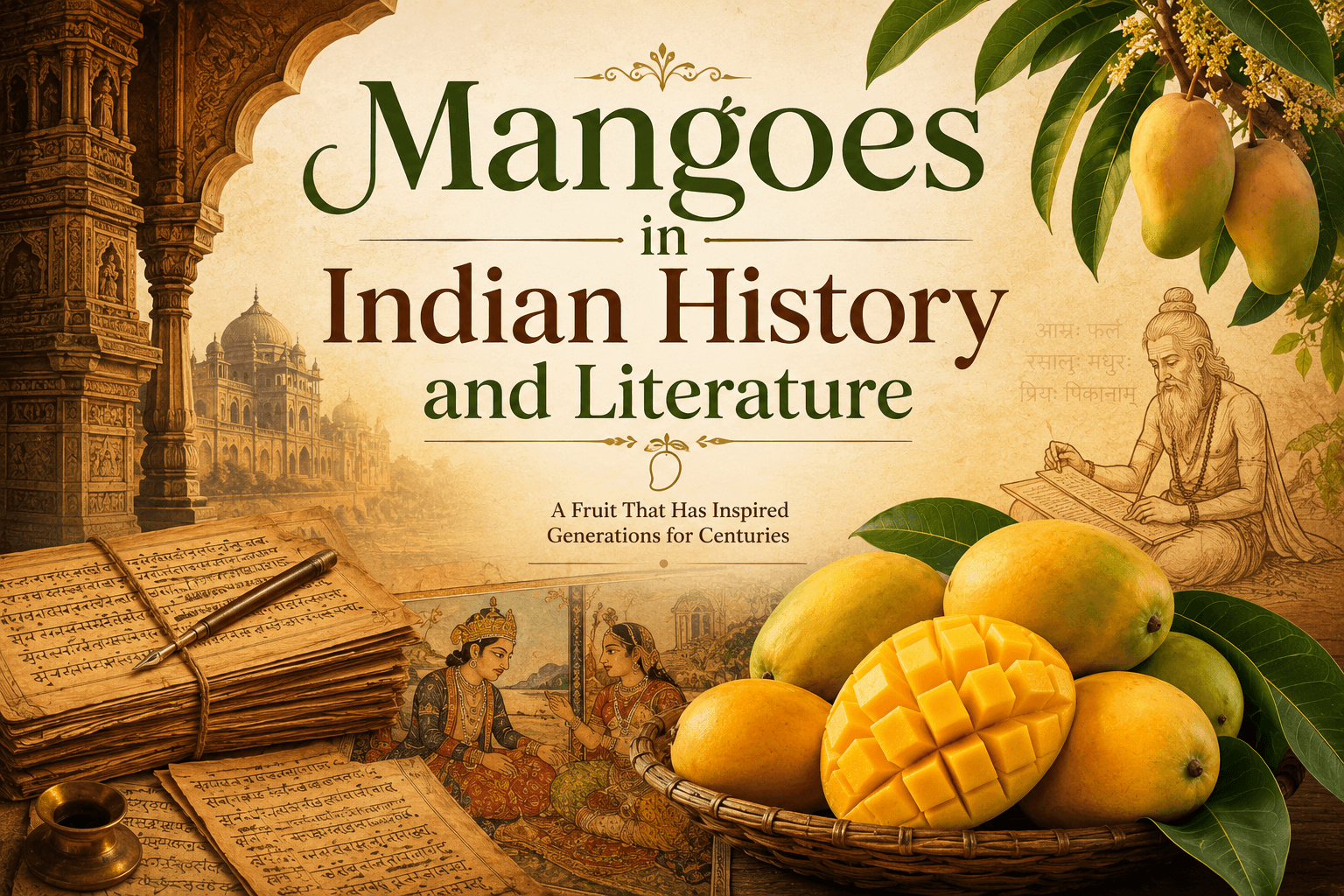
across different regions of the country, thriving in diverse climates and becoming an integral part of Indian agriculture.
Ancient communities valued mango trees for their:
- Nutritious fruit.
- Dense shade.
- Long lifespan.
- Economic importance.
- Cultural symbolism.
Today, India remains one of the world’s largest producers of mangoes, with hundreds of unique varieties grown across the country.
Mangoes in Ancient Indian Literature
Mangoes appear in many ancient Indian literary works, reflecting their importance in everyday life and cultural traditions.
They are mentioned in:
- Classical Sanskrit literature.
- Ancient poems.
- Religious stories.
- Folk traditions.
- Seasonal songs.
In many writings, mango blossoms symbolize the arrival of spring, renewal, beauty, and new beginnings.
Mangoes in Sanskrit Poetry
Classical Sanskrit poets frequently used mango trees and blossoms as symbols of love, nature, and romance.
Their works often describe:
- Blooming mango orchards.
- Fragrant flowers.
- Singing birds.
- Pleasant spring weather.
- Joyful celebrations.
The mango became a poetic representation of life’s beauty and the changing seasons.
Mangoes in Indian Epics and Traditional Stories
Throughout Indian storytelling traditions, mangoes have appeared as symbols of:
- Prosperity.
- Wisdom.
- Hospitality.
- Fertility.
- Good fortune.
Many regional folktales feature mango trees as places of gathering, learning, and community life.
These stories helped strengthen the mango’s place in Indian cultural memory.
The Mango in Religious Traditions
Mangoes and mango leaves hold special significance in many Indian religious and cultural ceremonies.
Common traditions include:
- Decorating entrances with mango leaf garlands.
- Using mango leaves during festivals.
- Offering ripe mangoes in seasonal rituals.
- Including mango motifs in traditional art.
These customs continue across many regions of India today.
Mangoes During the Mughal Era
The Mughal period played an important role in promoting mango cultivation.
Royal gardens often included carefully managed mango orchards, where horticultural knowledge and cultivation techniques continued to evolve.
Historical accounts describe the appreciation of mangoes among members of the Mughal court, contributing to the popularity and preservation of many regional varieties.
The era also encouraged the exchange of horticultural practices that influenced mango cultivation for generations.
Mangoes in Regional Literature
Different regions of India celebrate mangoes through local languages and literary traditions.
Writers have praised:
- The sweetness of ripe mangoes.
- The beauty of flowering orchards.
- Rural summer life.
- Family gatherings during mango season.
- The emotional connection between people and nature.
Whether in Bengali, Hindi, Tamil, Marathi, Gujarati, or other Indian languages, mangoes continue to inspire poets and storytellers.
Mangoes in Indian Art
The mango has also become an enduring artistic symbol.
It appears in:
- Traditional paintings.
- Textile patterns.
- Temple carvings.
- Pottery.
- Decorative crafts.
One of the most recognizable examples is the famous paisley (mango) motif, inspired by the curved shape of a mango and widely used in Indian textiles and handicrafts.
Mangoes as a Symbol of Hospitality
Offering ripe mangoes to guests has long been considered a gesture of warmth and generosity.
During summer, families often:
- Share seasonal mangoes.
- Prepare mango-based desserts.
- Exchange mango gift boxes.
- Celebrate harvest traditions together.
These customs continue to strengthen social bonds across generations.
Mangoes in Modern Indian Literature
Contemporary Indian authors continue to feature mangoes in novels, essays, and children’s stories.
The fruit often represents:
- Childhood memories.
- Summer holidays.
- Family traditions.
- Village life.
- Nostalgia.
For many readers, mangoes evoke emotions that go far beyond taste alone.
The Role of Mangoes in Indian Festivals
Across India, mangoes are associated with seasonal celebrations and harvest festivals.
Communities celebrate the arrival of fresh mangoes through:
- Local fairs.
- Mango festivals.
- Cultural programs.
- Culinary events.
- Traditional recipes.
These events honor both the fruit and the farmers who cultivate it.
Preserving India’s Mango Heritage
India’s remarkable diversity of mango varieties is part of its agricultural and cultural heritage.
Conservation efforts focus on:
- Protecting traditional varieties.
- Supporting orchard communities.
- Promoting sustainable farming.
- Encouraging research.
- Preserving regional cultivation practices.
These initiatives help ensure that future generations can continue enjoying India’s rich mango legacy.
Malda: A Historic Mango-Growing Region
Among India’s renowned mango-growing districts, Malda in West Bengal has earned a distinguished reputation.
The region is celebrated for premium varieties such as:
- Himsagar
- Fazli
- Lakshmanbhog
- Gopalbhog
- Khirsapati
For generations, mango cultivation has been an important part of Malda’s economy, traditions, and local identity, making it one of India’s most respected mango-producing regions.
Final Thoughts
The story of mangoes in Indian history and literature is a story of culture, tradition, and enduring appreciation for one of nature’s finest fruits. From ancient Sanskrit poetry and religious ceremonies to royal orchards, regional folklore, and modern storytelling, the mango has remained a symbol of prosperity, beauty, hospitality, and the joy of summer.
As India continues to preserve its remarkable diversity of mango varieties and cultivation traditions, the mango remains much more than a seasonal fruit. It is a living part of the country’s heritage, connecting generations through shared memories, celebrations, and the timeless pleasure of enjoying a perfectly ripened mango.
Experience a Living Tradition with Premium Malda Mangoes
Celebrate India’s rich mango heritage with premium Malda Mangoes sourced directly from trusted orchards in West Bengal. Our Himsagar, Fazli, Lakshmanbhog, Gopalbhog, and Khirsapati mangoes are handpicked at peak maturity, naturally ripened, carefully graded, thoroughly quality-checked, and securely packed before being delivered fresh across India. Enjoy the authentic flavors that have been treasured across generations and remain an important part of India’s cultural legacy.