

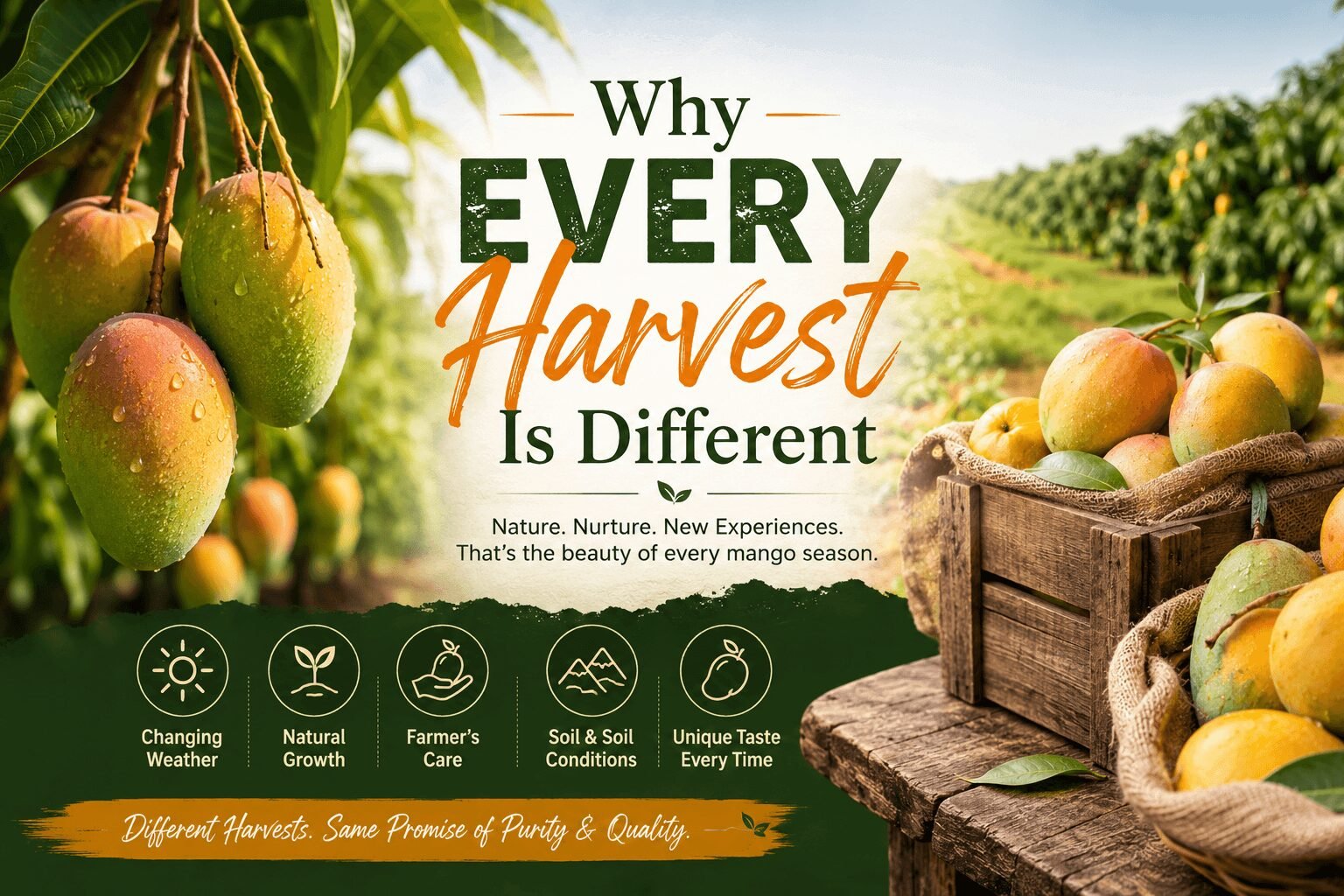
If you’ve ever noticed that mangoes taste slightly different from one season to the next, you’re not imagining it. Every mango harvest is unique because nature is constantly changing. Factors such as weather, rainfall, sunshine, temperature, flowering conditions, and orchard management all influence how mangoes grow, ripen, and develop their characteristic sweetness and aroma.
Unlike manufactured products, fresh fruits are shaped by the environment in which they grow. Even mangoes harvested from the same orchard can vary slightly from year to year in size, color, texture, and flavor. These natural differences are part of what makes every mango season exciting and special.
In this article, we’ll explore why every mango harvest is different, the natural factors that influence each season, and how experienced growers work with nature to produce premium-quality mangoes year after year.
Mangoes Are a Seasonal Gift from Nature
Mangoes follow a natural growth cycle that depends on environmental conditions.
Throughout the season, mango trees pass through several important stages:
- Dormancy.
- Flowering.
- Pollination.
- Fruit development.
- Maturity.
- Harvesting.
Each stage is influenced by weather and orchard conditions, making every harvest slightly different.
Weather Plays a Major Role
Weather is one of the biggest influences on mango production.
Key weather factors include:
- Temperature.
- Rainfall.
- Sunshine.
- Humidity.
- Wind conditions.
Even small seasonal variations can affect how mangoes grow and mature.
Flowering Determines the Beginning of the Harvest
A successful harvest starts with healthy flowering.
Flower production depends on:
- Suitable temperatures.
- Healthy trees.
- Balanced irrigation.
- Proper pruning.
- Favorable environmental conditions.
A strong flowering season often supports better fruit development later in the year.
Pollination Supports Fruit Development
Once flowers bloom, pollination becomes essential.
Natural pollinators such as bees and other beneficial insects help transfer pollen, allowing flowers to develop into healthy mangoes.
Successful pollination contributes to:
- Better fruit formation.
- Improved yield.
- Healthy fruit development.
- Balanced orchard productivity.
Rainfall Can Be Helpful—or Challenging
Rain is important for orchard health, but timing matters.
Well-distributed rainfall can support:
- Healthy tree growth.
- Soil moisture.
- Fruit development.
However, unusually heavy or untimely rainfall during sensitive stages may influence flowering or harvesting activities.
Sunshine Helps Develop Sweetness
Sunlight plays a key role throughout the growing season.
Adequate sunshine supports:
- Photosynthesis.
- Fruit growth.
- Sugar development.
- Natural ripening.
- Rich color formation.
Sunny conditions often contribute to the naturally sweet flavor that mango lovers enjoy.
Orchard Management Makes a Difference
Experienced growers carefully manage orchards throughout the year.
Important practices include:
- Irrigation management.
- Seasonal pruning.
- Soil care.
- Nutrient management.
- Pest monitoring.
- Post-harvest orchard maintenance.
Good orchard management helps trees remain healthy across changing seasons.
Soil Conditions Influence Fruit Quality
Healthy soil provides the nutrients mango trees need to grow.
Fertile alluvial soils, such as those found in Malda, support:
- Strong root development.
- Balanced moisture retention.
- Healthy tree growth.
- Consistent fruit production.
Well-maintained soil contributes to premium-quality mangoes.
Every Variety Responds Differently
Not all mango varieties react to seasonal conditions in the same way.
For example:
- Himsagar may mature at a slightly different pace than Fazli.
- Lakshmanbhog and Gopalbhog can have their own flowering and harvesting patterns.
- Khirsapati may respond differently to rainfall and temperature than other cultivars.
This natural variation adds diversity to every mango season.
Harvest Timing Is Carefully Planned
Harvesting at the correct stage of maturity is essential.
Growers consider:
- Fruit maturity.
- Skin appearance.
- Variety-specific characteristics.
- Weather forecasts.
- Transportation schedules.
Careful timing helps preserve flavor, freshness, and quality.
Natural Variation Is a Sign of Authentic Fruit
Consumers sometimes expect every mango to look identical, but natural fruits vary.
Differences may include:
- Slight variations in size.
- Color shades.
- Shape.
- Sweetness.
- Aroma.
These natural variations are signs that the fruit has developed under real orchard conditions rather than being artificially standardized.
Why Malda Mangoes Continue to Impress Every Season
Malda, located in West Bengal, is one of India’s most respected mango-growing regions.
Its famous varieties include:
- Himsagar.
- Fazli.
- Lakshmanbhog.
- Gopalbhog.
- Khirsapati.
The fertile alluvial soils, warm climate, careful irrigation, seasonal pruning, and generations of orchard expertise allow growers to consistently produce premium-quality mangoes. Although each harvest has its own unique characteristics, Malda mangoes are widely appreciated for their naturally sweet flavor, rich aroma, smooth, fibre-light pulp, and exceptional freshness.
Appreciating Seasonal Differences
Every harvest tells a unique story.
Instead of expecting every mango to be identical, consumers can appreciate:
- Seasonal flavor differences.
- Natural sweetness.
- Unique aromas.
- Regional characteristics.
- Variety-specific qualities.
These subtle changes make each mango season memorable.
Interesting Facts About Mango Harvests
Here are a few fascinating facts:
- Mango harvests vary every year because weather conditions are never exactly the same.
- Flowering and pollination are two of the most important stages in fruit production.
- Sunshine contributes to the natural development of sugars within the fruit.
- Different mango varieties mature at different times during the season.
- Experienced orchard management helps maintain quality despite changing environmental conditions.
Final Thoughts
Every mango harvest is a unique collaboration between nature and the expertise of dedicated growers. Weather, flowering, pollination, soil conditions, sunshine, rainfall, and orchard management all influence the final fruit that reaches your table.
Rather than viewing seasonal differences as imperfections, they should be appreciated as part of the natural beauty of fresh produce. Each harvest brings its own combination of flavors, aromas, textures, and experiences, making mango season something to look forward to every year.
Whether you’re enjoying a creamy Himsagar, a giant Fazli, a fragrant Lakshmanbhog, or another premium variety, every mango reflects the conditions of its season and the care invested throughout its journey from orchard to harvest.
Experience Premium Malda Mangoes
Experience the authentic taste of premium Malda Mangoes sourced directly from trusted orchards in West Bengal. Our Himsagar, Fazli, Lakshmanbhog, Gopalbhog, and Khirsapati mangoes are handpicked at peak maturity, naturally ripened, carefully graded, thoroughly quality-checked, and securely packed before being delivered fresh across India. Grown in fertile alluvial soils and nurtured through expert orchard management, our farm-direct mangoes celebrate the uniqueness of every harvest while delivering exceptional flavor, rich aroma, and premium quality in every box.