

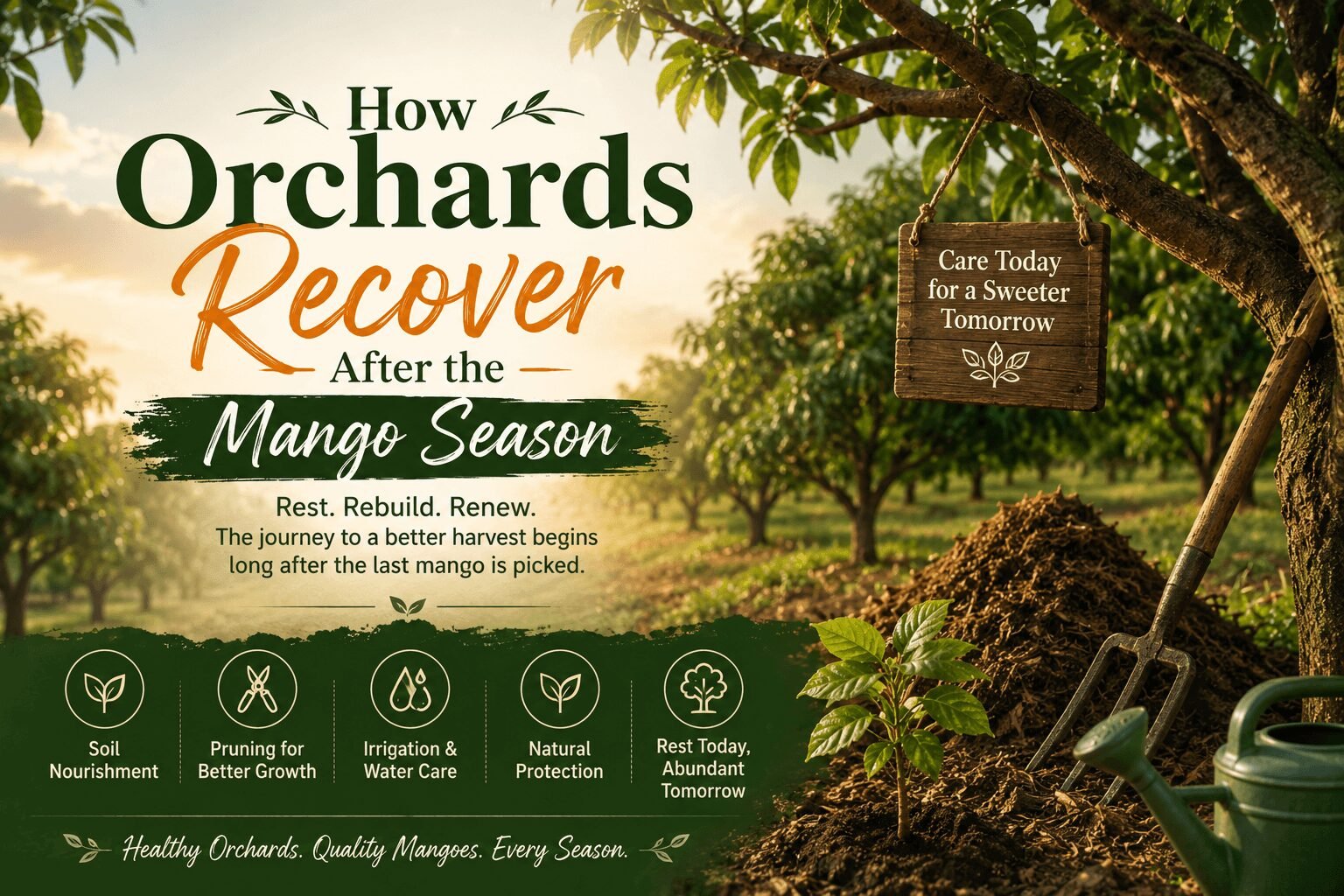
For many people, the end of mango season simply means waiting another year for fresh, juicy mangoes. However, for orchard owners and growers, the work is far from over. Once the last mangoes are harvested, an equally important phase begins—helping the orchard recover and prepare for the next growing cycle.
A healthy mango harvest is not achieved through seasonal care alone. It is the result of year-round orchard management that focuses on maintaining tree health, restoring soil fertility, encouraging new growth, and protecting trees from pests and environmental stress. The months following the harvest are essential for ensuring that mango trees remain productive and capable of producing high-quality fruit in the seasons ahead.
In this article, we’ll explore how mango orchards recover after the harvest, the post-season practices followed by experienced growers, and why these efforts are so important for future mango crops.
Why Post-Harvest Care Is So Important
Harvesting places significant demands on mango trees.
After the fruit has been picked, trees need time to:
- Restore energy reserves.
- Grow healthy new leaves.
- Strengthen branches.
- Develop healthy roots.
- Prepare for the next flowering cycle.
Without proper recovery, tree health and future yields may be affected.
Cleaning the Orchard
The first step after harvest is cleaning the orchard.
Growers usually remove:
- Fallen leaves.
- Damaged fruit.
- Broken branches.
- Weeds.
- Plant debris.
Keeping the orchard clean helps create a healthier growing environment and supports good orchard management.
Pruning for Healthy Growth
Pruning is one of the most important post-harvest activities.
Careful pruning helps:
- Remove dead branches.
- Improve air circulation.
- Encourage new shoots.
- Maintain tree shape.
- Support healthy canopy development.
Proper pruning also makes future orchard management easier.
Restoring Soil Health
Healthy soil is the foundation of a productive orchard.
Post-harvest soil care may include:
- Adding organic matter.
- Improving soil structure.
- Monitoring nutrient levels.
- Conserving moisture.
- Supporting beneficial soil organisms.
Healthy soil helps trees recover more effectively after fruit production.
Irrigation Management
Although the harvest has ended, mango trees still require appropriate irrigation.
Water management helps:
- Maintain root health.
- Encourage new growth.
- Reduce drought stress.
- Support recovery during dry periods.
Growers adjust irrigation schedules according to weather and soil conditions.
Monitoring Tree Health
The period after harvest provides an excellent opportunity to assess tree condition.
Growers inspect:
- Leaves.
- Branches.
- Bark.
- Root zones.
- New shoots.
Regular monitoring helps identify issues early and supports long-term orchard health.
Encouraging New Vegetative Growth
After fruit production, mango trees naturally begin producing fresh leaves and shoots.
Healthy vegetative growth is important because it:
- Rebuilds energy reserves.
- Supports future flowering.
- Strengthens the canopy.
- Improves overall tree vigor.
Strong growth during this period lays the foundation for the next season.
Supporting Pollinators
Healthy orchards also benefit from thriving pollinator populations.
Growers often focus on maintaining an environment that supports:
- Bees.
- Butterflies.
- Other beneficial insects.
These pollinators play an essential role during the next flowering season.
Preparing for Seasonal Weather
The months after harvest allow growers to prepare orchards for changing weather conditions.
Preparations may include:
- Checking irrigation systems.
- Maintaining drainage.
- Protecting young trees.
- Inspecting support structures.
- Monitoring seasonal forecasts.
Good planning helps orchards adapt to changing environmental conditions.
Learning from the Previous Harvest
Every mango season provides valuable experience.
Growers review:
- Harvest timing.
- Fruit quality.
- Yield patterns.
- Weather conditions.
- Orchard performance.
These observations help improve future management practices.
Why Malda Orchards Continue to Produce Premium Mangoes
The mango orchards of Malda, West Bengal, have been cultivated by experienced growers for generations.
The region is famous for premium varieties such as:
- Himsagar.
- Fazli.
- Lakshmanbhog.
- Gopalbhog.
- Khirsapati.
After each harvest, growers continue caring for their orchards through:
- Seasonal pruning.
- Irrigation management.
- Soil improvement.
- Orchard cleaning.
- Careful observation.
- Responsible post-harvest handling.
The fertile alluvial soils and dedicated orchard management contribute to the consistent quality of Malda mangoes year after year.
Why Recovery Takes Time
Trees do not recover overnight.
Recovery is a gradual process influenced by:
- Tree age.
- Seasonal weather.
- Soil conditions.
- Water availability.
- Orchard care.
Patience and consistent management help trees regain strength for the next flowering season.
Sustainable Orchard Management
Many experienced growers follow practices that support long-term orchard health.
These include:
- Responsible irrigation.
- Soil conservation.
- Organic matter management.
- Careful pruning.
- Biodiversity support.
- Efficient resource use.
Sustainable practices help orchards remain productive for many years.
Interesting Facts About Post-Harvest Orchard Care
Here are a few fascinating facts:
- Mango trees continue growing even after the harvest season ends.
- Post-harvest pruning encourages healthy new shoots and canopy development.
- Healthy soil supports stronger trees and future fruit production.
- Pollinators play an important role in the following flowering season.
- Orchard recovery is a year-round process rather than a single activity.
Final Thoughts
While the mango harvest may signal the end of one season, it also marks the beginning of another important chapter in the life of an orchard. Post-harvest care ensures that mango trees recover from fruit production, rebuild their strength, and prepare for the next flowering and fruiting cycle.
From pruning and irrigation to soil management and orchard monitoring, every step contributes to healthier trees and future harvests. The dedication of experienced growers during these quieter months is one of the reasons premium mangoes continue to delight consumers year after year.
Whether you’re enjoying a Himsagar, Fazli, Lakshmanbhog, Gopalbhog, or Khirsapati mango, every delicious bite reflects months of care that extend well beyond the harvest season.
Experience Premium Malda Mangoes
Experience the authentic taste of premium Malda Mangoes sourced directly from trusted orchards in West Bengal. Our Himsagar, Fazli, Lakshmanbhog, Gopalbhog, and Khirsapati mangoes are handpicked at peak maturity, naturally ripened, carefully graded, thoroughly quality-checked, and securely packed before being delivered fresh across India. Behind every harvest is year-round orchard care—from post-harvest recovery and soil management to pruning and natural ripening—ensuring our farm-direct mangoes deliver exceptional freshness, rich aroma, and premium quality every season.