

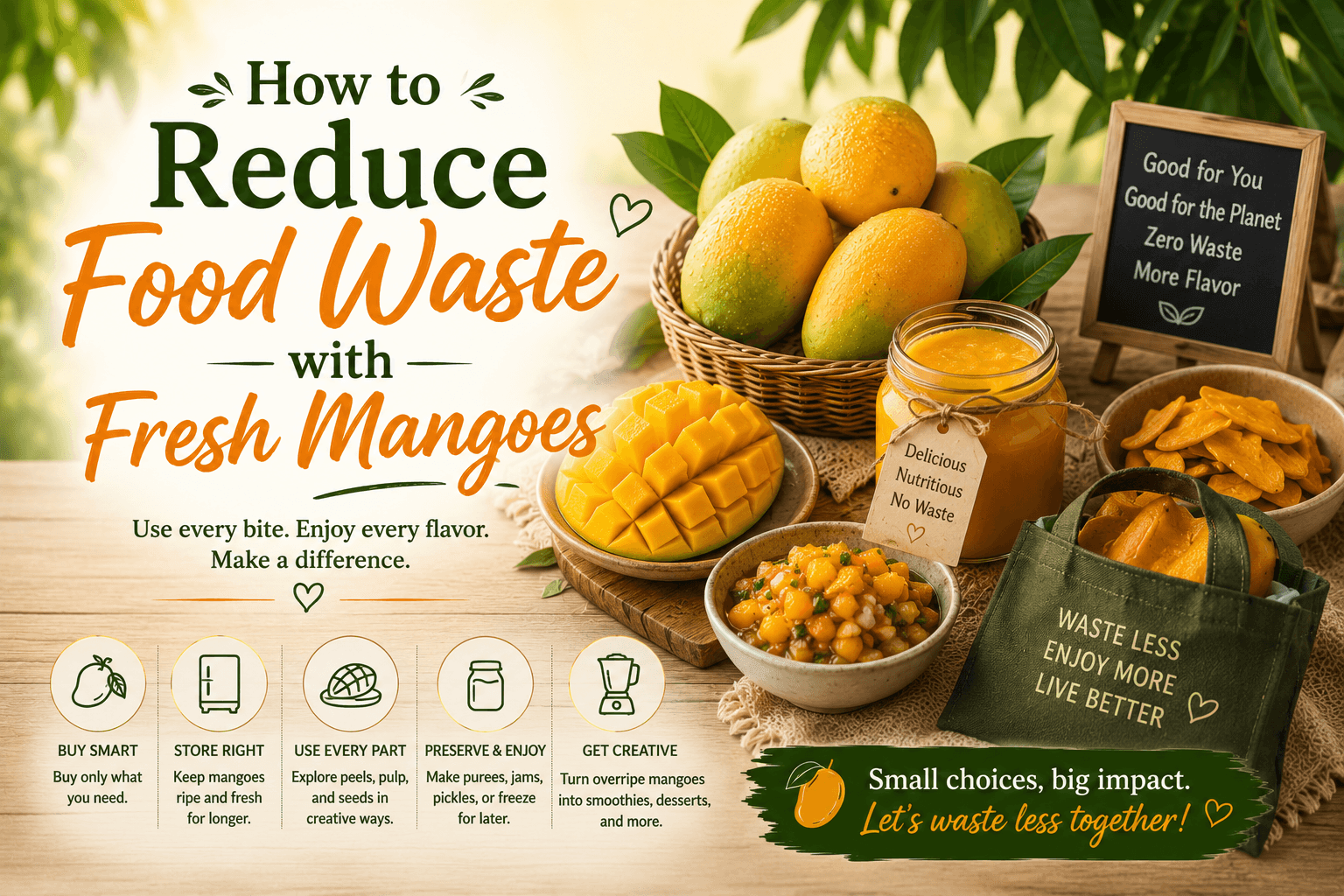
Fresh mangoes are one of the greatest joys of summer. Their sweet aroma, juicy flesh, and tropical flavor make them a favorite fruit for families across India. However, because mangoes are seasonal and ripen quickly, they can sometimes spoil before they are fully enjoyed. Buying more mangoes than you can consume or storing them incorrectly often leads to unnecessary food waste.
Reducing food waste isn’t just about saving money—it’s also about making the most of nature’s harvest, supporting farmers, and using resources responsibly. With a little planning and a few simple habits, you can enjoy every mango to its fullest while minimizing waste.
Whether you purchase mangoes directly from orchards, receive them as gifts, or stock up during peak season, this guide will help you reduce food waste with fresh mangoes through proper storage, smart meal planning, and creative ways to use every part of the fruit.
Why Reducing Food Waste Matters
Food waste affects households, farmers, and the environment.
Reducing waste helps you:
- Make the most of seasonal produce.
- Save money on groceries.
- Appreciate farmers’ hard work.
- Reduce unnecessary household waste.
- Support more sustainable food habits.
- Enjoy fresh mangoes before they spoil.
Every mango that is fully enjoyed represents less waste and greater value.
Buy Only What You Need
It can be tempting to purchase large quantities of mangoes during the peak season, especially when they are readily available.
Before buying, consider:
- How many people are in your household.
- How quickly your family consumes mangoes.
- Whether you’ll be traveling.
- Available refrigerator or freezer space.
- Planned recipes for the week.
Buying the right quantity helps reduce spoilage.
Store Mangoes Correctly
Proper storage is one of the easiest ways to extend the life of fresh mangoes.
For Unripe Mangoes
- Keep them at room temperature.
- Store in a dry, well-ventilated place.
- Avoid direct sunlight.
- Check daily for ripeness.
For Ripe Mangoes
- Refrigerate to slow further ripening.
- Keep them in the fruit drawer if possible.
- Consume within a few days for the best quality.
Correct storage helps preserve flavor and texture.
Plan Meals Around Mangoes
Meal planning helps ensure mangoes are used before they become overripe.
Include mangoes in:
- Breakfast bowls.
- Smoothies.
- Fruit salads.
- Lunch boxes.
- Evening snacks.
- Desserts.
Having a plan makes it easier to enjoy mangoes throughout the week.
Freeze Extra Mangoes
Freezing is an excellent way to prevent waste.
To freeze mangoes:
- Wash and peel the fruit.
- Cut into cubes or slices.
- Arrange pieces on a tray.
- Freeze until firm.
- Transfer to airtight freezer bags or containers.
Frozen mangoes are perfect for:
- Smoothies.
- Milkshakes.
- Ice cream.
- Sorbet.
- Yogurt bowls.
- Homemade desserts.
Use Overripe Mangoes Creatively
Overripe mangoes are often sweeter and ideal for recipes.
Try making:
- Mango puree.
- Mango jam.
- Mango chutney.
- Mango sauce.
- Mango smoothies.
- Mango popsicles.
- Mango lassi.
- Mango muffins.
Slightly soft mangoes often work better in blended recipes than fresh slices.
Make Healthy Snacks
Instead of letting mangoes sit untouched, prepare ready-to-eat snacks.
Ideas include:
- Sliced mango containers.
- Fruit skewers.
- Mango yogurt parfaits.
- Mango salsa.
- Fresh fruit cups.
- Mango and cottage cheese bowls.
Prepared snacks encourage the whole family to enjoy fresh fruit more often.
Preserve Mangoes for Later
Traditional preservation methods help extend the mango season.
Popular options include:
- Mango pickle.
- Dried mango slices.
- Mango pulp.
- Homemade jam.
- Fruit leather.
- Frozen puree.
These methods allow you to enjoy mangoes long after the harvest season ends.
Share Extra Mangoes
If you have more mangoes than your household can finish, consider sharing them.
You can gift mangoes to:
- Friends.
- Neighbors.
- Family members.
- Colleagues.
Sharing fresh fruit reduces waste while spreading the joy of mango season.
Compost Mango Peels and Seeds
Not every part of the mango needs to end up in the trash.
Mango peels and seeds can be added to compost, where appropriate, helping create nutrient-rich material for gardens. If composting isn’t an option, check whether your local community offers organic waste collection.
Using compost supports a more sustainable household.
Learn to Recognize Ripeness
Knowing when a mango is ready to eat helps prevent spoilage.
Signs of ripeness include:
- A pleasant fruity aroma.
- Slight softness when gently pressed.
- Full skin color for the variety.
- A fresh, sweet fragrance near the stem.
Checking your mangoes daily allows you to enjoy them at their best.
Rotate Your Fruit
If you’ve bought several mangoes, eat the ripest ones first.
A simple “first ripe, first eaten” approach helps ensure that no fruit is forgotten at the bottom of the fruit basket or refrigerator.
Get the Whole Family Involved
Reducing food waste becomes easier when everyone participates.
Children and adults can:
- Help check ripeness.
- Prepare fruit salads.
- Blend smoothies.
- Pack lunchbox snacks.
- Suggest new mango recipes.
- Organize leftover fruit.
Small habits practiced together can make a big difference.
Why Malda Mangoes Are Worth Enjoying Fully
Malda, in West Bengal, is known for producing exceptional mango varieties, including:
- Himsagar.
- Fazli.
- Lakshmanbhog.
- Gopalbhog.
- Khirsapati.
These mangoes are prized for their naturally sweet flavor, rich aroma, smooth, fibre-light pulp, and premium quality. Because they are carefully cultivated and harvested, making full use of every fruit honors the effort that goes into growing them.
Tips to Reduce Mango Waste at Home
Follow these practical tips throughout the season:
- Buy fresh mangoes from trusted growers.
- Store them according to their ripeness.
- Freeze extras before they become overripe.
- Plan meals using seasonal fruit.
- Use soft mangoes in recipes instead of discarding them.
- Preserve surplus mangoes for future use.
- Share extra fruit with friends or family.
These simple habits help reduce waste while making the most of mango season.
Interesting Facts About Mango Waste
Here are a few interesting facts:
- Proper storage can help maintain mango quality for longer after ripening.
- Frozen mangoes retain much of their flavor and are excellent for smoothies and desserts.
- Many traditional Indian recipes were developed to use mangoes at different stages of ripeness.
- Composting fruit scraps can help reduce household organic waste.
- Careful meal planning is one of the easiest ways to minimize food waste.
Final Thoughts
Reducing food waste with fresh mangoes is easier than many people think. A little planning, proper storage, and creative use of ripe fruit can help you enjoy every mango while minimizing unnecessary waste. Whether you’re preparing refreshing smoothies, preserving mango pulp, sharing extra fruit, or freezing slices for later, every small step contributes to a more sustainable and enjoyable mango season.
By valuing every mango you purchase, you not only make the most of this delicious seasonal fruit but also support responsible consumption and show appreciation for the farmers who grow it.
Experience Premium Malda Mangoes
Enjoy every bite of premium Malda Mangoes sourced directly from trusted orchards in West Bengal. Our Himsagar, Fazli, Lakshmanbhog, Gopalbhog, and Khirsapati mangoes are handpicked at peak maturity, naturally ripened, carefully graded, thoroughly quality-checked, and securely packed before being delivered fresh across India. Whether you’re savoring them fresh, freezing them for later, or creating delicious homemade recipes, our farm-direct mangoes offer authentic flavor and exceptional quality while helping you make the most of the mango season.