

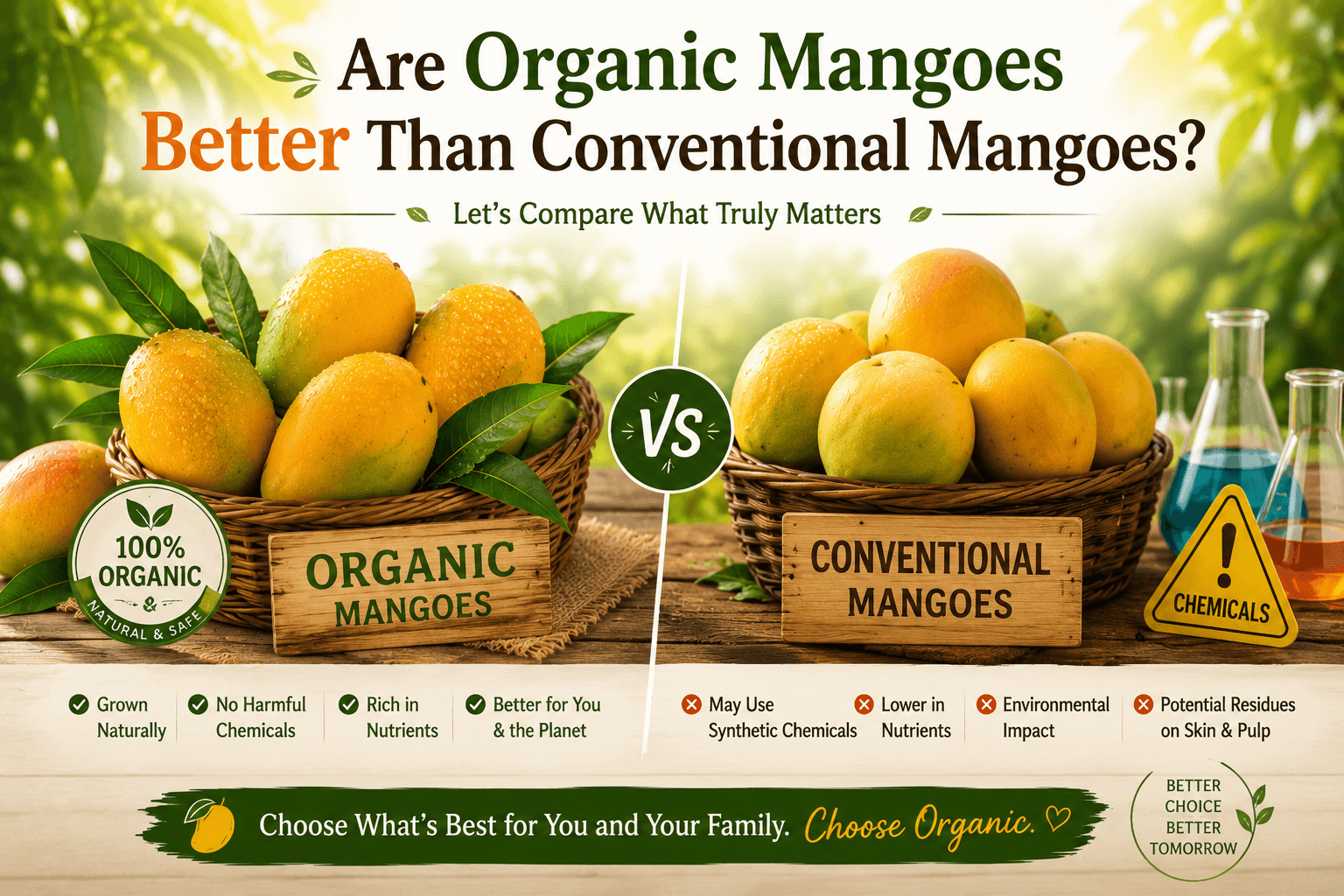
Mangoes are one of the world’s most loved tropical fruits, enjoyed for their rich sweetness, juicy texture, and refreshing flavor. As consumers become more conscious about food choices, many people wonder whether organic mangoes are actually better than conventionally grown mangoes. Is there a noticeable difference in taste? Are organic mangoes more nutritious? Which option offers better value?
The answer isn’t as simple as choosing one over the other. Both organic and conventional mangoes can be delicious, nutritious, and safe to eat when they are grown responsibly and handled properly. The differences mainly lie in farming practices, certification standards, environmental impact, and consumer preferences rather than in the fruit itself.
In this guide, we’ll compare organic and conventional mangoes to help you make an informed decision based on your priorities, whether they involve taste, sustainability, nutrition, or budget.
What Are Organic Mangoes?
Organic mangoes are grown using farming methods that follow certified organic agricultural standards.
Organic farming generally focuses on:
- Natural soil fertility.
- Compost and organic manure.
- Crop rotation.
- Biological pest management.
- Reduced use of synthetic chemicals.
- Sustainable farming practices.
Certified organic farms follow specific regulations that vary by country and certification body.
What Are Conventional Mangoes?
Conventional mangoes are grown using modern agricultural practices designed to support healthy crop production and protect orchards from pests, diseases, and weeds.
These practices may include:
- Balanced fertilization.
- Irrigation management.
- Pest monitoring.
- Disease control.
- Modern orchard management.
- Scientific cultivation techniques.
Many conventional growers also follow good agricultural practices that emphasize food safety and responsible resource use.
Organic vs Conventional Farming Practices
The primary difference lies in how the mangoes are cultivated.
Organic Farming
Organic cultivation generally emphasizes:
- Natural fertilizers.
- Compost.
- Mulching.
- Biological pest control.
- Biodiversity.
- Soil conservation.
Conventional Farming
Conventional farming may use:
- Modern crop protection methods.
- Carefully managed fertilizers.
- Precision irrigation.
- Scientific orchard monitoring.
- Advanced farming technologies.
Both approaches aim to produce healthy, high-quality fruit.
Do Organic Mangoes Taste Better?
Taste is highly subjective.
Flavor depends more on factors such as:
- Mango variety.
- Climate.
- Soil quality.
- Orchard management.
- Harvest timing.
- Natural ripening.
For example, a naturally ripened Himsagar or Alphonso mango may taste exceptional regardless of whether it is organically or conventionally grown.
Freshness often has a greater influence on taste than the farming method itself.
Are Organic Mangoes More Nutritious?
Both organic and conventional mangoes provide valuable nutrients.
Fresh mangoes naturally contain:
- Vitamin C.
- Vitamin A.
- Dietary fiber.
- Folate.
- Potassium.
- Antioxidants.
Current scientific research has not consistently shown large nutritional differences between organic and conventional mangoes. The nutrient content is often influenced by the variety, ripeness, growing conditions, and post-harvest handling rather than farming method alone.
Environmental Considerations
Many consumers choose organic mangoes because of environmental concerns.
Organic farming often aims to support:
- Soil health.
- Biodiversity.
- Pollinator protection.
- Reduced synthetic chemical use.
- Long-term sustainability.
At the same time, many conventional mango growers also adopt sustainable practices such as efficient irrigation, integrated pest management, and responsible fertilizer use to reduce environmental impact.
Food Safety
Both organic and conventional mangoes can be safe to eat when they are grown, harvested, transported, and stored according to food safety standards.
Regardless of the farming method, it’s a good idea to:
- Wash mangoes thoroughly before eating.
- Peel the skin if desired.
- Store fruit properly.
- Buy from trusted growers or reputable sellers.
These simple habits help ensure a safe and enjoyable eating experience.
Price Differences
Organic mangoes often cost more than conventional mangoes.
This can be due to factors such as:
- Certification costs.
- Lower production volumes.
- Labor-intensive farming methods.
- Specialized management practices.
Conventional mangoes may be more widely available and affordable, making them an accessible option for many households.
Choosing High-Quality Mangoes
Whether you choose organic or conventional mangoes, quality matters most.
Look for mangoes that are:
- Naturally ripened.
- Pleasantly fragrant.
- Free from major damage.
- Firm with slight softness when ripe.
- Carefully handled and packed.
A high-quality mango offers the best eating experience regardless of its farming method.
Why Natural Ripening Matters
Natural ripening plays an important role in flavor and texture.
Naturally ripened mangoes typically develop:
- Better sweetness.
- Rich aroma.
- Smooth texture.
- Juicy pulp.
- Full flavor.
Many consumers prioritize naturally ripened fruit over whether it is organic or conventional.
Why Malda Mangoes Are a Great Choice
Malda, in West Bengal, is famous for producing premium mangoes through generations of skilled orchard management.
Popular varieties include:
- Himsagar.
- Fazli.
- Lakshmanbhog.
- Gopalbhog.
- Khirsapati.
These mangoes are known for their naturally sweet flavor, rich aroma, smooth pulp, and excellent quality. Regardless of the farming approach, careful cultivation, timely harvesting, natural ripening, and proper post-harvest handling contribute significantly to their outstanding taste.
Tips for Buying the Best Mangoes
When shopping for mangoes:
- Buy from trusted growers or reliable retailers.
- Choose naturally ripened fruit.
- Smell for a pleasant fruity aroma.
- Avoid fruit with significant bruising or damage.
- Select mangoes appropriate for your intended use, whether fresh eating, smoothies, or desserts.
Quality and freshness are often more important than labels alone.
Interesting Facts About Organic and Conventional Mangoes
Here are a few interesting facts:
- India grows hundreds of mango varieties using different farming methods.
- Organic certification follows specific standards that differ between countries.
- Many conventional orchards incorporate sustainable farming techniques alongside modern cultivation practices.
- The same mango variety can be grown using either organic or conventional methods.
- Flavor is strongly influenced by variety, climate, harvest timing, and natural ripening.
Final Thoughts
So, are organic mangoes better than conventional mangoes? The answer depends on what matters most to you. If you prioritize certified organic farming practices and environmental considerations, organic mangoes may be your preferred choice. If you’re looking for excellent flavor, affordability, and broad availability, responsibly grown conventional mangoes can also be an outstanding option.
Ultimately, the best mangoes are those that are fresh, naturally ripened, carefully handled, and sourced from trusted growers. By focusing on quality, ripeness, and responsible farming practices, you can enjoy delicious mangoes throughout the season, regardless of whether they are organic or conventionally grown.
Experience Premium Malda Mangoes
Enjoy the authentic taste of premium Malda Mangoes sourced directly from trusted orchards in West Bengal. Our Himsagar, Fazli, Lakshmanbhog, Gopalbhog, and Khirsapati mangoes are handpicked at peak maturity, naturally ripened, carefully graded, thoroughly quality-checked, and securely packed before being delivered fresh across India. Whether you’re looking for fresh fruit to enjoy at home or premium mangoes for seasonal gifting, our farm-direct mangoes deliver exceptional flavor, rich aroma, and outstanding quality in every bite.