

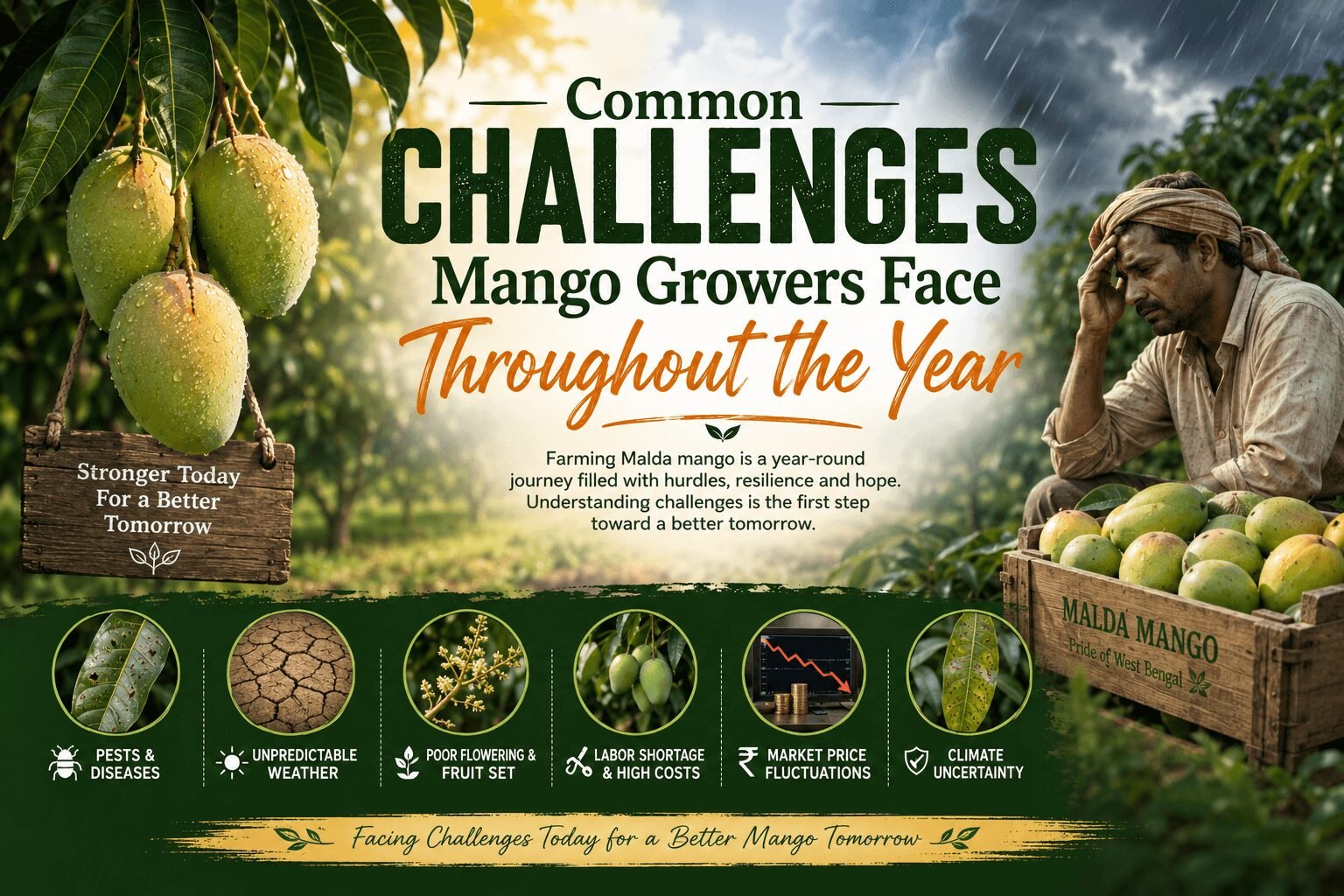
When we enjoy a sweet, juicy mango during the summer, it’s easy to forget the months of dedication and hard work that go into producing every fruit. Growing premium mangoes is a year-round responsibility that requires patience, experience, and constant attention to changing orchard conditions. From the first signs of flowering to the final harvest, mango growers face numerous challenges that can influence fruit quality, yield, and overall orchard health.
Unlike many crops, mango trees go through a long growth cycle, and each stage presents its own set of opportunities and challenges. Weather conditions, irrigation, pollination, soil health, pest management, and harvesting all require careful planning. Experienced growers continuously monitor their orchards to ensure the trees remain healthy and capable of producing high-quality mangoes season after season.
In this guide, we’ll explore the most common challenges mango growers face throughout the year and how thoughtful orchard management helps overcome them.
The Year-Round Nature of Mango Farming
Mango cultivation is not limited to the harvest season.
Growers remain active throughout the year by managing:
- Orchard health.
- Soil conditions.
- Irrigation.
- Tree growth.
- Flowering.
- Fruit development.
- Post-harvest recovery.
Each season brings different priorities that require careful attention.
Unpredictable Weather
Weather is one of the biggest factors affecting mango production.
Growers must adapt to changing conditions such as:
- High temperatures.
- Unseasonal rainfall.
- Strong winds.
- Humidity fluctuations.
- Dry spells.
Because weather changes from year to year, every mango harvest is unique.
Managing Water Efficiently
Mango trees require appropriate irrigation at different stages of growth.
Challenges include:
- Extended dry periods.
- Uneven rainfall.
- Maintaining proper soil moisture.
- Conserving water resources.
Modern irrigation systems and careful scheduling help growers use water efficiently.
Flowering Challenges
A successful mango harvest begins with healthy flowering.
Growers carefully monitor:
- Flower development.
- Seasonal temperatures.
- Orchard nutrition.
- Tree health.
Environmental conditions during flowering can influence fruit production later in the season.
Supporting Pollination
Pollination is essential for fruit formation.
Growers work to maintain healthy orchard environments that support natural pollinators such as:
- Bees.
- Butterflies.
- Other beneficial insects.
Healthy pollination contributes to better fruit set and improved yields.
Maintaining Soil Health
Healthy soil provides the nutrients mango trees need throughout the year.
Common soil management priorities include:
- Preserving soil structure.
- Maintaining organic matter.
- Managing moisture.
- Supporting root development.
- Preventing erosion.
Well-maintained soil helps trees remain productive over many seasons.
Orchard Maintenance
Keeping an orchard healthy requires continuous care.
Regular activities include:
- Pruning.
- Weed management.
- Removing damaged branches.
- Cleaning fallen plant material.
- Monitoring overall tree condition.
These practices create a healthier growing environment.
Managing Pests and Diseases
Like many fruit crops, mango orchards can be affected by pests and diseases.
Growers routinely inspect orchards to identify potential issues early and use appropriate management practices suited to their farming methods and local conditions.
Regular monitoring helps reduce the impact of orchard problems while protecting tree health.
Harvest Timing
Harvesting mangoes too early or too late can affect quality.
Growers carefully evaluate:
- Fruit maturity.
- Variety characteristics.
- Seasonal conditions.
- Weather forecasts.
Harvesting at the right stage helps preserve flavor, texture, and freshness.
Protecting Fruit During Harvest
Even after months of careful cultivation, mangoes can be damaged if handled improperly.
Growers use:
- Gentle harvesting techniques.
- Collection bags.
- Harvesting poles.
- Protective crates.
- Careful transportation within the orchard.
Proper handling minimizes bruising and protects fruit quality.
Post-Harvest Orchard Recovery
Once harvesting is complete, orchard work continues.
Growers focus on:
- Tree recovery.
- Seasonal pruning.
- Soil improvement.
- Irrigation adjustments.
- Preparing for the next growth cycle.
Healthy recovery supports future flowering and fruit production.
Adapting to Changing Seasons
No two mango seasons are exactly alike.
Growers must remain flexible as they respond to:
- Weather changes.
- Growth patterns.
- Irrigation needs.
- Harvest schedules.
Experience plays a major role in making informed decisions throughout the year.
Why Malda Growers Continue to Produce Premium Mangoes
Malda, in West Bengal, is one of India’s most respected mango-growing regions.
The area is famous for premium varieties such as:
- Himsagar.
- Fazli.
- Lakshmanbhog.
- Gopalbhog.
- Khirsapati.
Despite facing the same seasonal challenges as growers elsewhere, Malda’s experienced farming families combine generations of orchard knowledge with thoughtful management practices. Fertile alluvial soils, careful irrigation, timely pruning, natural ripening, and meticulous post-harvest care help them consistently produce mangoes known for their naturally sweet flavor, rich aroma, smooth, fibre-light pulp, and premium quality.
Sustainable Farming for Long-Term Success
Many growers focus on practices that support healthy orchards for years to come.
These may include:
- Efficient irrigation.
- Soil conservation.
- Responsible resource management.
- Biodiversity support.
- Careful pruning.
- Regular orchard monitoring.
Sustainable practices help improve long-term orchard productivity and resilience.
Appreciating the Work Behind Every Mango
Every mango represents months of dedication.
From preparing the orchard and supporting flowering to harvesting and post-season recovery, growers invest significant time and effort into producing fruit that consumers can enjoy.
Understanding these challenges helps us appreciate the expertise required to grow premium mangoes.
Interesting Facts About Mango Farming Challenges
Here are a few fascinating facts:
- Mango trees require year-round care, not just during the harvest season.
- Flowering conditions strongly influence the size and quality of the future harvest.
- Healthy soil and balanced irrigation are essential for long-term orchard productivity.
- Careful harvesting helps preserve fruit quality during transportation.
- Every harvest is influenced by natural seasonal conditions, making each year’s crop unique.
Final Thoughts
Growing premium mangoes is a year-round commitment that demands knowledge, patience, and adaptability. From unpredictable weather and irrigation management to flowering, pollination, harvesting, and post-harvest recovery, growers face numerous challenges that require thoughtful planning and continuous care.
The dedication of experienced farming families ensures that consumers receive fresh, flavorful mangoes despite the changing conditions each season brings. Every delicious mango is the result of months of careful work, making it far more than just a summer fruit—it is a reflection of nature, tradition, and agricultural expertise.
Experience Premium Malda Mangoes
Experience the authentic taste of premium Malda Mangoes sourced directly from trusted orchards in West Bengal. Our Himsagar, Fazli, Lakshmanbhog, Gopalbhog, and Khirsapati mangoes are handpicked at peak maturity, naturally ripened, carefully graded, thoroughly quality-checked, and securely packed before being delivered fresh across India. Behind every box is a year of dedicated orchard care, from flowering and irrigation to harvesting and post-season recovery, ensuring our farm-direct mangoes deliver exceptional freshness, rich aroma, and premium quality every season.