

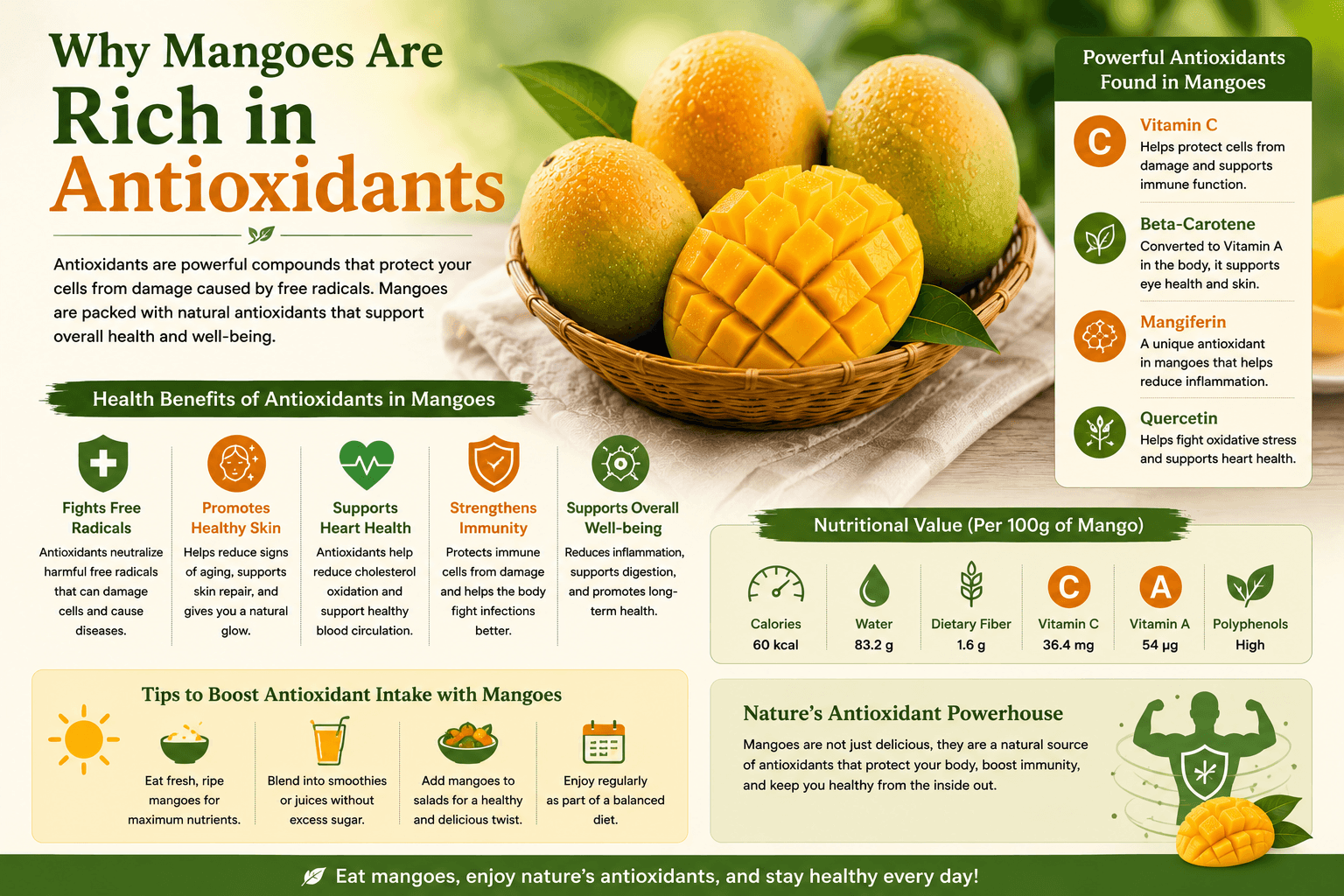
Mangoes are more than just a delicious summer fruit—they are also a powerhouse of antioxidants that help support overall health and well-being. Their naturally sweet taste, vibrant color, and juicy texture come with an impressive nutritional profile that includes vitamins, minerals, dietary fiber, and several plant compounds known for their antioxidant properties.
Fresh, naturally ripened Malda mangoes are particularly valued not only for their exceptional flavor but also for the beneficial antioxidants they contain. These compounds help protect the body’s cells from oxidative stress, making mangoes a nutritious addition to a balanced diet.
In this article, we’ll explore what antioxidants are, why mangoes are rich in them, and how they contribute to your overall health.
What Are Antioxidants?
Antioxidants are natural compounds that help protect the body’s cells from damage caused by unstable molecules called free radicals.
Free radicals are produced naturally during normal body processes and can also result from factors such as:
- Pollution
- UV radiation
- Smoking
- Poor dietary habits
- Stress
When free radicals accumulate in excess, they can contribute to oxidative stress, which may affect normal cell function over time.
A diet rich in antioxidant-containing foods helps support the body’s natural defense systems.
Why Are Mangoes Rich in Antioxidants?
Mangoes naturally contain a variety of plant-based compounds that act as antioxidants. These compounds work together with essential vitamins to help protect cells and support overall health.
Some of the key antioxidants found in mangoes include:
- Mangiferin
- Beta-carotene
- Vitamin C
- Quercetin
- Gallic Acid
- Kaempferol
Together, these nutrients make mangoes one of the most antioxidant-rich fruits enjoyed during the summer season.
1. Mangiferin – The Signature Antioxidant in Mangoes
Mangiferin is one of the most well-known antioxidants naturally found in mangoes.
Researchers often refer to it as a unique bioactive plant compound because of its antioxidant properties.
Mangiferin helps:
- Protect cells from oxidative stress
- Support overall wellness
- Contribute to the fruit’s nutritional value
Its presence is one of the reasons mangoes are widely recognized as a healthy fruit.
2. Vitamin C – A Powerful Natural Antioxidant
Mangoes are an excellent source of Vitamin C.
In addition to supporting the immune system, Vitamin C also acts as an antioxidant that helps:
- Protect healthy cells
- Support collagen production
- Improve iron absorption
- Promote healthy skin
Including Vitamin C-rich fruits in your diet supports overall health.
3. Beta-Carotene
The bright yellow-orange color of ripe mangoes comes from beta-carotene.
Beta-carotene is converted into Vitamin A by the body and contributes to:
- Healthy vision
- Skin health
- Normal immune function
It also functions as an antioxidant that helps protect cells from oxidative damage.
4. Quercetin
Quercetin is a naturally occurring plant compound found in many fruits, including mangoes.
It contributes to the fruit’s antioxidant profile and supports the body’s natural defenses against oxidative stress.
5. Gallic Acid
Gallic acid is another beneficial antioxidant naturally present in mangoes.
It helps strengthen the overall antioxidant capacity of the fruit and contributes to its nutritional benefits.
Health Benefits of Antioxidants in Mangoes
Regularly including antioxidant-rich fruits like mangoes in a balanced diet may help support:
Healthy Immune Function
Antioxidants and Vitamin C help support the body’s natural immune defenses.
Healthy Skin
Antioxidants help protect skin cells from oxidative stress, while Vitamin C supports collagen production.
Eye Health
Beta-carotene and Vitamin A contribute to maintaining healthy vision.
Heart Health
A balanced diet rich in fruits containing antioxidants may support overall cardiovascular wellness.
Healthy Aging
Oxidative stress is one of the factors associated with normal aging. Antioxidants help protect healthy cells as part of a nutritious diet.
Fresh Mangoes vs Processed Mango Products
Fresh mangoes provide the highest nutritional value because they naturally contain:
- Dietary Fiber
- Water
- Vitamins
- Minerals
- Antioxidants
Some processed mango products may contain added sugars or fewer naturally occurring nutrients.
Whenever possible, choose fresh, naturally ripened mangoes to maximize nutritional benefits.
Best Ways to Enjoy Antioxidant-Rich Mangoes
You can enjoy fresh mangoes in many healthy ways:
- Fresh mango slices
- Fruit salads
- Smoothies without added sugar
- Yogurt bowls
- Overnight oats
- Homemade fruit desserts
Pairing mangoes with other colorful fruits creates a nutrient-rich meal or snack.
Why Choose Naturally Ripened Malda Mangoes?
Naturally ripened Malda mangoes develop their sweetness, aroma, and nutritional quality naturally.
At Malda Mango, we are committed to delivering naturally ripened, premium-quality mangoes sourced from trusted farms so you can enjoy authentic flavor along with the natural goodness of fresh fruit.
Conclusion
Mangoes are naturally rich in antioxidants that help support your body’s normal functions and overall well-being. Compounds such as mangiferin, beta-carotene, Vitamin C, quercetin, and gallic acid make fresh mangoes one of the most nutritious fruits you can enjoy during the summer.
By choosing fresh, naturally ripened Malda mangoes and including them as part of a balanced diet, you can enjoy their delicious taste while benefiting from the vitamins, antioxidants, and nutrients that make mangoes a true superfruit.