

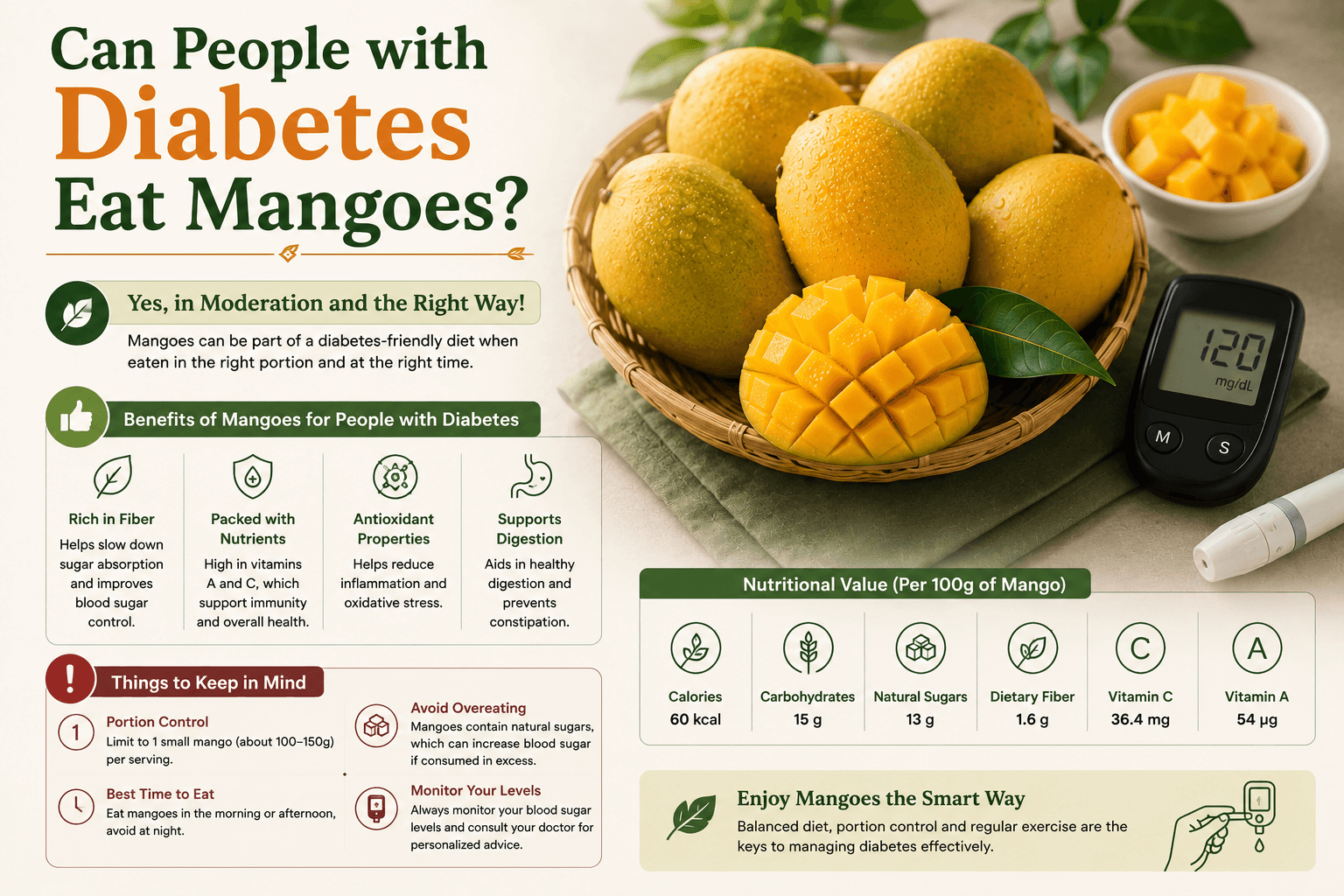
Mangoes are one of the most popular summer fruits, loved for their sweet taste, juicy texture, and impressive nutritional value. However, many people living with diabetes often wonder whether they should avoid mangoes because of their natural sugar content.
The good news is that people with diabetes can enjoy mangoes in moderation as part of a healthy, balanced diet. Fresh mangoes contain natural sugars, but they also provide dietary fiber, vitamins, minerals, and antioxidants that contribute to overall health.
In this article, we’ll explore whether mangoes are suitable for people with diabetes, how they affect blood sugar, recommended portion sizes, and tips for enjoying them safely.
Are Mangoes Safe for People with Diabetes?
Yes. Fresh mangoes can be included in a diabetes-friendly diet when eaten in appropriate portions.
Like all fruits, mangoes contain natural carbohydrates that the body converts into glucose. However, they also provide:
- Dietary fiber
- Vitamin C
- Vitamin A
- Potassium
- Folate
- Natural antioxidants
The combination of these nutrients makes fresh mangoes a healthier option than foods containing added sugars.
Understanding the Glycemic Index of Mangoes
The Glycemic Index (GI) measures how quickly a food raises blood sugar levels.
Fresh mangoes have a moderate Glycemic Index, generally ranging between 51 and 60, depending on the variety and ripeness.
This means mangoes cause a gradual increase in blood sugar compared to foods with a high glycemic index.
However, portion size remains just as important as the GI value.
Nutritional Benefits of Mangoes
Fresh mangoes provide several nutrients that support overall health.
Some of the key nutrients include:
- Vitamin C
- Vitamin A
- Dietary Fiber
- Potassium
- Magnesium
- Folate
- Antioxidants such as mangiferin and beta-carotene
These nutrients help support immunity, healthy skin, vision, digestion, and overall wellness.
Why Portion Control Matters
Even healthy fruits should be consumed in moderation.
A recommended serving size for most adults is approximately:
- ½ to 1 cup of fresh mango pieces
- Around 80–100 grams
Eating mangoes in appropriate portions helps you enjoy their nutritional benefits while managing your total carbohydrate intake.
Individual dietary needs vary, so it’s always best to follow your healthcare provider’s advice.
Fresh Mango Is Better Than Processed Mango Products
For people with diabetes, fresh mangoes are generally a better choice than processed mango products.
Choose:
- Fresh mango slices
- Homemade fruit salads
- Unsweetened smoothies
Limit foods such as:
- Sweetened mango juice
- Mango syrup
- Mango candies
- Mango desserts with added sugar
Fresh fruit naturally contains fiber, which helps slow the absorption of sugar.
Tips for Enjoying Mangoes with Diabetes
Here are some practical ways to include mangoes in a balanced meal plan:
Pair Mango with Protein
Combine mango with foods like:
- Plain Greek yogurt
- Cottage cheese
- Unsalted nuts
- Seeds
Protein may help slow digestion and promote better satiety.
Eat Whole Mango Instead of Juice
Whole mango retains its natural fiber, while juice often contains less fiber and may affect blood sugar more quickly.
Watch Your Portion Size
Avoid eating large quantities in one sitting.
Smaller portions fit more easily into a balanced diet.
Include Mango as Part of a Meal
Enjoy mango alongside balanced meals containing vegetables, lean protein, and whole grains instead of eating large amounts on its own.
Common Myths About Mangoes and Diabetes
Myth 1: People with Diabetes Should Never Eat Mangoes
Fact: Fresh mangoes can be enjoyed in moderation as part of a healthy eating plan.
Myth 2: Mangoes Are Full of Harmful Sugar
Fact: Mangoes contain natural fruit sugars along with fiber, vitamins, and antioxidants—not added sugar.
Myth 3: All Sweet Fruits Are Unhealthy
Fact: Many naturally sweet fruits provide essential nutrients and can be included in balanced diets when portion sizes are appropriate.
Choosing Naturally Ripened Mangoes
Naturally ripened mangoes offer the authentic taste, aroma, and texture that make this fruit so enjoyable.
At Malda Mango, we focus on delivering naturally ripened, premium-quality mangoes sourced from trusted farms so customers can enjoy fresh seasonal fruit with confidence.
Conclusion
People with diabetes do not necessarily need to avoid mangoes. Fresh mangoes provide valuable nutrients, dietary fiber, and antioxidants that can be part of a balanced eating plan when enjoyed in moderation.
The keys are choosing fresh mangoes, managing portion sizes, pairing them with balanced meals, and following the guidance of your healthcare provider.
With mindful eating habits, mangoes can remain a delicious part of a healthy lifestyle—even for people managing diabetes.