

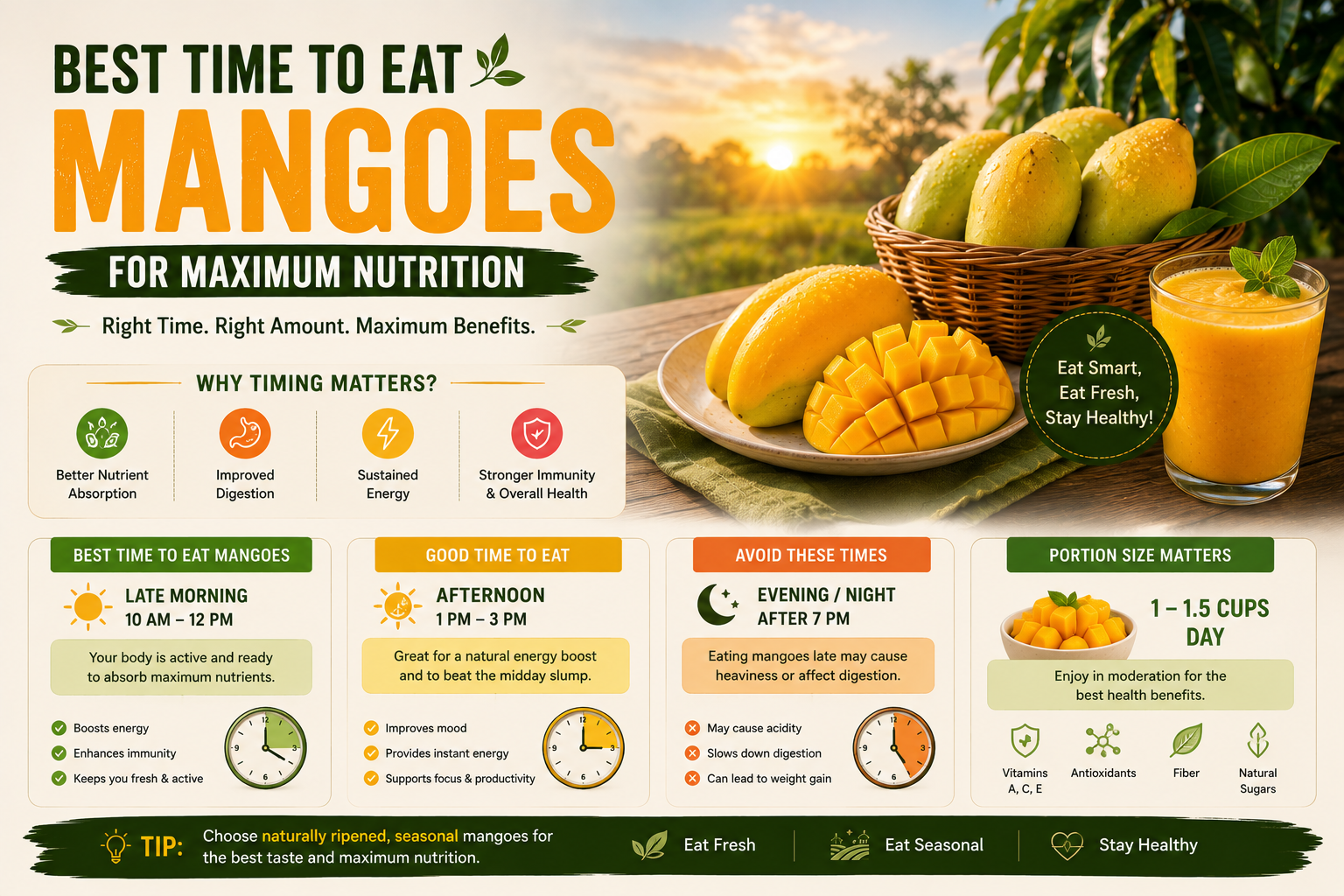
Mangoes are one of the most nutritious and delicious fruits of the summer season. Rich in vitamins, minerals, antioxidants, and dietary fiber, they can be a healthy addition to your daily diet. However, many people wonder if there is a “best” time to eat mangoes to maximize their nutritional benefits.
The truth is that there isn’t one perfect time that works for everyone. The best time to eat mangoes depends on your daily routine, activity level, meal patterns, and personal preferences. What matters most is enjoying fresh, naturally ripened mangoes in moderate portions as part of a balanced diet.
In this article, we’ll explore the ideal times to eat mangoes, their nutritional benefits, common myths, and practical tips to help you enjoy this king of fruits in the healthiest way.
Why Mangoes Are a Nutritious Choice
Mangoes provide a wide range of essential nutrients that support overall health.
They are naturally rich in:
- Vitamin C
- Vitamin A (beta-carotene)
- Vitamin E
- Vitamin K
- Folate
- Potassium
- Copper
- Dietary fiber
- Natural antioxidants
Fresh mangoes are also low in fat and contain no cholesterol, making them a wholesome seasonal fruit.
Is There a Best Time to Eat Mangoes?
There is no universal rule about when mangoes should be eaten.
For most healthy individuals, mangoes can be enjoyed at different times of the day depending on their eating habits and nutritional needs.
The key is to:
- Eat moderate portions.
- Include mangoes as part of balanced meals.
- Pair them with other nutritious foods when appropriate.
- Avoid excessive consumption in a single sitting.
Eating Mangoes at Breakfast
Breakfast is one of the most popular times to enjoy mangoes.
Adding mangoes to your morning meal can provide:
- Natural sweetness
- Vitamins and antioxidants
- Dietary fiber
- A refreshing start to the day
Healthy breakfast ideas include:
- Mango with oatmeal
- Mango yogurt parfait
- Whole-grain toast with cottage cheese and mango
- Smoothies made with fresh mango
- Chia pudding topped with mango
Pairing mangoes with protein-rich foods such as yogurt or nuts can make breakfast more satisfying.
As a Mid-Morning Snack
A fresh mango makes an excellent mid-morning snack.
It helps you enjoy:
- Natural fruit sugars
- Fiber
- Hydration
- A refreshing energy boost
Choosing fresh fruit instead of processed snacks is an easy way to improve your overall diet.
Before Physical Activity
Some people enjoy mangoes before exercise because they provide naturally occurring carbohydrates that can serve as a source of energy.
Eating a moderate portion about 30 to 60 minutes before physical activity may be suitable for many active individuals.
After Exercise
Mangoes can also be part of a balanced post-workout meal.
When paired with a protein source such as yogurt, milk, or nuts, they help create a satisfying snack that contributes vitamins, minerals, and carbohydrates.
Enjoying Mangoes with Lunch
Fresh mangoes pair well with lunch.
They can be added to:
- Green salads
- Grain bowls
- Fruit salads
- Yogurt-based dishes
- Homemade salsa
Including mangoes with a balanced meal increases dietary variety and adds natural sweetness.
Can You Eat Mangoes in the Evening?
Yes, healthy individuals can enjoy mangoes in the evening if they fit comfortably within their daily calorie and nutrient needs.
Rather than focusing on the clock, it’s more important to:
- Control portion sizes.
- Maintain an overall balanced diet.
- Avoid excessive overeating late at night.
There is no strong scientific evidence suggesting that simply eating mangoes in the evening is harmful for healthy people.
How Much Mango Should You Eat?
Portion size is more important than timing.
For most healthy adults, a reasonable serving is approximately:
- 1–2 cups of fresh sliced mango, or
- One medium-sized mango, depending on the variety.
Eating mangoes in moderation allows you to enjoy their nutritional benefits while maintaining a balanced diet.
Pair Mangoes with Other Nutritious Foods
Combining mangoes with foods rich in protein, healthy fats, or fiber can create a more balanced meal.
Good combinations include:
- Greek yogurt
- Cottage cheese
- Oats
- Nuts
- Seeds
- Whole-grain cereals
These pairings make meals more filling and nutritionally diverse.
Common Myths About the Best Time to Eat Mangoes
Myth 1: Mangoes Should Only Be Eaten in the Morning
Fact: Mangoes can be enjoyed at any time of day. What matters most is your overall diet and portion size.
Myth 2: Eating Mangoes at Night Is Unhealthy
Fact: There is no scientific evidence that eating mangoes in the evening is harmful for healthy individuals. Moderation remains the key.
Myth 3: More Mangoes Mean More Nutrition
Fact: Eating excessive amounts of any food is not recommended. Balanced portions help you enjoy the nutritional benefits without overconsuming calories.
Myth 4: Mangoes Are Just a Sweet Treat
Fact: Besides their natural sweetness, mangoes are rich in vitamins, minerals, antioxidants, and dietary fiber that contribute to a healthy eating pattern.
Tips for Getting Maximum Nutrition from Mangoes
To make the most of mango season:
- Choose naturally ripened mangoes.
- Eat fresh, seasonal fruit whenever possible.
- Store ripe mangoes properly.
- Pair mangoes with balanced meals.
- Enjoy a variety of fruits throughout the week.
- Stay hydrated, especially during summer.
These habits help you enjoy mangoes while maintaining a nutritious lifestyle.
Who Should Monitor Their Intake?
Although mangoes are healthy, some people may need personalized dietary advice.
These include:
- Individuals managing diabetes.
- People following calorie-controlled diets.
- Those with specific medical conditions that affect carbohydrate intake.
If you have concerns about your diet, consult a qualified healthcare professional or registered dietitian for personalized recommendations.
Choosing High-Quality Mangoes
For the best flavor and nutritional value, choose mangoes that are:
- Naturally ripened.
- Freshly harvested.
- Aromatic.
- Slightly soft when ripe.
- Free from major bruises.
Buying directly from trusted growers helps ensure freshness and quality.
Final Thoughts
The best time to eat mangoes for maximum nutrition is simply the time that fits best into your healthy eating routine. Whether you enjoy them at breakfast, as a snack, after exercise, or with lunch, fresh mangoes provide valuable vitamins, minerals, antioxidants, and dietary fiber that support overall well-being.
Instead of worrying about the exact time of day, focus on choosing naturally ripened mangoes, eating sensible portions, and including them as part of a balanced and varied diet. This approach allows you to enjoy both their delicious taste and impressive nutritional benefits throughout the mango season.
Enjoy Fresh, Naturally Ripened Malda Mangoes
Experience the perfect balance of taste and nutrition with premium Malda Mangoes. Our mangoes are sourced directly from trusted orchards in Malda, handpicked at the ideal stage of maturity, naturally ripened, carefully quality-checked, and securely packed before being delivered fresh across India. Enjoy the authentic sweetness and nutritional goodness of one of India’s finest seasonal fruits.
FAQ

What is the best time to eat mangoes?