

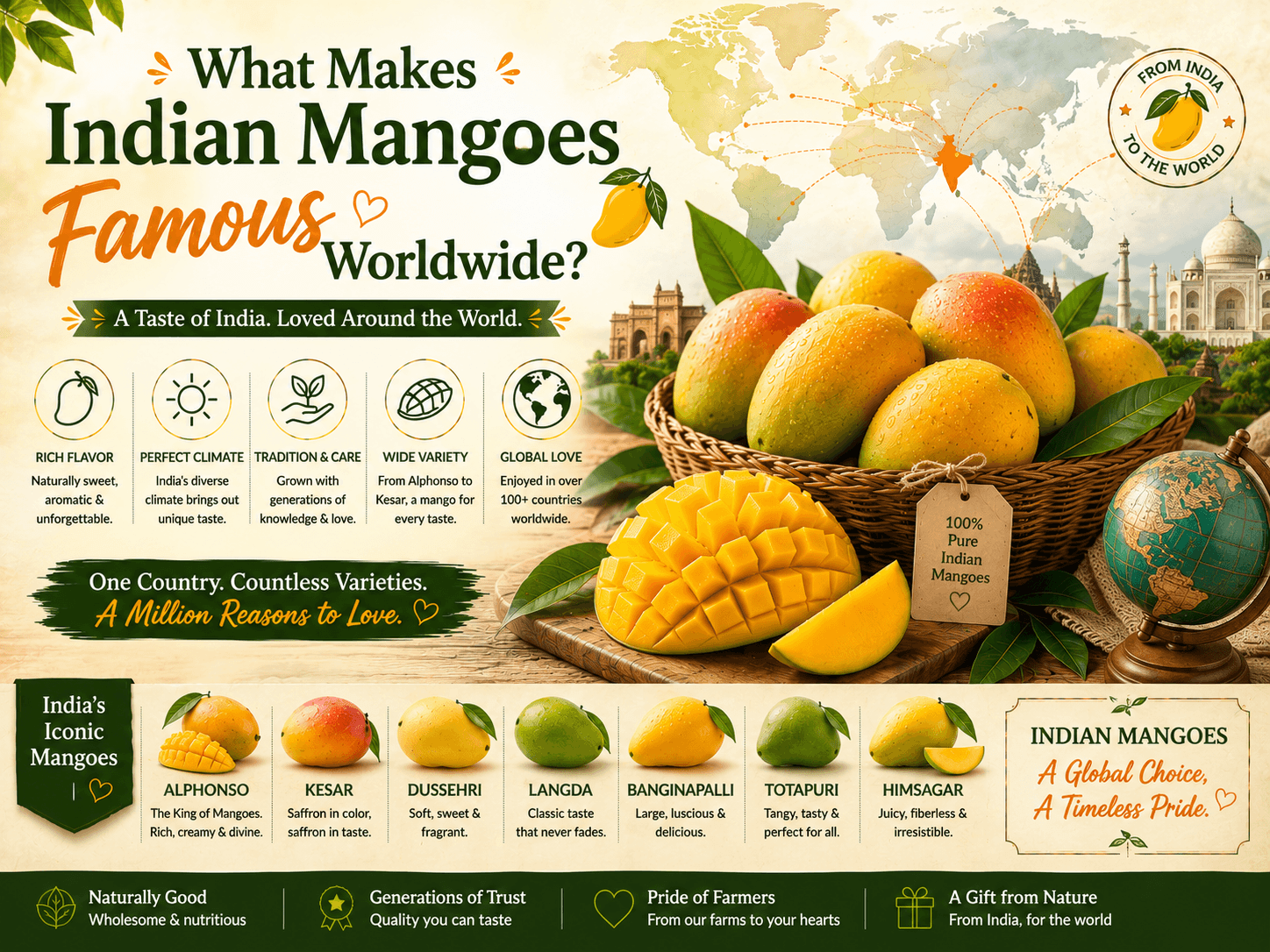
India is often referred to as the home of mangoes, and for good reason. As the world’s largest producer of mangoes, the country is blessed with diverse climates, fertile soils, and centuries of cultivation expertise that have helped create some of the finest mango varieties on Earth. Every summer, millions of people eagerly await mango season to enjoy the unmatched sweetness, aroma, and rich flavors that Indian mangoes are known for.
From the buttery richness of Alphonso to the juicy sweetness of Himsagar and the large, flavorful Fazli, Indian mangoes offer an incredible variety that appeals to mango lovers around the world. Their exceptional taste, vibrant colors, and cultural significance have made them a symbol of Indian agriculture and a favorite fruit in international markets.
In this article, we’ll explore what makes Indian mangoes famous worldwide, from their remarkable diversity and growing conditions to their nutritional value, export quality, and the traditions that have shaped their global reputation.
India – The Land of Mango Diversity
One of the biggest reasons Indian mangoes are admired worldwide is the country’s extraordinary diversity of mango varieties.
India is home to hundreds of mango cultivars, each with its own:
- Flavor profile.
- Sweetness level.
- Aroma.
- Texture.
- Shape.
- Color.
- Harvest season.
This diversity allows consumers to enjoy different mango experiences throughout the summer.
Exceptional Growing Conditions
Nature plays a significant role in producing premium-quality mangoes.
Many mango-growing regions in India benefit from:
- Fertile alluvial soils.
- Warm tropical and subtropical climates.
- Plenty of sunshine.
- Seasonal rainfall.
- Well-managed irrigation.
- Favorable flowering conditions.
These natural factors help mango trees produce flavorful and aromatic fruit year after year.
Rich Heritage of Mango Cultivation
Mango cultivation in India has been passed down through generations.
Farmers combine:
- Traditional orchard knowledge.
- Careful tree management.
- Modern cultivation techniques.
- Responsible irrigation practices.
- Timely harvesting.
This balance of experience and innovation contributes to consistently high-quality mango production.
Incredible Flavor and Aroma
Indian mangoes are celebrated for their unforgettable taste.
Depending on the variety, they may offer:
- Rich sweetness.
- Floral aroma.
- Smooth, fibre-light pulp.
- Juicy texture.
- Creamy consistency.
- Balanced acidity.
These characteristics make Indian mangoes popular among consumers worldwide.
Famous Indian Mango Varieties
India produces many internationally recognized mango varieties.
Some of the most popular include:
- Alphonso (Hapus).
- Himsagar.
- Kesar.
- Dashehari.
- Langra.
- Chausa.
- Banganapalli.
- Fazli.
- Lakshmanbhog.
- Gopalbhog.
- Khirsapati.
- Amrapali.
Each variety has its own unique characteristics, making India’s mango selection one of the most diverse in the world.
Naturally Ripened Goodness
Many premium growers emphasize harvesting mangoes at the right stage of maturity and allowing them to ripen naturally.
Naturally ripened mangoes are valued for their:
- Rich flavor.
- Authentic aroma.
- Better texture.
- Uniform sweetness.
- Enjoyable eating experience.
Consumers often associate naturally ripened fruit with premium quality.
Seasonal Freshness
Unlike many fruits that are available year-round, mangoes are seasonal.
This limited availability creates excitement because:
- Consumers eagerly anticipate the harvest.
- Fresh mangoes become a highlight of summer.
- Seasonal fruit is often enjoyed at peak quality.
- Families celebrate the arrival of mango season.
Their seasonal nature adds to their worldwide appeal.
Nutritional Benefits
Indian mangoes are not only delicious but also nutritious.
They naturally provide:
- Vitamin C.
- Vitamin A.
- Dietary fiber.
- Folate.
- Potassium.
- Antioxidants.
When enjoyed as part of a balanced diet, fresh mangoes can be a flavorful way to include fruit in everyday meals.
Strong Export Reputation
Indian mangoes are exported to many countries where consumers appreciate their premium quality and distinctive taste.
Export-quality mangoes are typically:
- Carefully harvested.
- Graded for quality.
- Securely packed.
- Handled with care.
- Transported under suitable conditions.
This attention to quality helps maintain India’s reputation in global markets.
Deep Cultural Significance
Mangoes have held an important place in Indian culture for centuries.
They are associated with:
- Family gatherings.
- Summer celebrations.
- Traditional recipes.
- Festivals.
- Hospitality.
- Regional pride.
This cultural connection enhances their value beyond simply being a delicious fruit.
Why Malda Mangoes Stand Out
Among India’s celebrated mango-growing regions, Malda in West Bengal is known for producing some of the country’s most sought-after mangoes.
Its famous varieties include:
- Himsagar.
- Fazli.
- Lakshmanbhog.
- Gopalbhog.
- Khirsapati.
These mangoes are admired for their:
- Naturally sweet flavor.
- Rich aroma.
- Smooth, fibre-light pulp.
- Juicy texture.
- Excellent eating quality.
The region’s fertile alluvial soil, favorable climate, skilled orchard management, and generations of farming expertise contribute to the exceptional quality of Malda mangoes.
Sustainable Orchard Practices
Many mango growers today combine traditional knowledge with modern agricultural practices.
These may include:
- Efficient irrigation.
- Responsible soil management.
- Careful pruning.
- Orchard monitoring.
- Natural pollination support.
- Quality-focused harvesting.
Such practices help produce healthy, high-quality mangoes while supporting long-term orchard productivity.
Choosing the Best Indian Mangoes
When selecting fresh mangoes, consider:
- Buying from trusted growers.
- Choosing naturally ripened fruit.
- Looking for a pleasant fruity aroma.
- Selecting mangoes appropriate for your preferred taste and recipes.
- Checking for healthy, undamaged skin.
Freshness and proper handling are key to enjoying the best flavor.
Interesting Facts About Indian Mangoes
Here are a few fascinating facts:
- India is the world’s largest producer of mangoes.
- Hundreds of mango varieties are cultivated across different states.
- Different regions are famous for different mango cultivars.
- Mango trees can produce fruit for many decades with proper care.
- India’s mango season spans several months because of regional climate differences.
Final Thoughts
Indian mangoes have earned worldwide recognition through an extraordinary combination of natural advantages, agricultural expertise, remarkable diversity, and centuries of tradition. Their unmatched sweetness, rich aroma, vibrant colors, and wide selection of varieties continue to delight consumers across the globe.
Whether you prefer the creamy richness of Alphonso, the juicy sweetness of Himsagar, or the impressive size of Fazli, Indian mangoes offer something for every palate. Their reputation as some of the world’s finest mangoes reflects the dedication of growers, the richness of India’s landscapes, and the timeless appeal of this beloved summer fruit.
Experience Premium Malda Mangoes
Experience the authentic taste of premium Malda Mangoes sourced directly from trusted orchards in West Bengal. Our Himsagar, Fazli, Lakshmanbhog, Gopalbhog, and Khirsapati mangoes are handpicked at peak maturity, naturally ripened, carefully graded, thoroughly quality-checked, and securely packed before being delivered fresh across India. Whether you’re enjoying them fresh, sharing them with family, or sending them as a thoughtful seasonal gift, our farm-direct mangoes bring exceptional flavor, rich aroma, and premium quality to every bite.