

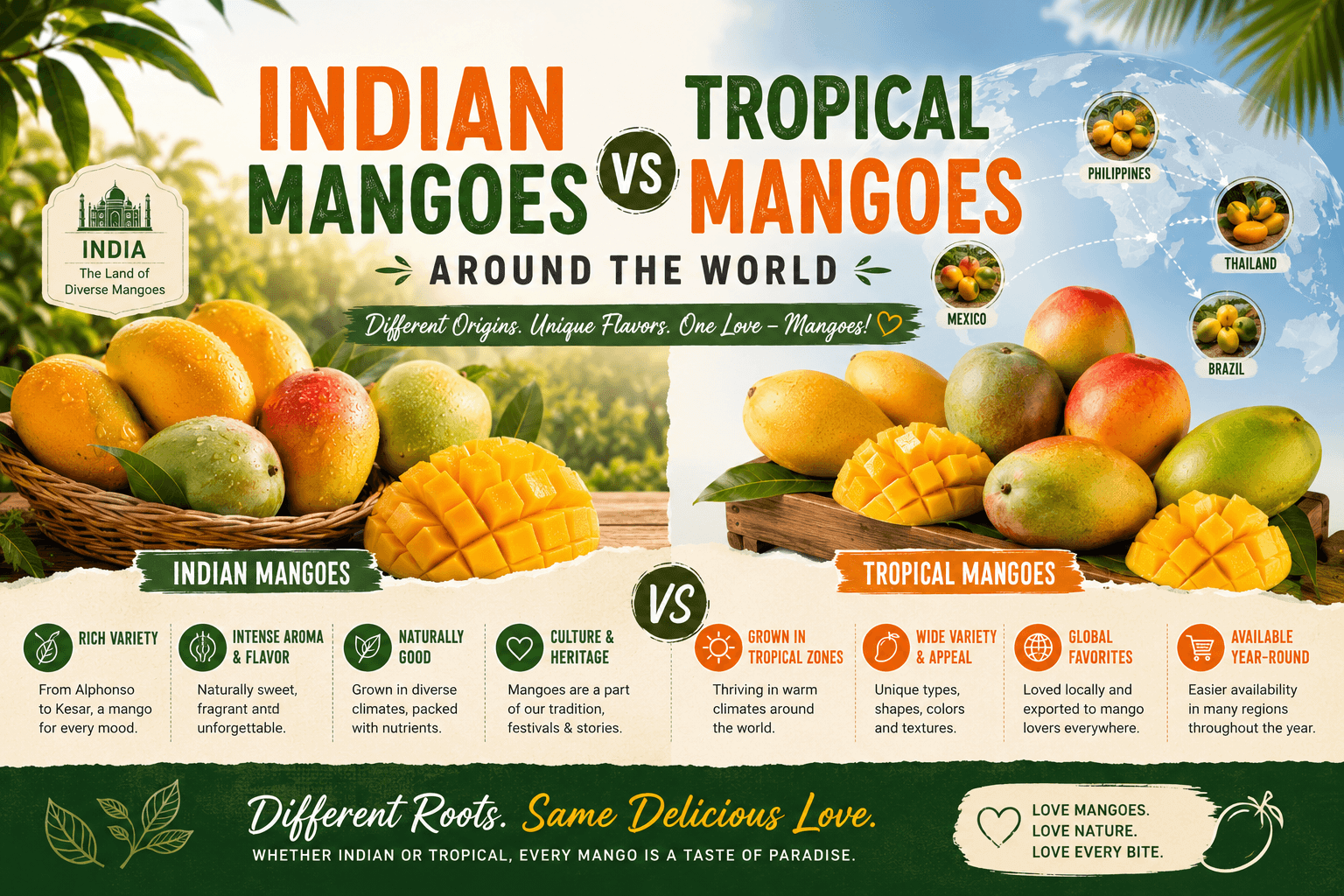
Mangoes are one of the world’s most beloved tropical fruits, enjoyed across continents for their delicious flavor, vibrant colors, and incredible versatility. While many countries cultivate excellent mangoes, Indian mangoes have earned a special place among fruit lovers for their remarkable diversity, rich sweetness, and centuries-old cultivation traditions.
From Southeast Asia and Latin America to Africa and the Caribbean, tropical regions produce their own unique mango varieties, each shaped by local climates, soils, and farming practices. Some are prized for their buttery texture, others for their firm flesh or mild sweetness. Comparing these mangoes reveals how geography and tradition influence the characteristics of one of the world’s favorite fruits.
In this guide, we’ll compare Indian mangoes with tropical mangoes from around the world, highlighting their varieties, flavor profiles, growing conditions, and what makes Indian mangoes stand out on the global stage.
Mangoes Around the World
Mangoes are cultivated in many tropical and subtropical regions.
Major mango-producing areas include:
- India.
- Thailand.
- Pakistan.
- Mexico.
- Brazil.
- Peru.
- Philippines.
- Indonesia.
- Vietnam.
- Australia.
- Egypt.
- South Africa.
Each region grows varieties that have adapted to its local climate and consumer preferences.
India – The Home of Incredible Mango Diversity
India is the world’s largest producer of mangoes and is home to hundreds of cultivated varieties.
Popular Indian mangoes include:
- Alphonso (Hapus).
- Himsagar.
- Kesar.
- Dashehari.
- Langra.
- Chausa.
- Fazli.
- Lakshmanbhog.
- Gopalbhog.
- Khirsapati.
- Banganapalli.
- Amrapali.
This remarkable diversity gives consumers a wide range of flavors, aromas, and textures to enjoy throughout the mango season.
Thailand – Sweet and Smooth
Thai mangoes are well known for their smooth texture and mild sweetness.
Many are commonly enjoyed:
- Fresh.
- With sticky rice.
- In desserts.
- In smoothies.
- In tropical salads.
Their firm flesh makes them suitable for both ripe and unripe preparations.
Mexico – A Major Exporter
Mexico is one of the world’s leading mango exporters.
Popular Mexican varieties include:
- Ataulfo.
- Tommy Atkins.
- Kent.
- Keitt.
- Haden.
These mangoes are appreciated for their availability, vibrant appearance, and versatility in fresh eating and food preparation.
Pakistan – Richly Flavored Mangoes
Pakistan produces several highly regarded mango varieties.
Some well-known cultivars include:
- Chaunsa.
- Sindhri.
- Anwar Ratol.
These mangoes are admired for their sweetness, aroma, and juicy texture, making them popular both locally and internationally.
The Philippines – Famous for Sweet Mangoes
Philippine mangoes are widely recognized for their bright yellow flesh and naturally sweet flavor.
They are commonly used in:
- Fresh fruit platters.
- Desserts.
- Smoothies.
- Dried mango products.
Their balanced sweetness has earned them a loyal following worldwide.
Australia – Premium Seasonal Mangoes
Australia grows several commercial mango varieties suited to its climate.
Consumers appreciate Australian mangoes for:
- Attractive appearance.
- Consistent quality.
- Fresh seasonal availability.
- Smooth texture.
They are popular during Australia’s summer harvest season.
Comparing Flavor Profiles
Every mango-growing region offers something unique.
Indian Mangoes
Often known for:
- Rich sweetness.
- Complex aroma.
- Smooth, fibre-light pulp in many varieties.
- Wide flavor diversity.
- Exceptional juiciness.
Tropical Mangoes from Other Regions
Often appreciated for:
- Mild sweetness.
- Firm texture.
- Balanced acidity.
- Excellent versatility.
- Regional culinary uses.
Individual flavor varies significantly depending on the specific variety rather than the country alone.
Variety and Diversity
One of India’s greatest strengths is the extraordinary number of mango cultivars.
Consumers can choose from mangoes that are:
- Creamy.
- Juicy.
- Fibre-light.
- Richly aromatic.
- Mildly sweet.
- Intensely sweet.
- Large or small.
Few countries offer the same level of varietal diversity.
Growing Conditions
Climate plays a major role in mango quality.
Many premium mango-growing regions benefit from:
- Warm temperatures.
- Abundant sunshine.
- Seasonal rainfall.
- Fertile soils.
- Careful irrigation.
- Experienced orchard management.
India’s varied geography allows different mango varieties to thrive across multiple states.
Cultural Importance
Mangoes hold cultural significance in many countries, but they have a particularly deep connection with Indian traditions.
They are associated with:
- Family gatherings.
- Festivals.
- Hospitality.
- Regional cuisine.
- Traditional recipes.
- Summer celebrations.
This cultural heritage adds to the global appreciation of Indian mangoes.
Why Malda Mangoes Represent India’s Excellence
Among India’s renowned mango-growing regions, Malda in West Bengal stands out for its exceptional fruit.
Its famous varieties include:
- Himsagar.
- Fazli.
- Lakshmanbhog.
- Gopalbhog.
- Khirsapati.
These mangoes are celebrated for their:
- Naturally sweet flavor.
- Rich tropical aroma.
- Smooth, fibre-light pulp.
- Juicy texture.
- Premium quality.
The fertile alluvial soils, favorable climate, and generations of orchard expertise help produce mangoes that represent the very best of Indian cultivation.
Choosing the Right Mango for You
Your ideal mango depends on personal preference.
Consider:
- Sweetness level.
- Texture.
- Aroma.
- Intended recipe.
- Seasonal availability.
Exploring different varieties from India and other tropical regions is a great way to discover your favorites.
Interesting Facts About Tropical Mangoes
Here are a few fascinating facts:
- Mangoes are cultivated in more than 100 countries worldwide.
- Different climates produce unique flavor profiles and harvest seasons.
- Hundreds of mango cultivars exist globally, with India accounting for a large share of the world’s diversity.
- Some varieties are ideal for fresh eating, while others are better suited for cooking or processing.
- Mangoes remain one of the most widely enjoyed tropical fruits across the globe.
Final Thoughts
Indian mangoes and tropical mangoes from around the world each offer their own unique qualities, reflecting the climates, traditions, and agricultural expertise of the regions where they are grown. While countries such as Thailand, Mexico, Pakistan, the Philippines, and Australia produce outstanding mangoes, India’s remarkable diversity, exceptional sweetness, and deep cultural heritage continue to distinguish its mangoes on the global stage.
Whether you’re savoring the creamy richness of Alphonso, the aromatic sweetness of Himsagar, the large and flavorful Fazli, or exploring tropical varieties from other countries, every mango tells a story of its origin. For mango enthusiasts, comparing these fruits is a delicious journey that highlights the incredible diversity of one of nature’s finest gifts.
Experience Premium Malda Mangoes
Experience the authentic taste of premium Malda Mangoes sourced directly from trusted orchards in West Bengal. Our Himsagar, Fazli, Lakshmanbhog, Gopalbhog, and Khirsapati mangoes are handpicked at peak maturity, naturally ripened, carefully graded, thoroughly quality-checked, and securely packed before being delivered fresh across India. Whether you’re discovering Indian mangoes for the first time or comparing them with tropical varieties from around the world, our farm-direct mangoes offer exceptional flavor, rich aroma, and premium quality in every bite.