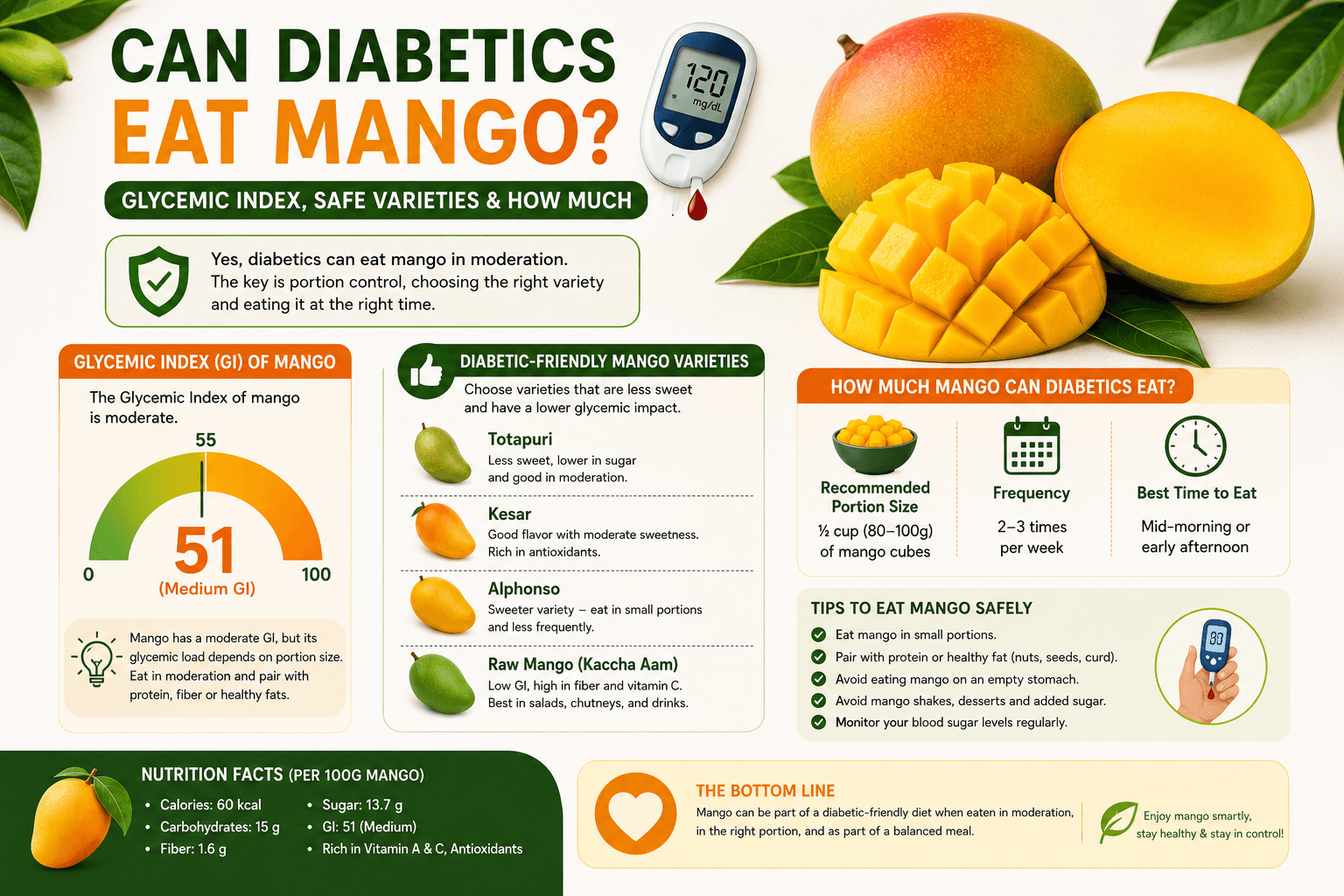
Mango is often called the “King of Fruits” because of its delicious taste, rich aroma, and impressive nutritional profile. However, people with diabetes frequently wonder whether mangoes are safe to eat due to their natural sugar content.
The good news is that diabetics can enjoy mangoes in moderation as part of a balanced diet. Understanding the glycemic index (GI), portion size, and the best ways to consume mangoes can help people with diabetes enjoy this nutritious fruit without significantly affecting blood sugar levels.
In this guide, we’ll explore whether diabetics can eat mangoes, the glycemic index of mangoes, recommended serving sizes, and practical tips for managing blood sugar.
Are Mangoes Safe for People with Diabetes?
Yes, people with diabetes can eat mangoes when consumed in appropriate portions and as part of a balanced meal plan.
Mangoes contain natural sugars, but they also provide:
- Dietary fiber
- Vitamin C
- Vitamin A
- Potassium
- Antioxidants
- Polyphenols
These nutrients contribute to overall health and may help support healthy metabolic function.
The key is moderation and portion control.
What Is the Glycemic Index of Mango?
The Glycemic Index (GI) measures how quickly a food raises blood sugar levels.
Mangoes have a moderate glycemic index of approximately 51–60, depending on the variety and ripeness.
GI Categories:
- Low GI: Below 55
- Medium GI: 56–69
- High GI: 70 and above
Most mango varieties fall within the low-to-medium GI range, making them a better choice than many processed sweets and sugary desserts.
Understanding Glycemic Load
While glycemic index is important, glycemic load (GL) provides a more complete picture because it considers both the GI and the amount of carbohydrates consumed.
A typical serving of mango has a moderate glycemic load, meaning that reasonable portions generally have a manageable impact on blood sugar levels.
This is why portion size matters more than simply avoiding mangoes altogether.
Nutritional Benefits of Mangoes for Diabetics
Rich in Fiber
Mangoes contain dietary fiber that helps:
- Slow digestion
- Reduce rapid sugar absorption
- Improve satiety
- Support digestive health
High in Vitamin C
Vitamin C acts as an antioxidant and supports:
- Immune health
- Cell protection
- Overall wellness
Contains Beneficial Antioxidants
Mangoes contain antioxidants such as:
- Mangiferin
- Quercetin
- Beta-carotene
- Gallic acid
These compounds help combat oxidative stress and support general health.
Best Mango Varieties for Diabetics
Different mango varieties contain slightly different sugar levels and nutritional profiles.
Popular varieties that can be enjoyed in moderation include:
Malda Mango
Known for its balanced sweetness and rich flavor.
Dashehari Mango
Aromatic and moderately sweet when consumed in controlled portions.
Langra Mango
Popular for its distinctive taste and moderate sweetness.
Himsagar Mango
Fibreless and flavorful, suitable when portion sizes are controlled.
Alphonso Mango
Naturally sweeter than some varieties, so smaller portions are generally recommended.
Regardless of the variety, portion control remains the most important factor.
How Much Mango Can a Diabetic Eat?
The ideal serving size depends on an individual’s:
- Blood sugar control
- Overall diet
- Activity level
- Medical advice
A commonly recommended serving is:
One Serving
- Approximately ½ cup to 1 cup of sliced mango
- Around 80–100 grams of fresh mango
This amount allows most individuals to enjoy mangoes while managing carbohydrate intake.
Always consult a healthcare professional or registered dietitian for personalized recommendations.
Best Ways for Diabetics to Eat Mango
Pair Mango with Protein
Combining mango with protein sources may help slow sugar absorption.
Examples:
- Greek yogurt
- Cottage cheese
- Nuts
- Seeds
Eat Fresh Mango
Fresh mango is preferable to:
- Mango juice
- Mango syrup
- Sweetened mango desserts
- Processed mango products
Fresh fruit contains fiber that helps moderate blood sugar response.
Watch Portion Sizes
Avoid consuming large quantities of mango in a single sitting.
Smaller portions spread throughout the day are often a better option.
Tips for Managing Blood Sugar While Eating Mango
- Choose fresh, naturally ripened mangoes.
- Avoid adding sugar to mango dishes.
- Pair mango with protein or healthy fats.
- Monitor blood glucose levels regularly.
- Follow your healthcare provider’s dietary recommendations.
- Include mango as part of a balanced meal rather than as a standalone large snack.
Should Diabetics Avoid Mango Completely?
No. Most people with diabetes do not need to eliminate mangoes entirely.
Modern nutrition guidelines emphasize:
- Balanced eating
- Portion control
- Individualized meal planning
Fresh mangoes can be enjoyed responsibly while maintaining healthy blood sugar management.
Conclusion
Diabetics can enjoy mangoes in moderation as part of a healthy and balanced diet. With a moderate glycemic index, valuable nutrients, dietary fiber, and antioxidants, mangoes offer several nutritional benefits beyond their delicious taste.
The key is choosing fresh mangoes, controlling portion sizes, pairing them with protein-rich foods, and monitoring individual blood sugar responses.
If you have diabetes and enjoy mangoes, consult your healthcare provider for personalized dietary advice and enjoy this seasonal fruit responsibly.
FAQ