

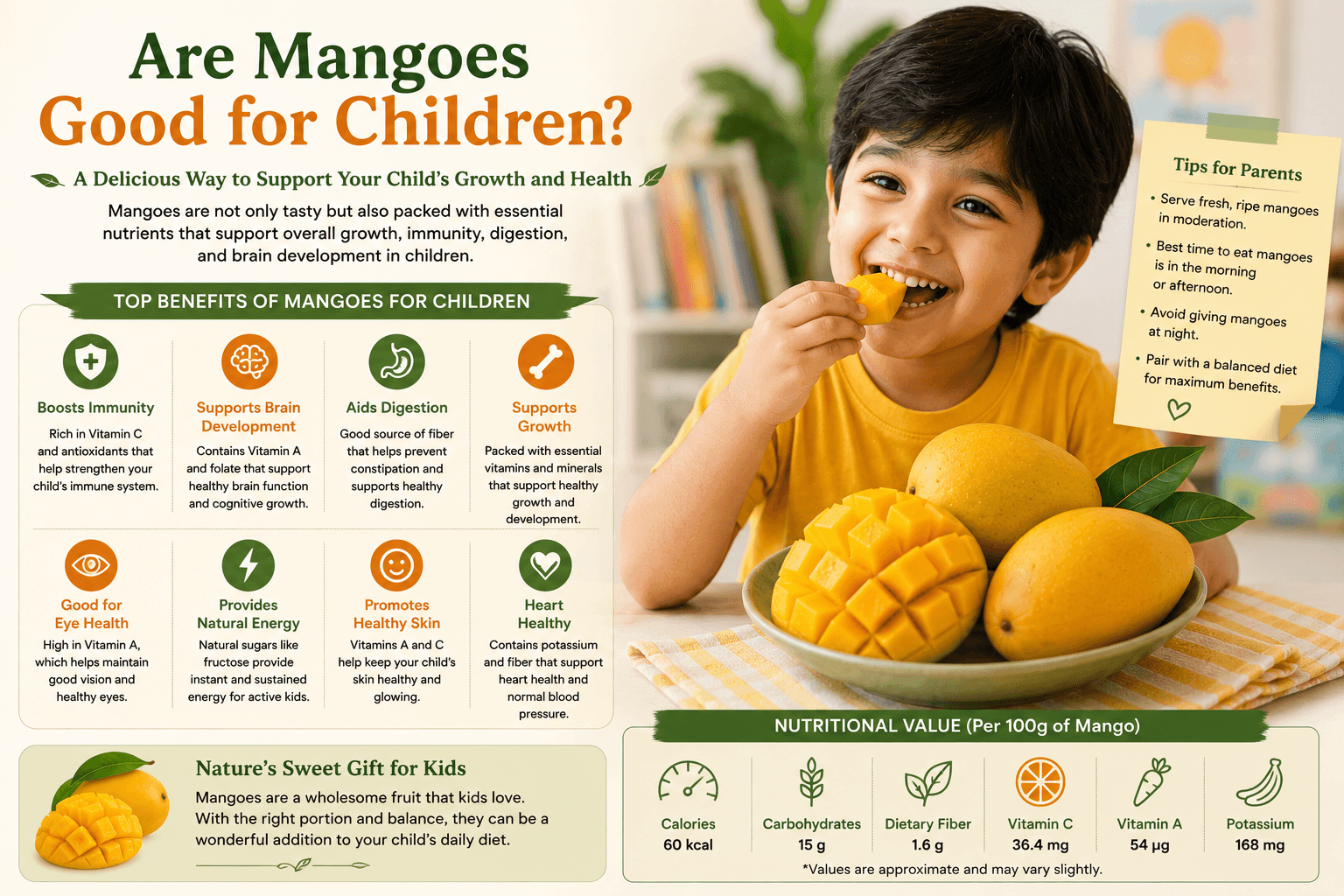
Mangoes are one of the most loved fruits among children, thanks to their naturally sweet taste, soft texture, and juicy pulp. Beyond their delicious flavor, mangoes are packed with essential vitamins, minerals, antioxidants, and dietary fiber that support a child’s healthy growth and development.
Parents often wonder whether mangoes are suitable for children, how much they should eat, and what health benefits they offer. The good news is that fresh, naturally ripened mangoes can be a nutritious part of a balanced diet for most children when served in age-appropriate portions.
In this article, we’ll explore why mangoes are good for children, their nutritional benefits, recommended serving sizes, and tips for including them in your child’s diet.
Are Mangoes Safe for Children?
Yes. Fresh mangoes are generally safe and nutritious for children when introduced according to their age and dietary needs.
They are naturally rich in:
- Vitamin C
- Vitamin A
- Vitamin E
- Dietary Fiber
- Potassium
- Folate
- Natural Antioxidants
These nutrients play an important role in supporting a child’s overall health and development.
1. Supports Healthy Growth and Development
Growing children require a variety of nutrients to support their physical and mental development.
Mangoes provide vitamins and minerals that contribute to:
- Healthy cell growth
- Tissue repair
- Bone development
- Overall growth
Including nutrient-rich fruits in a child’s daily diet helps support healthy development.
2. Strengthens the Immune System
Children are often exposed to seasonal illnesses, making a strong immune system important.
Vitamin C and Vitamin A found in mangoes help:
- Support normal immune function
- Protect the body’s cells
- Promote healthy growth
- Contribute to overall wellness
A balanced diet rich in fruits can help children maintain good health.
3. Good for Eye Health
Mangoes are an excellent source of beta-carotene, which the body converts into Vitamin A.
Vitamin A supports:
- Healthy vision
- Eye development
- Normal eye function
Including Vitamin A-rich foods in a child’s diet helps maintain good eyesight.
4. Supports Healthy Digestion
Dietary fiber is important for children’s digestive health.
Fresh mangoes contain fiber that helps:
- Promote regular bowel movements
- Support gut health
- Improve digestion
- Reduce occasional constipation
A healthy digestive system also supports better nutrient absorption.
5. Provides Natural Energy
Children need energy for:
- School
- Outdoor play
- Sports
- Learning
- Daily activities
The natural carbohydrates found in mangoes provide a quick source of energy without relying on processed sugary snacks.
6. Supports Healthy Skin
The vitamins and antioxidants found in mangoes help support healthy skin.
Vitamin C contributes to collagen production, while Vitamin A supports healthy skin cells.
These nutrients help maintain healthy, glowing skin as children grow.
7. Rich in Antioxidants
Mangoes contain antioxidants such as:
- Mangiferin
- Beta-carotene
- Vitamin C
- Quercetin
These compounds help protect the body’s cells from oxidative stress and support overall health.
8. Encourages Healthy Eating Habits
Because of their naturally sweet taste, mangoes can be a healthier alternative to processed sweets and sugary desserts.
Offering fresh fruit instead of highly processed snacks encourages children to develop healthier eating habits from an early age.
How Much Mango Can Children Eat?
The right serving size depends on the child’s age and nutritional needs.
General serving suggestions include:
Toddlers (1–3 Years)
- About ¼ to ½ cup of fresh mango pieces.
Children (4–8 Years)
- Around ½ to 1 cup of fresh mango.
Older Children (9–13 Years)
- Approximately 1 cup of fresh mango as part of a balanced diet.
Moderation is important, and mangoes should be enjoyed alongside a variety of other fruits and vegetables.
Healthy Ways to Serve Mangoes
Fresh mangoes can be served in many child-friendly ways, including:
- Fresh mango slices
- Fruit salads
- Yogurt bowls
- Smoothies
- Homemade popsicles
- Oatmeal topping
- Healthy desserts
Avoid adding extra sugar to preserve the fruit’s natural nutritional value.
Tips for Parents
To help your child enjoy mangoes safely:
- Choose fresh, naturally ripened mangoes.
- Wash the fruit thoroughly before serving.
- Remove the peel and seed.
- Cut into small, bite-sized pieces for younger children.
- Introduce new foods gradually if it’s their first time eating mango.
Why Choose Naturally Ripened Mangoes?
Naturally ripened mangoes develop their sweetness, aroma, and texture naturally without harmful artificial ripening methods.
At Malda Mango, we are committed to delivering naturally ripened, premium-quality mangoes sourced from trusted farms so families can enjoy fresh and delicious fruit with confidence.
Conclusion
Mangoes are an excellent fruit for children, offering a delicious combination of taste and nutrition. Rich in vitamins, minerals, antioxidants, and dietary fiber, they support healthy growth, immunity, digestion, eye health, skin health, and energy levels.
When served in age-appropriate portions as part of a balanced diet, fresh, naturally ripened mangoes can become a healthy and enjoyable addition to your child’s daily meals.